How-to
How to preheat each type of pan
Published
Short answer
Preheat most pans on medium, not high. Clad stainless usually needs a few minutes until a drop of water beads and skates. Cast iron and enameled Dutch ovens need longer, often 5 to 10 minutes, because they heat slowly but hold heat. Carbon steel heats faster than cast iron. Nonstick needs only a short warm-up with oil or butter already in the pan, and should never be preheated empty on high.
Cookware for this job
All 7 picks compared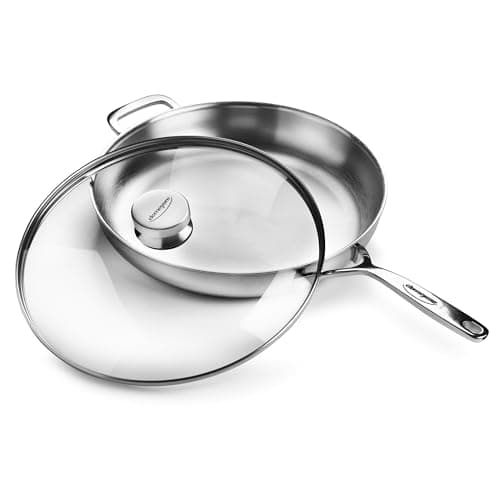
Demeyere 5-Plus 12.5 in with Glass Lid: 3 mm 5-ply
See price on AmazonSee it on Amazon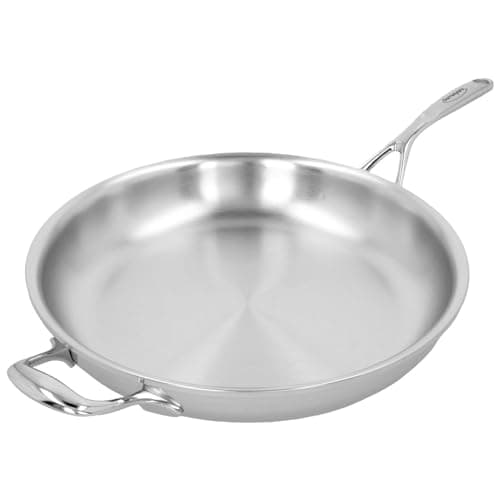
Demeyere Atlantis Proline 12.6 in: 7-ply, helper handle
See price on AmazonSee it on Amazon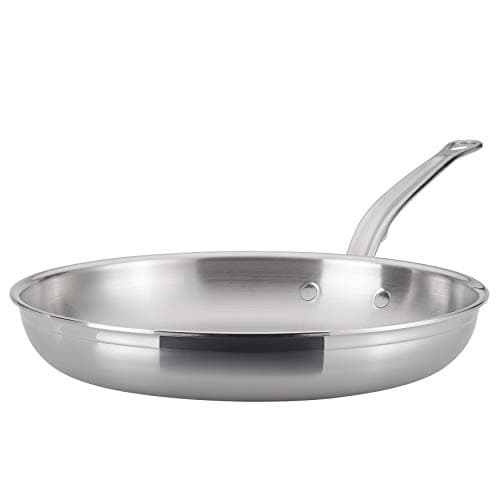
Hestan ProBond Forged 12.5 in: dishwasher safe
See price on AmazonSee it on Amazon
Preheating is the single habit that most changes how food cooks. A cold pan makes meat stick and steam; an overheated pan burns oil and can damage coatings and enamel. This page is for home cooks who want a clear rule for each pan they own. It covers how long and how hot to preheat clad stainless, bare cast iron, enameled Dutch ovens, carbon steel and nonstick, how to tell when a pan is ready, and how the cooktop changes the timing.
Why preheating matters
When food hits a hot pan, its surface sears and moisture turns to steam quickly, which helps it brown and release. When food hits a cool pan, it slowly warms, gives off liquid and bonds to the metal. Preheating also evens out the temperature across the pan, so the center and the edges cook at similar rates.
The goal is the right temperature for the job, not maximum heat. Pancakes and eggs want moderate heat, a steak wants higher heat, and a braise wants a steady medium. Medium heat with enough time gets most pans to a good searing temperature without burning anything.
| Material | Braise | Sear | Sauce | Oven | Eggs |
|---|---|---|---|---|---|
| Enameled cast iron | good | fair | fair | good | poor |
| Clad stainless | fair | good | good | good | poor |
| Carbon steel | poor | good | poor | good | good |
| Bare cast iron | fair | good | poor | good | fair |
| Nonstick | poor | poor | fair | fair | good |
good fair poor
Preheat guide by pan type
Clad stainless (tri-ply, 5-ply)
- Heat
- Medium
- Approximate time
- 2 to 4 minutes
- Empty or with fat
- Empty, then add oil
- Ready sign
- Water drops bead and skate
Disc-bottom stainless
- Heat
- Medium
- Approximate time
- 2 to 3 minutes
- Empty or with fat
- Empty, then add oil
- Ready sign
- Water drops bead; watch for a hot center
Carbon steel
- Heat
- Medium
- Approximate time
- 2 to 4 minutes
- Empty or with fat
- Empty or with a thin film of oil
- Ready sign
- Oil shimmers, light wisp of smoke for searing
Bare cast iron skillet
- Heat
- Low then medium
- Approximate time
- 5 to 10 minutes
- Empty or with fat
- Empty or with oil
- Ready sign
- Water sizzles away at once; oil shimmers
Enameled cast iron Dutch oven
- Heat
- Low then medium
- Approximate time
- 5 to 10 minutes
- Empty or with fat
- Add oil or fat first
- Ready sign
- Oil shimmers and flows easily
PTFE or ceramic nonstick
- Heat
- Low to medium
- Approximate time
- 1 to 2 minutes
- Empty or with fat
- With oil or butter in the pan
- Ready sign
- Butter foams or oil flows thin
| Pan | Heat | Approximate time | Empty or with fat | Ready sign |
|---|---|---|---|---|
| Clad stainless (tri-ply, 5-ply) | Medium | 2 to 4 minutes | Empty, then add oil | Water drops bead and skate |
| Disc-bottom stainless | Medium | 2 to 3 minutes | Empty, then add oil | Water drops bead; watch for a hot center |
| Carbon steel | Medium | 2 to 4 minutes | Empty or with a thin film of oil | Oil shimmers, light wisp of smoke for searing |
| Bare cast iron skillet | Low then medium | 5 to 10 minutes | Empty or with oil | Water sizzles away at once; oil shimmers |
| Enameled cast iron Dutch oven | Low then medium | 5 to 10 minutes | Add oil or fat first | Oil shimmers and flows easily |
| PTFE or ceramic nonstick | Low to medium | 1 to 2 minutes | With oil or butter in the pan | Butter foams or oil flows thin |
Note.These times are a starting point. Thicker pans, larger pans, electric coils and low output burners take longer. Watch the ready sign rather than the clock.
How to preheat clad stainless steel
Five-ply and copper core pans take slightly longer than tri-ply because they have more metal to heat. Pans with only a disc on the bottom heat the base quickly but the sides lag. For why preheating stops sticking, see why food sticks to stainless steel. For pan picks, see the best stainless steel frying pan guide.
- 1
Put the dry pan on a burner that matches its base.
- 2
Heat on medium for 2 to 4 minutes.
- 3
Flick a few drops of water in. If they sizzle and vanish, keep heating. If they bead into balls and skate across the surface, the pan is ready.
- 4
Wipe out the water, add oil and give it a few seconds to shimmer.
- 5
Add the food and lower the heat a little if the oil starts to smoke heavily.
How to preheat cast iron and a Dutch oven
Cast iron is a poor heat conductor but stores a lot of heat. Put it straight on high and you get a scorching ring over the flame and a cool rim. Start on low for a couple of minutes, then raise it to medium and give it 5 to 10 minutes in total. Turning the pan now and then helps on a small burner. Some cooks preheat a bare skillet in a hot oven for very even heat before moving it to the stove.
Enameled cast iron Dutch ovens need the same patience, with one extra rule: do not heat them empty on high. Add oil or fat first, then bring the heat up gradually. Makers of enameled cast iron recommend low to medium heat for almost all stovetop cooking. For full technique, see how to use a Dutch oven.
To preheat a Dutch oven for bread, many recipes heat the covered pot in the oven at 450°F. Check the knob rating first: Staub metal knobs and Lodge enameled cast iron are rated to 500°F by their makers, while the older Le Creuset black phenolic knob is rated to 390°F. For other knobs, check the maker's care page or the oven temperature limit checker.
How to preheat carbon steel and nonstick
Carbon steel is thinner than cast iron and heats faster, but it still benefits from a few minutes on medium. For a hard sear, let a thin film of oil heat until it just starts to smoke. Avoid blasting a thin carbon steel pan on the highest setting from cold, since rapid uneven heating can warp it. See how to cook with a carbon steel pan.
Nonstick is the exception to the preheat-empty rule. PTFE coatings should not be heated empty, and high heat shortens the life of both PTFE and ceramic coatings. Add a little oil or butter, then warm the pan on low to medium for a minute or two until the butter foams. That is hot enough for eggs and pancakes. For more on coating care, see when to replace nonstick pans.
Note.Never leave an empty nonstick pan on a hot burner. Overheating can damage the coating and release fumes.
How the cooktop changes preheating
On induction, only the part of the pan over the coil heats directly. Cast iron spreads that heat slowly, so give it extra time on a medium setting. For which pans work, see what cookware works on induction. For gas and electric picks, see the best cookware for gas stove guide.
- Gas responds quickly. Adjust the flame so it stays under the base and does not climb the sides.
- Electric coil and radiant glass top heat slowly and hold heat after you turn them down. Start lowering early.
- Induction heats fastest. A medium setting can preheat a pan in less time than on gas, so start low and watch closely.
- Small burners under large pans leave cool edges. Use the burner that matches the pan.
Common preheating mistakes
- Adding oil to a cold stainless pan and heating them together, which often leads to sticking.
- Preheating on high to save time, which burns oil and creates hot spots.
- Adding food straight from the fridge in a big batch, which drops the pan temperature.
- Preheating nonstick empty.
- Heating an empty enameled Dutch oven on high on the stovetop.
Frequently asked questions
How long should I preheat a stainless steel pan? About 2 to 4 minutes on medium for most clad pans, until drops of water bead and skate across the surface.
How long do you preheat a Dutch oven on the stove? Start on low, then medium, for about 5 to 10 minutes with a little oil or fat in the pot. Watch for the oil to shimmer.
Should I add oil before or after preheating? For stainless, preheat first, then add oil. For nonstick, add oil or butter first. For cast iron and carbon steel, either works.
Why does my pan smoke when I preheat it? The pan is too hot for the oil, or there is leftover residue burning off. Lower the heat and clean the pan well.
What you need for this
- See price on AmazonAmazon
Demeyere 5-Plus 12.5 in with Glass Lid: 3 mm 5-ply
 See price on AmazonAmazon
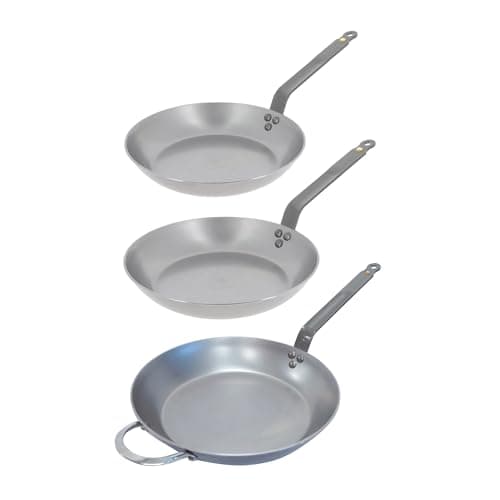
de Buyer Mineral B 3-Pan Set: best carbon steel
 See price on AmazonAmazon
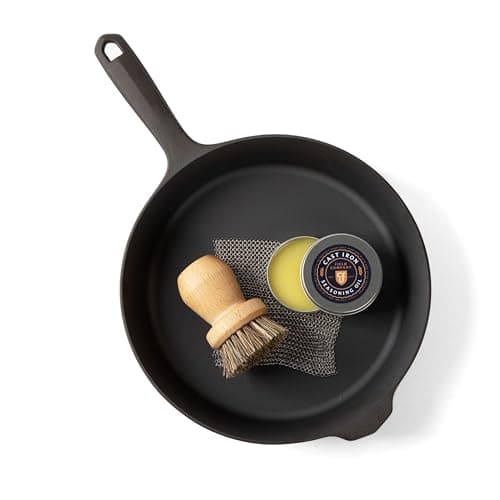
Field 10.25 in Starter Set: 4.3 lb with care kit
From Best premium cast iron skillets: machined and enameled picks
- See price on AmazonAmazon
Hestan ProBond Forged 12.5 in: clad, dishwasher safe