Explainer
When to replace cookware and nonstick pans
Published
Short answer
Replace a nonstick pan when food sticks even with oil, the coating is scratched through, peeling or flaking, or the surface is badly discolored and rough. Nonstick coatings wear out with use, so they last a few years rather than decades, depending on heat and care. Replace any pan with a warped base that will not sit flat, a handle that cannot be tightened, or chipped interior enamel.
Cookware for this job
All 7 picks compared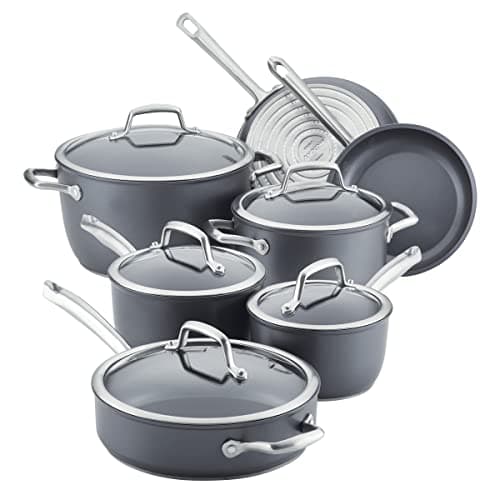
Anolon Accolade 12-Piece: forged, flush rivets
See price on AmazonSee it on Amazon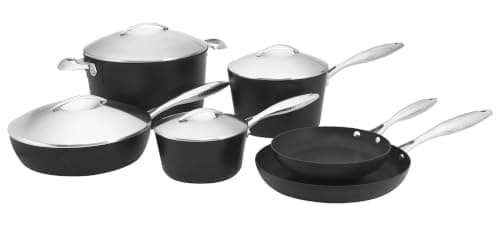
Scanpan PRO 10-Piece: includes a 7 qt Dutch oven
See price on AmazonSee it on Amazon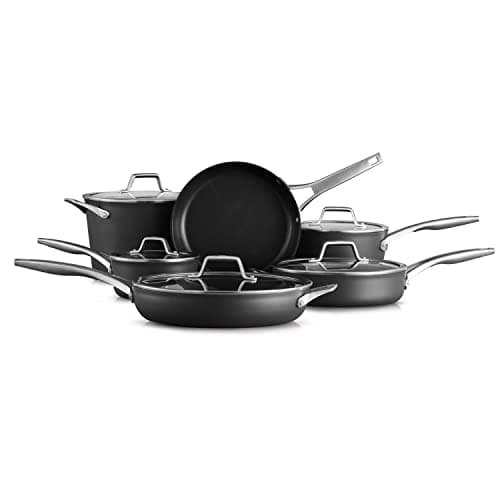
Calphalon Premier 11-Piece: metal utensil safe, 450°F
See price on AmazonSee it on Amazon
Some cookware lasts a lifetime and some is designed to be replaced. This page is for home cooks trying to decide whether a pan is finished or just needs a good clean. It covers how long nonstick usually lasts, the signs of a worn coating, when stainless, cast iron, carbon steel and enameled pieces need replacing, and how to make the next pan last longer. It also explains which problems can be fixed instead of replaced.
How long nonstick pans last
Every nonstick coating, whether PTFE or ceramic, wears down with use. Heat, metal utensils, abrasive scrubbing, cooking sprays and the dishwasher all speed that up. A nonstick pan used daily on high heat wears much faster than one used gently a few times a week. There is no fixed lifespan, but nonstick is generally measured in years, not decades, and ceramic coatings are commonly reported to lose their release sooner than PTFE.
That is the trade-off. Nonstick is easy for eggs, fish and pancakes, but it is a consumable. Stainless steel, cast iron and carbon steel have no coating to wear out. For how the two coating types differ, see PTFE vs ceramic nonstick.
Signs a nonstick pan needs replacing
Light surface scratches that do not go through the coating are mostly cosmetic. Deep scratches, peeling and flaking mean the coating is breaking down. Many makers advise replacing a nonstick pan when the coating is visibly damaged. Before replacing a sticky pan, try a thorough clean. Built-up residue from oils and cooking spray is a common cause of sticking, and a gentle scrub with baking soda paste can restore some release.
- Food sticks even with oil and the right heat.
- The coating is scratched through to the metal underneath.
- Flakes or peeling patches appear on the cooking surface.
- The surface is rough, dull or stained in a way that cleaning does not fix.
- The base is warped and rocks on the burner.
- The handle is loose and cannot be tightened.
Note.Do not overheat nonstick. Do not preheat a PTFE pan empty on high heat. Follow the maker's heat and oven limits, which for PTFE lines are generally 400 to 500°F; check the label or the maker's care page.
When to replace other cookware
Stainless, cast iron and carbon steel are about as close to permanent as cookware gets. Rust, burnt food and stained seasoning can almost always be fixed. See how to clean a burnt stainless steel pan and rusty cast iron Dutch oven.
Clad stainless
- Usually fixable
- Burnt residue, stains, heat tint, light scratches
- Time to replace
- Badly warped base, layers separating, broken handle that cannot be fixed
Bare cast iron
- Usually fixable
- Rust, sticky or flaking seasoning
- Time to replace
- Cracks through the iron, severe warping
Carbon steel
- Usually fixable
- Rust, patchy seasoning
- Time to replace
- Severe warping that will not sit flat, cracks
Enameled cast iron
- Usually fixable
- Stains, discoloration, small exterior chips
- Time to replace
- Chips or cracks in the interior enamel that expose iron
Nonstick
- Usually fixable
- Residue buildup
- Time to replace
- Scratched through, peeling, flaking, no longer releases
Copper
- Usually fixable
- Tarnish, worn tin lining (can be retinned)
- Time to replace
- Badly dented or damaged body
| Material | Usually fixable | Time to replace |
|---|---|---|
| Clad stainless | Burnt residue, stains, heat tint, light scratches | Badly warped base, layers separating, broken handle that cannot be fixed |
| Bare cast iron | Rust, sticky or flaking seasoning | Cracks through the iron, severe warping |
| Carbon steel | Rust, patchy seasoning | Severe warping that will not sit flat, cracks |
| Enameled cast iron | Stains, discoloration, small exterior chips | Chips or cracks in the interior enamel that expose iron |
| Nonstick | Residue buildup | Scratched through, peeling, flaking, no longer releases |
| Copper | Tarnish, worn tin lining (can be retinned) | Badly dented or damaged body |
Warped bases and loose handles
A warped pan spins or rocks on a flat surface, and on induction or glass top stoves it heats poorly because the base does not make full contact. Warping usually comes from thermal shock, such as running cold water into a hot pan, or from heating a thin pan on a burner much larger or smaller than its base. Minor warping can sometimes be corrected; see how to fix a warped pan. Severe warping usually means replacement.
Loose handles on screwed or bolted pans can often be tightened with a screwdriver. Riveted handles that loosen are harder to fix at home. A handle that wobbles while carrying hot oil is a safety risk, so if it cannot be tightened, replace the pan.
Enamel damage on Dutch ovens
Enameled cast iron is not replaced for staining. Brown or gray staining inside is normal and does not affect cooking. Chips are different. A chip on the outside is cosmetic. A chip or crack on the interior cooking surface exposes iron, which can rust, and the damage can spread. Many cooks stop using a pot for cooking once the interior is chipped. Check whether the maker's warranty covers it before replacing; see chipped enamel on a Dutch oven for how claims usually work.
How to make the next pan last longer
When replacing, think about which pans actually need a coating. Many cooks keep one nonstick skillet for eggs and use stainless or carbon steel for everything else, which means fewer pans to replace over time. For replacements, see the best nonstick cookware set, best ceramic cookware set and best stainless steel frying pan guides.
- Use low to medium heat with nonstick and never preheat it empty on high.
- Use wooden, silicone or nylon utensils on nonstick and enamel.
- Hand wash nonstick even if it says dishwasher safe. See is cookware dishwasher safe.
- Avoid aerosol cooking sprays on nonstick; use a little oil or butter instead.
- Let pans cool before washing to avoid warping.
- Stack with pan protectors or hang pans. See how to store cookware.
Frequently asked questions
How long does nonstick last? It depends on heat, utensils and cleaning. With gentle use a nonstick pan can last several years; heavy daily use on high heat wears it much faster.
Is it safe to use a scratched nonstick pan? Light scratches are mostly cosmetic. Many makers advise replacing a pan when the coating is peeling, flaking or scratched through.
Can I re-coat a nonstick pan? Home re-coating is not practical. Replace the pan, or switch to stainless or carbon steel for jobs that do not need a coating.
Do stainless steel pans ever need replacing? Rarely. Replace one if the base is badly warped, the layers separate, or the handle cannot be fixed.
What you need for this
- See price on AmazonAmazon
Anolon Accolade 12-Piece: forged, flush rivets
From Best nonstick cookware sets: hard anodized and clad picks
 See price on AmazonAmazon
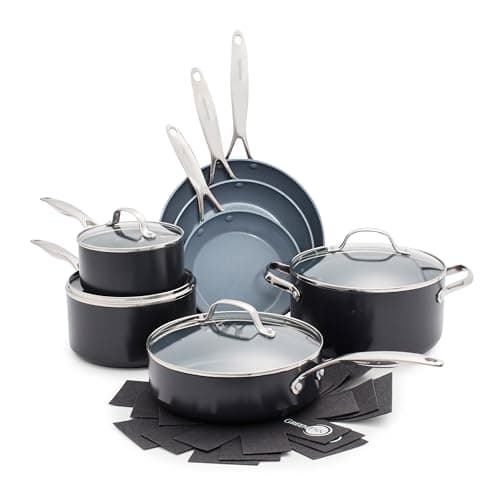
GreenPan Valencia Pro 11-Piece: ceramic, 600°F
From Best ceramic nonstick cookware sets by oven limit and build
 See price on AmazonAmazon
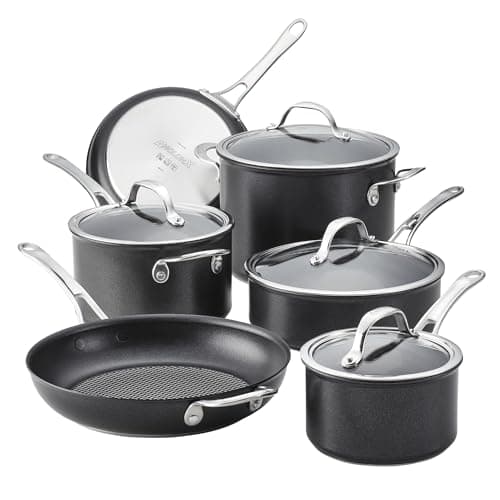
Anolon X 10-Piece: SearTech mesh, helper handles
 See price on AmazonAmazon
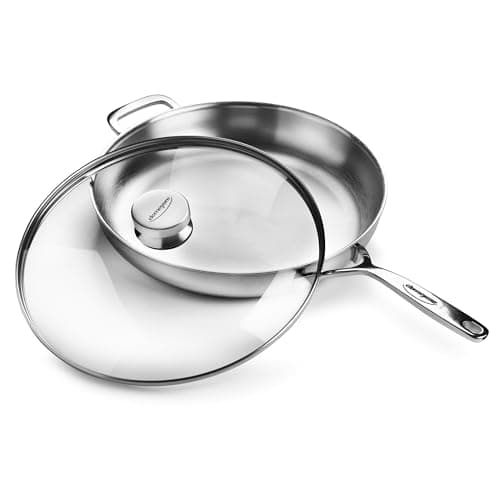
Demeyere 5-Plus 12.5 in with Glass Lid: 3 mm 5-ply