Explainer
What 18/10 stainless steel means
Published
Short answer
18/10 means the stainless steel contains about 18 percent chromium and 10 percent nickel. Chromium makes the steel resist rust and staining; nickel adds shine and extra corrosion resistance. 18/10 and 18/8 are non-magnetic grades used for cooking surfaces. 18/0 has no nickel and is magnetic, which is why it is often used on the outside of induction-ready pans.
Cookware for this job
All 8 picks compared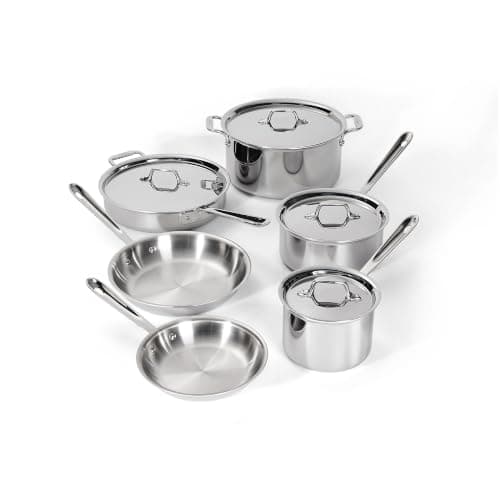
All-Clad D3 10-Piece: the tri-ply benchmark
See price on AmazonSee it on Amazon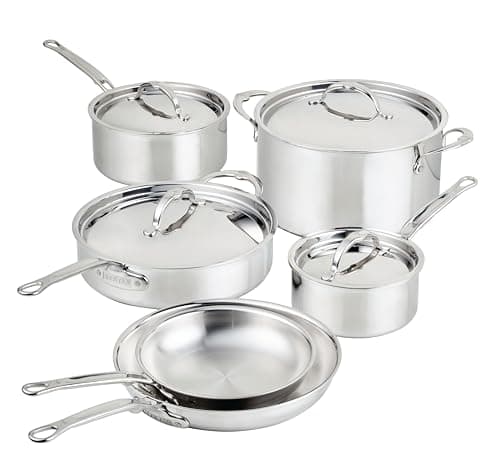
Hestan ProBond Luxe 10-Piece: dishwasher safe, 600°F
See price on AmazonSee it on Amazon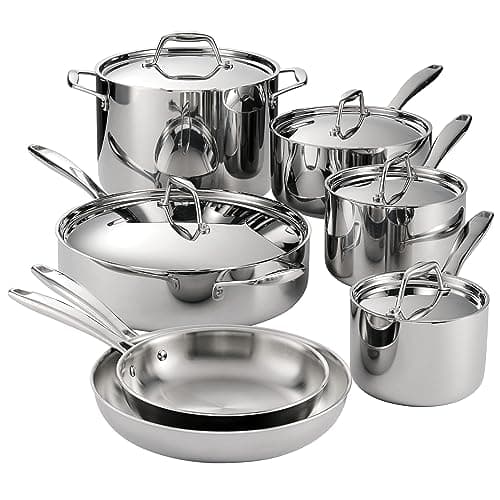
Tramontina Signature 12-Piece: tri-ply on a budget
See price on AmazonSee it on Amazon
Stainless cookware is stamped with numbers like 18/10, 18/8 or 18/0, and listings often treat them as a mark of quality without saying what they mean. This page is for shoppers who want to understand the stamp before they buy. We explain the chromium and nickel figures, how the grades relate to the 300 and 400 series names, why some stainless steel is not magnetic, how makers combine grades in clad pans to work on induction, and what the stamp does and does not tell you about how a pan will cook.
What the two numbers mean
The first number is the approximate percentage of chromium in the steel; the second is the percentage of nickel. Steel with at least about 10.5 percent chromium counts as stainless, because the chromium reacts with oxygen to form a thin, self-repairing film that protects the iron underneath from rust. Eighteen percent chromium gives a comfortable margin for kitchen use, where salt, acid and water are constant.
Nickel changes the crystal structure of the steel. Enough nickel makes it an austenitic steel, which is more resistant to corrosion, takes a bright polish and is not magnetic. That is why 18/10 is the usual choice for the cooking surface of good stainless pans and for flatware.
18/10
- Chromium / nickel
- About 18% / 10%
- Common name
- 304 (300 series)
- Magnetic
- No
- Typical use
- Cooking surface, flatware
18/8
- Chromium / nickel
- About 18% / 8%
- Common name
- 304 (300 series)
- Magnetic
- No
- Typical use
- Cooking surface, pots
18/0
- Chromium / nickel
- About 18% / under 1%
- Common name
- 430 (400 series)
- Magnetic
- Yes
- Typical use
- Exterior layer for induction
| Stamp | Chromium / nickel | Common name | Magnetic | Typical use |
|---|---|---|---|---|
| 18/10 | About 18% / 10% | 304 (300 series) | No | Cooking surface, flatware |
| 18/8 | About 18% / 8% | 304 (300 series) | No | Cooking surface, pots |
| 18/0 | About 18% / under 1% | 430 (400 series) | Yes | Exterior layer for induction |
18/10 vs 18/8: is there a difference
Both 18/10 and 18/8 fall within the range of type 304 stainless steel, the standard food-grade austenitic steel. The extra nickel in 18/10 gives slightly better corrosion resistance and luster, but in daily cooking the difference is small. Many makers use the labels interchangeably, and some simply say 304 stainless.
What matters far more for cooking is how the pan is built: the thickness, and whether it has an aluminum or copper core. A thin 18/10 pan will scorch food; a thick tri-ply 18/8 pan will cook evenly. Read the stamp as a sign of the surface material, not of overall quality.
Why some stainless steel is not magnetic
Steels in the 300 series, including 18/10 and 18/8, have an austenitic structure that is not magnetic. Steels in the 400 series, including 18/0, are ferritic and magnetic. A magnet test on the base of a pan tells you which you have.
This matters for induction. An induction cooktop heats the pan through a magnetic field, so the base must contain magnetic metal. A pan made only of 18/10 steel will not work on induction. Our induction-compatible cookware page explains the test in more detail.
Note.If a magnet sticks firmly to the bottom of the pan, it will work on induction. If it barely clings or falls off, it may not heat properly.
How clad pans combine grades
Most quality clad cookware uses different steels for different layers. The interior cooking surface is usually 18/10 or 18/8 for corrosion resistance and a non-reactive surface. The core is aluminum or copper, which spreads heat quickly. The exterior is often 18/0 magnetic stainless so the pan works on induction.
So a pan described as "18/10 stainless" may well be magnetic on the outside. That is by design. Our what is clad cookware page explains tri-ply, 5-ply and copper core construction, and our best induction cookware sets guide lists pans built this way.
What the stamp does not tell you
The stamp tells you the grade of one layer of steel. It does not tell you the thickness of the pan, how many layers it has, whether the cladding runs up the sides or only covers a disc on the bottom, how the handles are attached, or the oven limit. Those matter more for cooking and durability.
Fully clad pans, where the core runs all the way up the sides, heat more evenly than disc-bottom pans, where a thick disc is bonded only to the base and the walls are thin steel. For oven limits, check the maker's care page. On the lines we could confirm, All-Clad rates its D3, D5 and Copper Core stainless to 600°F and Made In rates its stainless clad to 800°F; see cookware oven temperature limits.
Stainless steel and acidic food
Stainless steel is considered non-reactive for everyday cooking, which is why it is the standard choice for tomato sauces, wine braises and anything with citrus. The protective chromium film keeps the surface stable, so acidic food does not pick up a metallic taste or discolor the way it can in bare iron, carbon steel or uncoated aluminum. That is a practical advantage of a stainless interior over a seasoned pan, which can lose seasoning to long acidic simmers.
For most cooks, the practical advice is simple: buy a fully clad pan with an 18/10 or 18/8 interior from a maker that publishes its materials, and care for it as described in how to cook with stainless steel pans.
Frequently asked questions
Is 18/10 stainless steel good for cookware? Yes. It is the standard material for the cooking surface of quality stainless pans. Look at the construction too: thickness and cladding matter more than the stamp.
Is 18/10 stainless steel magnetic? No. 18/10 and 18/8 are non-magnetic. Pans that work on induction usually have an 18/0 magnetic exterior layer.
Is 304 the same as 18/8? Type 304 covers steels with roughly 18 percent chromium and 8 to 10 percent nickel, so 18/8 and 18/10 both fall under it.
Does 18/10 stainless steel rust? It resists rust very well, but it can show small rust-colored spots if iron particles from steel wool or other tools are left on the surface. A stainless cleanser removes them.
What you need for this
- See price on AmazonAmazon
All-Clad D3 10-Piece: bare tri-ply stainless
From Best stainless steel cookware sets, compared piece by piece