How-to
How to cook with stainless steel pans
Published
Short answer
Preheat the empty pan over medium heat for a few minutes until a drop of water skates across the surface as a ball, then add oil and let it shimmer before adding food. Lay the food in and leave it alone: proteins stick at first and release on their own once a crust forms. Most sticking comes from a pan that is not hot enough or food that is moved too soon.
Cookware for this job
All 7 picks compared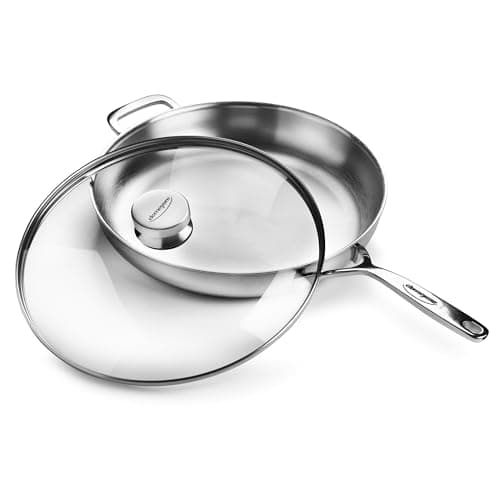
Demeyere 5-Plus 12.5 in with Glass Lid: 3 mm 5-ply
See price on AmazonSee it on Amazon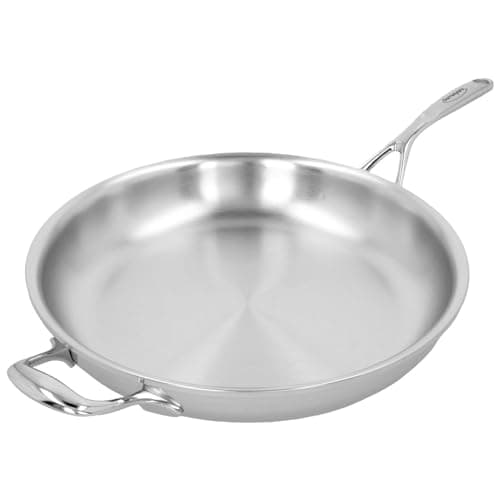
Demeyere Atlantis Proline 12.6 in: 7-ply, helper handle
See price on AmazonSee it on Amazon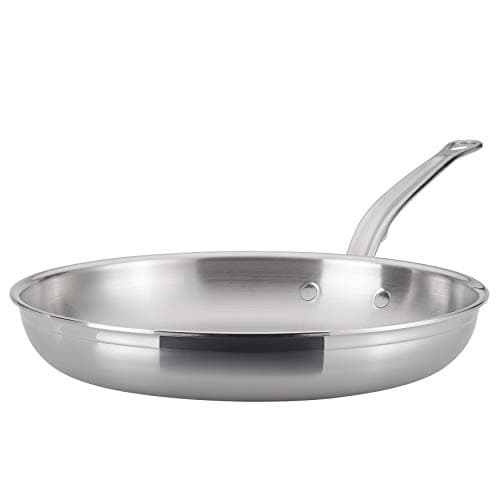
Hestan ProBond Forged 12.5 in: dishwasher safe
See price on AmazonSee it on Amazon
Clad stainless steel is the workhorse of most serious kitchens, but it frustrates new owners because eggs, fish and chicken can weld themselves to the surface. The pan is not the problem; the technique is different from nonstick. This page is for home cooks who just bought a tri-ply or 5-ply pan, or who have one in the cupboard they avoid. We walk through preheating, the water drop test, oil timing, heat control, deglazing and cleanup, and when to reach for another pan instead.
Why food sticks to stainless steel
Stainless steel looks smooth but has tiny pits and irregularities in its surface. When cold food with a lot of protein, such as meat, fish or eggs, hits a pan that is not hot enough, the proteins bond to the metal. As the pan heats and the surface of the food browns, those bonds break and the food releases. Sticking is often a timing problem as much as a heat problem.
Clad stainless pans have an aluminum or copper core sandwiched between steel layers, which spreads heat evenly across the base. That makes them excellent for browning, as long as you let them come up to temperature first. Our what is clad cookware page explains the layers, and why food sticks to stainless steel goes deeper on the cause.
Step by step: preheat, oil, cook
This sequence works for searing meat, browning vegetables and cooking most proteins in a stainless skillet.
- 1
Put the dry, empty pan on the burner over medium heat. On a gas or electric range, give it two to four minutes; induction heats faster.
- 2
Test with a few drops of water. If they sizzle and evaporate, wait. When a drop beads up into a ball that glides around the pan, the pan is ready.
- 3
Wipe out the water and add a thin layer of oil. Swirl it to coat. It should shimmer within seconds.
- 4
Pat the food dry and let it lose its fridge chill if you can. Wet, cold food drops the pan temperature and steams instead of browning.
- 5
Lay the food in, moving away from you, and do not crowd the pan. Leave space between pieces.
- 6
Leave it alone. When the underside has browned, the food will release with a gentle nudge. If it resists, give it another minute.
- 7
Turn once, finish cooking, and lower the heat if the oil starts to smoke heavily.
Note.Do not preheat a stainless pan on high while empty for long periods. It wastes energy, can cause heat tint and is not needed for even browning.
The water drop test explained
The water drop test uses the Leidenfrost effect. Once the pan is hot enough, a drop of water forms a thin layer of steam underneath itself and floats on it, rolling around the pan instead of boiling away. That tells you the surface has reached a good searing temperature.
If the water breaks into many small drops that scatter and vanish quickly, the pan is very hot; let it cool a moment before adding oil so the oil does not smoke right away. If the water simply sizzles and spreads, the pan is not ready. The test is quick and works on any burner, which is why many cooks rely on it instead of a thermometer.
Heat control and which foods to cook in stainless
Once food is in the pan, medium to medium-high heat covers most cooking. Clad stainless responds quickly to burner changes, especially pans with an aluminum or copper core, so you can turn the heat down as soon as browning starts to run ahead. Very high heat for long periods is rarely necessary and is the main cause of burnt oil and discoloration.
Stainless is at its best for searing steaks, chops and chicken thighs, browning onions, making pan sauces, sauteing vegetables and anything acidic, because it does not react with tomatoes, wine or citrus. Delicate eggs and flaky fish are the hardest foods for it. You can cook them with enough fat and careful preheating, but many cooks keep a nonstick pan for eggs. Our stainless steel vs nonstick page compares the two.
Steak, chops
- Heat
- Medium-high
- Tip
- Pat dry, do not move until it releases
Chicken thighs, skin down
- Heat
- Medium
- Tip
- Start skin side down, let fat render
Onions, vegetables
- Heat
- Medium
- Tip
- Stir often once browning starts
Eggs
- Heat
- Medium-low
- Tip
- Generous butter, fully preheated pan
Pan sauce
- Heat
- Medium
- Tip
- Deglaze fond with wine or stock
| Food | Heat | Tip |
|---|---|---|
| Steak, chops | Medium-high | Pat dry, do not move until it releases |
| Chicken thighs, skin down | Medium | Start skin side down, let fat render |
| Onions, vegetables | Medium | Stir often once browning starts |
| Eggs | Medium-low | Generous butter, fully preheated pan |
| Pan sauce | Medium | Deglaze fond with wine or stock |
Use the fond: deglazing and pan sauces
The browned bits that stick to a stainless pan after searing are called fond, and they are flavor, not a mess. After you take the meat out, pour off excess fat, add a splash of wine, stock or water, and scrape with a wooden spatula as it simmers. The fond dissolves into the liquid and becomes the base of a pan sauce. Finish with butter, herbs or mustard.
This is one of the main reasons to cook in stainless instead of nonstick: nonstick does not build fond the same way. A pale stainless interior also lets you see the fond darken so you can stop before it burns. If you want a skillet that excels at this, see our guide to the best stainless steel frying pans.
Cleaning stainless steel after cooking
Let the pan cool before washing; plunging a hot pan into cold water can warp thinner pans. Soak stuck-on food in warm soapy water, then scrub with a non-scratch sponge. For browned or burnt residue, simmer a little water in the pan and scrape, or use a cleanser made for stainless steel. Our how to clean a burnt stainless steel pan page covers tough cases.
Rainbow tints, cloudy films and white spots are cosmetic and come off with an acidic or mild abrasive cleaner. See stainless steel pan discoloration for each type. Stainless steel does not need seasoning, though some cooks like to; see do you need to season stainless steel.
Frequently asked questions
How long should I preheat a stainless steel pan? Usually two to four minutes on medium heat on gas or electric, less on induction. Use the water drop test rather than a timer, since burners vary.
Should I add oil before or after preheating? After. Preheat the dry pan, then add oil. Oil added to a cold pan can start to smoke and break down before the pan reaches searing temperature.
Why do eggs always stick in my stainless pan? Eggs are low in fat and high in protein, the hardest combination for stainless. Preheat fully, use plenty of butter or oil, keep the heat moderate and wait for the edges to set before moving them.
Can I use metal utensils on stainless steel? Yes. Metal utensils can leave fine scratches, but they do not damage the pan's performance. Avoid steel wool on polished exteriors if you care about the finish.
What you need for this
- See price on AmazonAmazon
Demeyere 5-Plus 12.5 in with Glass Lid: 3 mm 5-ply
 See price on AmazonAmazon
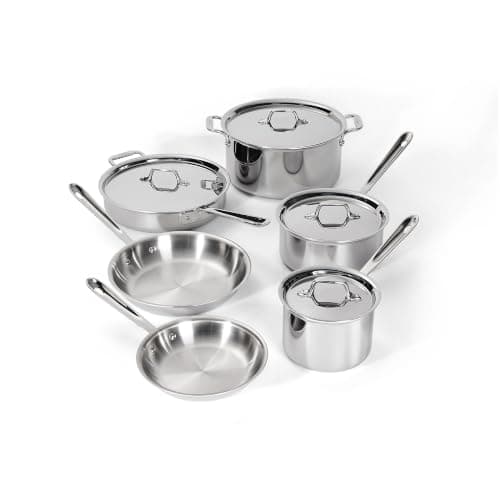
All-Clad D3 10-Piece: bare tri-ply stainless
From Best stainless steel cookware sets, compared piece by piece