Explainer
Why is Le Creuset so expensive, and is it worth it
Published
Short answer
Le Creuset costs more because each cast iron body is poured into a single-use sand mold in France, finished by hand, and coated in several layers of enamel, then backed by a lifetime limited warranty. Cheaper enameled pots cook much the same on day one; the difference shows up in enamel durability, consistency and resale value over many years of use.
Cookware for this job
All 7 picks compared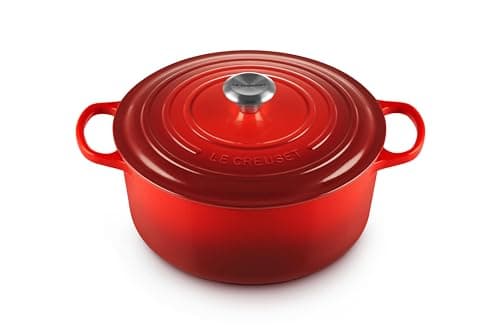
Le Creuset Round 7.25 qt: room for big batches
See price on AmazonSee it on Amazon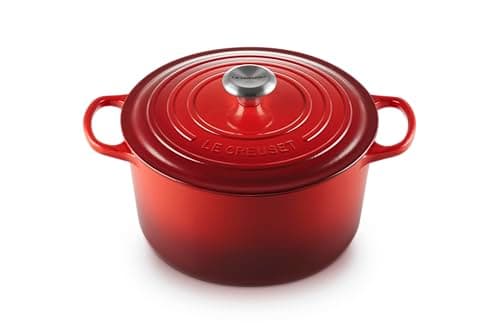
Le Creuset Signature Deep Round 6.5 qt: tall sides
See price on AmazonSee it on Amazon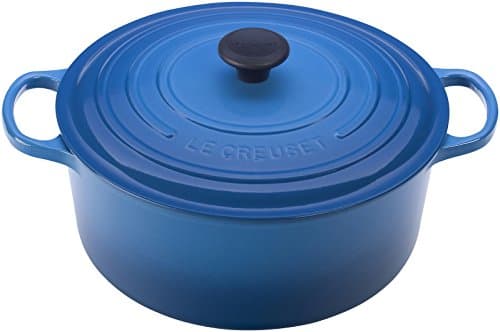
Le Creuset Signature Round 9 qt: the crowd pot
See price on AmazonSee it on Amazon
A Le Creuset Dutch oven can cost several times as much as an enameled pot from a budget brand, and both look similar on the shelf. This page is for home cooks deciding whether the premium is worth it. We explain how the pots are made, where the cost goes, what you get that a cheaper pot may not give you, and the cases where a less expensive enameled pot is the sensible buy. We stick to production methods and warranty terms the maker describes, and we do not claim to have measured anything ourselves.
How a Le Creuset Dutch oven is made
Le Creuset casts its enameled cast iron at its foundry in northern France. Molten iron is poured into sand molds, and each mold is broken apart to release the casting, so a new mold is made for every pot. After casting, the rough body is cleaned, ground and checked by hand before any enamel goes on.
The enamel is a glass-based coating fused to the iron at high temperature. Le Creuset applies more than one coat, firing the pot between coats, to build a smooth, even layer inside and out. Pots are inspected along the way, and pieces with flaws are rejected or sold as seconds. Each of these steps takes labor and time that a high-volume factory can cut.
Where the money goes
Several costs stack up in the price of a premium enameled pot. None of them on its own explains the gap, but together they do.
- Single-use sand molds and hand finishing, which take more labor per pot than automated production.
- Multiple enamel coats with firing between each, which builds a more durable finish.
- Production in France, where labor and energy cost more than in the countries where most budget pots are made.
- Quality control and rejects, since pots with visible flaws do not go out as first quality.
- A lifetime limited warranty on enameled cast iron, which the price has to cover.
- Brand, color range and retail markup, which are real parts of the price of any premium product.
Le Creuset vs cheaper enameled cast iron
On the first day, a budget enameled Dutch oven will braise a stew about as well as a Le Creuset. Cast iron is cast iron, and the heat behavior comes mostly from the thickness and mass of the pot. The differences show up later and in the details: how well the enamel holds up to years of heating and cooling, how smooth and even the interior is, how well the lid fits, and how the maker handles a warranty claim.
Enamel chipping and crazing are the most common complaints about cheap enameled pots. A thicker, well-fired enamel layer is more resistant, though no enamel is chip-proof. Our chipped enamel Dutch oven article explains what to do if it happens. For a direct comparison with a lower-priced brand, see Le Creuset vs Lodge.
Heat behavior
- Premium (Le Creuset, Staub)
- Steady, even
- Budget enameled
- Similar for the same thickness
Enamel
- Premium (Le Creuset, Staub)
- Multiple fired coats
- Budget enameled
- Varies by maker
Fit and finish
- Premium (Le Creuset, Staub)
- Consistent lid fit and interior
- Budget enameled
- More variation
Warranty
- Premium (Le Creuset, Staub)
- Lifetime limited (check terms)
- Budget enameled
- Shorter or limited
Resale value
- Premium (Le Creuset, Staub)
- Holds value well
- Budget enameled
- Low
| Factor | Premium (Le Creuset, Staub) | Budget enameled |
|---|---|---|
| Heat behavior | Steady, even | Similar for the same thickness |
| Enamel | Multiple fired coats | Varies by maker |
| Fit and finish | Consistent lid fit and interior | More variation |
| Warranty | Lifetime limited (check terms) | Shorter or limited |
| Resale value | Holds value well | Low |
Is Le Creuset worth it
It is worth it if you cook in a Dutch oven every week, want one pot that lasts for decades, and value an even interior that is easy to clean and see through while browning. The pale interior enamel makes it easier to judge fond and avoid burning, which is a real advantage when you sear before braising.
It is less worth it if you braise a few times a year, plan to use the pot mostly for bread at high heat (which can stain or wear the enamel), or are on a tight budget. In those cases a good budget enameled pot or a bare cast iron Dutch oven does the job. If you want a premium pot at a lower price, watch for seasonal sales; our when does Le Creuset go on sale page covers the usual patterns.
Le Creuset vs Staub for the price
Staub sits in the same price range and is also cast in France. The main differences are the interior and the lid. Staub uses a dark, slightly textured matte enamel inside, which hides stains and handles high-heat searing well. Le Creuset uses a light, glossy interior enamel that shows browning clearly. Staub lids have self-basting spikes underneath, and Staub's metal knob is rated to 500°F by the maker. Le Creuset's older black phenolic knob is rated to 390°F, so check which knob your pot has before baking bread.
Neither is clearly better; it comes down to which interior and lid you prefer. Our Staub vs Le Creuset comparison goes deeper, and our best Staub Dutch ovens guide lists the models worth buying.
How to get the most from an expensive pot
Premium enamel lasts longest with gentle handling. Heat the pot gradually on medium, avoid heating it empty on high, use wooden or silicone tools, and let it cool before washing. Do not plunge a hot pot into cold water. Stains from oil and browned food are normal and can be lifted; see why your enameled Dutch oven is turning brown and how to clean Le Creuset.
Keep the receipt and register the pot if the maker offers it. Warranty terms vary by country and exclude misuse, so check the maker's care page and warranty terms before you need them.
Frequently asked questions
Why are Dutch ovens so expensive in general? Cast iron pots are heavy, take a lot of metal and energy to make, and enameled ones need extra coating and firing steps. Premium brands add hand finishing and warranties on top.
Does Le Creuset cook better than a cheap Dutch oven? For most dishes the food will taste the same. The difference is in how long the enamel lasts, the consistency of the finish and the warranty behind it.
Is Le Creuset still made in France? The enameled cast iron is cast in France. Some other Le Creuset lines, such as stoneware and stainless steel, are made elsewhere, so check the label on the piece you buy.
Does Le Creuset hold its value? Used Le Creuset pots in good condition often resell well, which offsets part of the higher price if you ever sell it.
What you need for this
- See price on AmazonAmazon
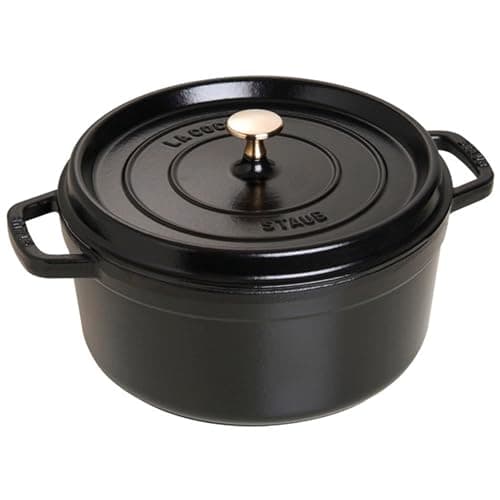
Le Creuset 7.25 qt Round: the family-size classic
From Best Le Creuset Dutch ovens: which shape and size to buy
 See price on AmazonAmazon
Staub 5.5 qt Round Cocotte: spiked lid, 900°F base limit
From Best Dutch ovens for home cooks: enameled and stainless picks
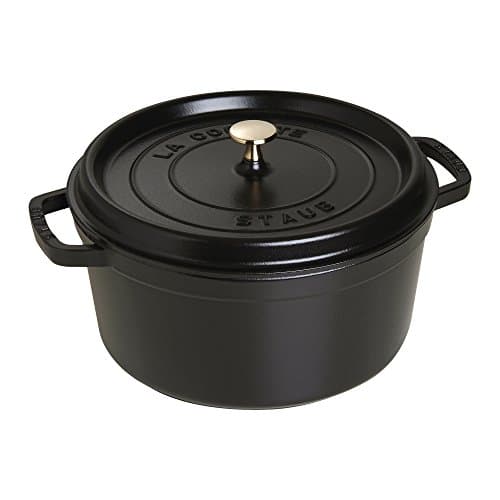 See price on AmazonAmazon
Staub 7 qt Round: spiked lid, serves 7-8
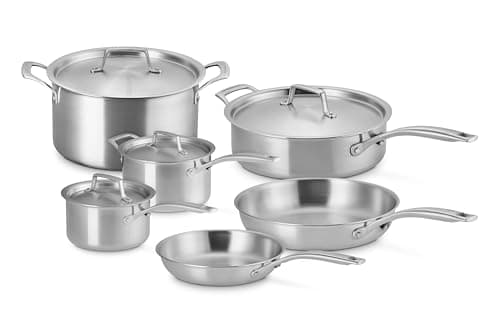 See price on AmazonAmazon
Le Creuset Essential Stainless 10-Piece: dishwasher, metal utensils
From Best Le Creuset cookware sets: enameled, stainless and nonstick