Comparison
Staub vs Le Creuset: which Dutch oven should you buy
Published
Short answer
Both make excellent enameled cast iron, so the choice comes down to the interior and the lid. Staub has a black matte enamel interior made for browning and a heavy lid with spikes that drip juices back onto food. Le Creuset has a light, smooth interior that makes it easy to watch fond and doneness. At 5.5 quarts the two are priced almost the same, so pick the interior you prefer to cook on.
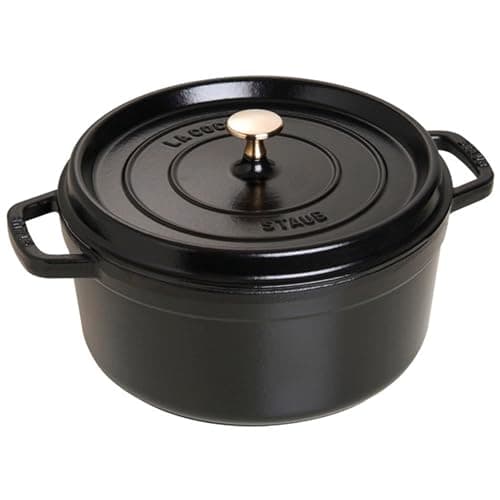
STAUB
Staub 5.5 qt Round Cocotte: spiked lid, 900°F base limit
See price on Amazon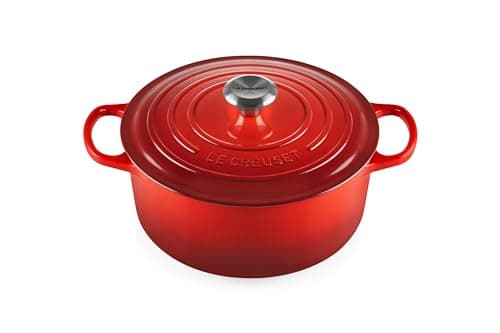
Le Creuset
Le Creuset 5.5 qt Round: light enamel, 500°F oven limit
See price on Amazon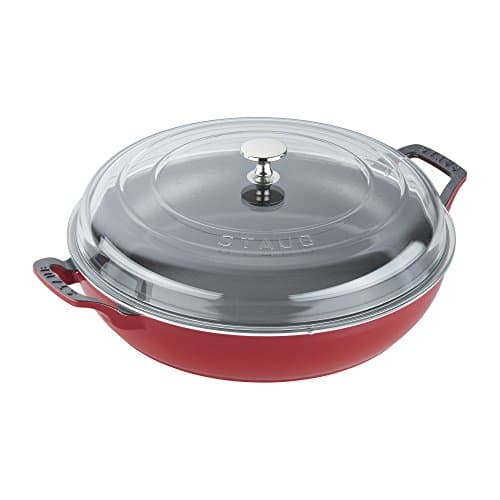
STAUB
Staub 3.5 qt Braiser with Glass Lid: 500°F, all stovetops
See price on Amazon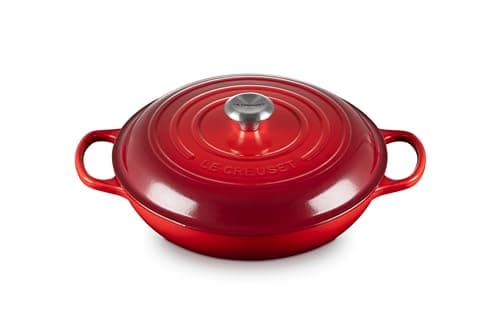
Le Creuset
Le Creuset Signature Braiser 3.5 qt: the classic
See price on Amazon
- Staub 5.5 qt Round Cocotte: spiked lid, 900°F base limit
- Material
- Enameled cast iron
- Capacity
- 5.5 qt
- Oven-safe to
- 900°F without lid, lid to 500°F
- Induction
- Yes
- Le Creuset 5.5 qt Round: light enamel, 500°F oven limit
- Material
- Enameled cast iron
- Capacity
- 5.5 qt
- Oven-safe to
- 500°F
- Induction
- Yes (all cooktops)
- Staub 3.5 qt Braiser with Glass Lid: 500°F, all stovetops
- Material
- Enameled cast iron
- Capacity
- 3.5 qt
- Oven-safe to
- 500°F
- Induction
- All stovetops per listing
- Le Creuset Signature Braiser 3.5 qt: the classic
- Material
- Enameled cast iron
- Capacity
- 3.5 qt
- Oven-safe to
- Not stated
- Induction
- Not stated
| Pick | Material | Capacity | Oven-safe to | Induction | Price | Link |
|---|---|---|---|---|---|---|
| Staub 5.5 qt Round Cocotte: spiked lid, 900°F base limit | Enameled cast iron | 5.5 qt | 900°F without lid, lid to 500°F | Yes | - | Amazon |
| Le Creuset 5.5 qt Round: light enamel, 500°F oven limit | Enameled cast iron | 5.5 qt | 500°F | Yes (all cooktops) | - | Amazon |
| Staub 3.5 qt Braiser with Glass Lid: 500°F, all stovetops | Enameled cast iron | 3.5 qt | 500°F | All stovetops per listing | - | Amazon |
| Le Creuset Signature Braiser 3.5 qt: the classic | Enameled cast iron | 3.5 qt | Not stated | Not stated | - | Amazon |
Facts are taken from each Amazon listing. Prices are checked daily and shown with their date.
Verdict
Buy the Staub 5.5 qt if you want a dark matte interior for browning, a self-basting lid and a confirmed 500°F oven rating. Buy the Le Creuset 5.5 qt if you want a light interior that shows what is cooking. For a braiser on a budget, the Staub 3.5 qt costs half as much as the Le Creuset Signature.
This page is for anyone deciding between a Staub cocotte and a Le Creuset Dutch oven, the two best known names in French enameled cast iron. It compares the 5.5 quart round pots side by side, then looks at the 3.5 quart braisers from each brand. It covers interior finish, lid design, knob and oven limits, sizes, care and price. Product facts come from the current listings, and oven limits come only from figures confirmed on the makers' own pages.
Staub vs Le Creuset at a glance
Both pots are cast iron coated in enamel, both work on every cooktop including induction, and neither needs seasoning before first use. The real differences are the color and texture of the cooking surface, how the lid handles moisture, and which knob sits on top. Price is close at the family size. The table below uses only what each listing states.
If you already know you want one brand, our guides to the best Staub Dutch ovens and the best Le Creuset Dutch ovens go size by size.
Price at listing
- Staub 5.5 qt Round Cocotte
- $299.97
- Le Creuset 5.5 qt Round Dutch Oven
- $299.98
Interior
- Staub 5.5 qt Round Cocotte
- Textured black matte enamel
- Le Creuset 5.5 qt Round Dutch Oven
- Light colored smooth enamel
Lid
- Staub 5.5 qt Round Cocotte
- Heavy, tight-fitting, with spikes that return juices
- Le Creuset 5.5 qt Round Dutch Oven
- Tight-fitting, designed to circulate steam and return moisture
Cooktops
- Staub 5.5 qt Round Cocotte
- All, including induction
- Le Creuset 5.5 qt Round Dutch Oven
- All cooktops
Seasoning
- Staub 5.5 qt Round Cocotte
- Not stated in listing
- Le Creuset 5.5 qt Round Dutch Oven
- Requires no seasoning
Dishwasher
- Staub 5.5 qt Round Cocotte
- Dishwasher safe, hand washing recommended
- Le Creuset 5.5 qt Round Dutch Oven
- Safe for dishwasher
Made in
- Staub 5.5 qt Round Cocotte
- France
- Le Creuset 5.5 qt Round Dutch Oven
- Not stated in listing
| Feature | Staub 5.5 qt Round Cocotte | Le Creuset 5.5 qt Round Dutch Oven |
|---|---|---|
| Price at listing | $299.97 | $299.98 |
| Interior | Textured black matte enamel | Light colored smooth enamel |
| Lid | Heavy, tight-fitting, with spikes that return juices | Tight-fitting, designed to circulate steam and return moisture |
| Cooktops | All, including induction | All cooktops |
| Seasoning | Not stated in listing | Requires no seasoning |
| Dishwasher | Dishwasher safe, hand washing recommended | Safe for dishwasher |
| Made in | France | Not stated in listing |
Interior finish: black matte vs light enamel
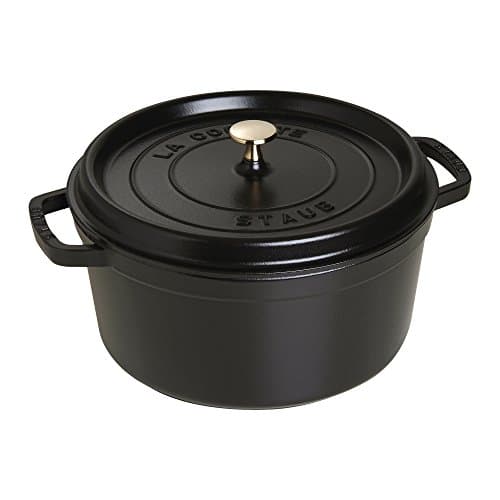
This is the biggest practical difference. Staub lines its cocottes with a textured black matte enamel. The listing says it gives exceptional browning and is more resistant to scratches and chips. The dark color hides staining well, and many cooks find the texture good for searing meat before a braise.
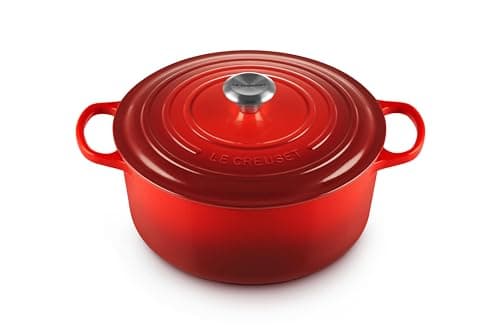
Le Creuset uses a light colored, smooth interior enamel. The listing points out the benefit plainly: it lets you monitor cooking progress. On a pale surface you can see the fond building up, tell when onions are turning golden, and catch scorching before it spreads. Pale enamel does show stains over time, which is cosmetic. If yours is discoloring, see why an enameled Dutch oven turns brown and how to clean Le Creuset.
Neither interior is nonstick in the way a coated pan is. Both need a little fat and proper preheating, and both reward patience when browning. If you mostly make stews and want to see what is happening, the light interior is easier. If you sear hard and want a surface that hides wear, the matte black interior suits you.
Lid design and moisture
Staub's lid is heavy and has spikes on the underside. Steam condenses on the spikes and drips back evenly over the food, which the listing calls a rain-forest effect. The lid sits flat and tight, so long braises lose little liquid.
Le Creuset's lid is also tight-fitting and designed to circulate steam and return moisture to the food. It has a smooth, domed underside rather than spikes. In practice both keep a braise moist for hours. If you like to reduce sauces with the lid cracked, either works fine. The difference shows most in very long, low oven braises, where Staub's design is built to baste the top of the food.
Knobs and oven limits
With enameled cast iron the iron and enamel are rarely the limit in a home oven. The knob is. Staub rates its cocottes with metal knobs oven safe to 500°F on its own pages. That clears a typical 450°F bread bake with room to spare.
Le Creuset is more complicated because the knob depends on the line and age of the pot. Older pots with the black phenolic knob are rated to 390°F on Le Creuset's care page, which is below most bread recipes. Newer Signature pots use a different composite knob, and Le Creuset pages we could read give different figures for it, so check the label on your pot or the maker's current care page. A stainless steel knob is the usual swap for high heat baking.
Our oven temperature limit checker works out the limit for a whole pot from its parts, and our guide to cookware oven temperature limits explains the rule: the lowest rated part sets the limit.
Note.Lids with glass, like some braisers, usually carry a lower oven limit than the pot itself. Check the maker figure for the lid before baking.
Sizes and shapes
Both brands number round pots by diameter in centimeters, but the capacities do not always match. A size 26 is 5.5 quarts from both makers. At 24 cm, Le Creuset is 4.5 quarts and Staub is 4 quarts. At 28 cm, Le Creuset is 7.25 quarts and Staub is 7 quarts. Size 30 is 9 quarts for both.
For a household of three or four, 5.5 quarts is the usual pick. Use our Dutch oven size picker to match the size to how many you cook for, and see the Le Creuset size chart and Staub size chart for every shape. Both pots are heavy cast iron, so if lifting is a concern, check the Dutch oven weight chart before you pick a large size.
Staub vs Le Creuset braiser
People also compare the two brands for a braiser, the wide, shallow pot made for searing and then simmering in a little liquid. The listed Staub braiser is 3.5 quarts with a glass lid and the same black matte enamel interior. The listed Le Creuset Signature braiser is also 3.5 quarts, with the light smooth interior and a cast iron lid designed to return moisture.
The Staub braiser is listed at $199.95 and the Le Creuset Signature braiser at $399.95, a much bigger gap than at the Dutch oven size. The glass lid on the Staub lets you watch a braise without lifting it. For more on which shape you need, see Dutch oven vs braiser, and for more options see the best braisers.
Price at listing
- Staub 3.5 qt Braiser
- $199.95
- Le Creuset Signature 3.5 qt Braiser
- $399.95
Interior
- Staub 3.5 qt Braiser
- Black matte enamel
- Le Creuset Signature 3.5 qt Braiser
- Light colored smooth enamel
Lid
- Staub 3.5 qt Braiser
- Glass
- Le Creuset Signature 3.5 qt Braiser
- Tight-fitting, returns moisture
Cooktops
- Staub 3.5 qt Braiser
- All stovetops
- Le Creuset Signature 3.5 qt Braiser
- Not stated in listing
Made in
- Staub 3.5 qt Braiser
- France
- Le Creuset Signature 3.5 qt Braiser
- Not stated in listing
| Feature | Staub 3.5 qt Braiser | Le Creuset Signature 3.5 qt Braiser |
|---|---|---|
| Price at listing | $199.95 | $399.95 |
| Interior | Black matte enamel | Light colored smooth enamel |
| Lid | Glass | Tight-fitting, returns moisture |
| Cooktops | All stovetops | Not stated in listing |
| Made in | France | Not stated in listing |
Care and durability
Both brands say their pots can go in the dishwasher, and Staub recommends hand washing. Hand washing is kinder to enamel over many years. Avoid heating an empty pot on high, use wooden or silicone tools, and let a hot pot cool before washing it in cold water. A chip in the enamel is the most common way these pots get damaged; see chipped enamel Dutch oven for what to do if it happens.
Le Creuset says its enamel resists dulling, staining, chipping and cracking. Staub says its matte interior is more resistant to scratches and chips. Both are built to last a long time with normal care. If you are weighing price more broadly, see why Le Creuset is so expensive and when Le Creuset goes on sale.
Frequently asked questions
Is Staub or Le Creuset better? Neither is better across the board. Staub suits cooks who sear hard and want a dark interior that hides wear. Le Creuset suits cooks who want to see the fond and the color of their food on a light interior.
Is Staub heavier than Le Creuset? Both are heavy enameled cast iron, and the Staub listing notes its heavy weight lid. Weight varies by size and shape, so compare the exact pots on our Dutch oven weight chart.
Can I bake bread in either one? Yes, as long as the knob is rated for your oven temperature. Staub rates its cocottes with metal knobs to 500°F. On a Le Creuset, check the knob first, since the older phenolic knob is rated to 390°F. See Dutch oven for sourdough.
Do Staub and Le Creuset need seasoning? No. Le Creuset says its pots need no seasoning, and enameled cast iron in general does not. See does Le Creuset need seasoning.
What you need for this
 See price on AmazonAmazon
Staub 7 qt Round: spiked lid, serves 7-8
 See price on AmazonAmazon
Le Creuset 7.25 qt Round: the family-size classic
From Best Le Creuset Dutch ovens: which shape and size to buy
- See price on AmazonAmazon
Staub 5.5 qt Round Cocotte: spiked lid, 900°F base limit
From Best Dutch ovens for home cooks: enameled and stainless picks
 See price on AmazonAmazon
Hestan ProBond Luxe 6 qt Rondeau: big and dishwasher safe