Comparison
All-Clad HA1 vs NS Pro nonstick
Published
Short answer
HA1 is All-Clad's hard anodized aluminum nonstick line with a stainless steel base for induction, a PTFE coating, a 500°F oven rating and dishwasher-safe care per its listing. NS Pro is another All-Clad nonstick line, but it is not in the listings we draw from, so we cannot give its specs. The closest listed alternative is HA1 Ceramic, which swaps the PTFE coating for a ceramic one. Buy HA1 for a proven PTFE set at a lower price; compare NS Pro's box specs against the checklist below.
All-Clad
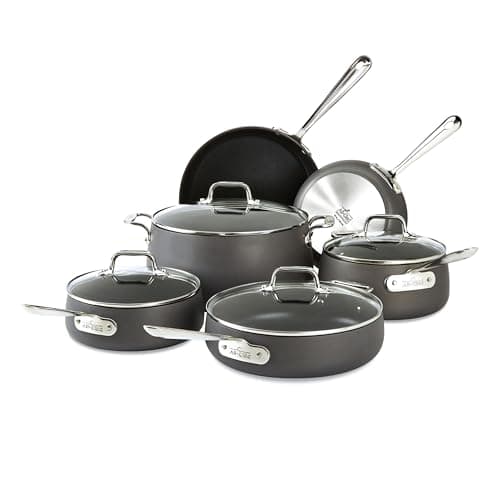
All-Clad HA1 10-Piece: 6 pans incl. 8 qt stockpot
See price on Amazon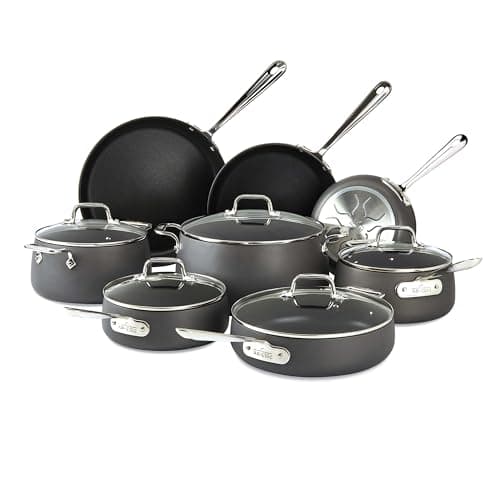
All-Clad
All-Clad HA1 13-Piece: best PTFE nonstick set
See price on Amazon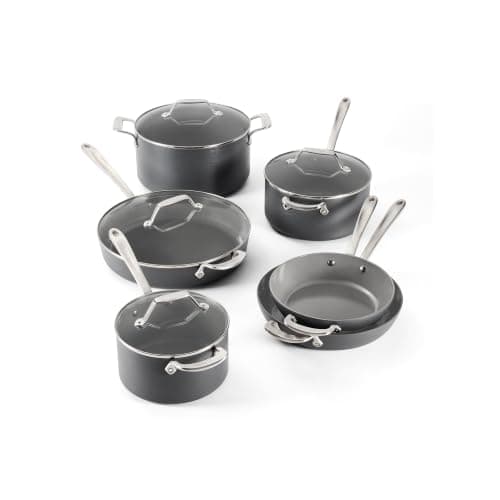
All-Clad
All-Clad HA1 Ceramic 10-Piece: 6 pans, hand wash
See price on Amazon
- All-Clad HA1 10-Piece: 6 pans incl. 8 qt stockpot
- Pieces
- 10 (6 pans, 4 lids)
- Oven-safe to
- 500°F, glass lids 350°F
- Induction
- Yes
- Dishwasher
- Yes
- All-Clad HA1 13-Piece: best PTFE nonstick set
- Pieces
- 13: 8, 10 and 12 in fry pans, 2 and 3 qt saucepans, 4 qt saute, 4 qt soup pot, 8 qt stockpot, lids
- Oven-safe to
- 500°F (glass lids 350°F)
- Induction
- Yes
- Dishwasher
- -
- All-Clad HA1 Ceramic 10-Piece: 6 pans, hand wash
- Pieces
- -
- Oven-safe to
- 450°F, glass lids 350°F
- Induction
- Yes
- Dishwasher
- No, hand wash only
| Pick | Pieces | Oven-safe to | Induction | Dishwasher | Price | Link |
|---|---|---|---|---|---|---|
| All-Clad HA1 10-Piece: 6 pans incl. 8 qt stockpot | 10 (6 pans, 4 lids) | 500°F, glass lids 350°F | Yes | Yes | - | Amazon |
| All-Clad HA1 13-Piece: best PTFE nonstick set | 13: 8, 10 and 12 in fry pans, 2 and 3 qt saucepans, 4 qt saute, 4 qt soup pot, 8 qt stockpot, lids | 500°F (glass lids 350°F) | Yes | - | - | Amazon |
| All-Clad HA1 Ceramic 10-Piece: 6 pans, hand wash | - | 450°F, glass lids 350°F | Yes | No, hand wash only | - | Amazon |
Facts are taken from each Amazon listing. Prices are checked daily and shown with their date.
Verdict
Buy the All-Clad HA1 10-piece for induction-ready PTFE nonstick at the lowest price, or the 13-piece if you want the 12 inch fry pan. NS Pro is not in our listings; HA1 Ceramic is the closest listed alternative, and suits buyers who want a ceramic coating and accept hand washing and a higher price.
This page is for shoppers comparing All-Clad's nonstick lines, especially HA1 and NS Pro. All-Clad NS Pro is not among the products we list, so instead of guessing its specs, we compare the listed HA1 sets with the closest listed alternative, HA1 Ceramic, and give a checklist for reading any NS Pro listing. We cover the base, coating, induction support, oven limits, care, set contents and price. Facts come only from the current listings and from oven figures confirmed on All-Clad's own pages.
What we can and cannot compare
Both HA1 and NS Pro are nonstick lines from All-Clad, made for everyday eggs, fish and pancakes rather than the hard searing All-Clad's stainless lines are known for. Because NS Pro is not in our listings, we do not state its base, coating or oven rating. Specs change between versions, and a wrong number is worse than none.
What we can do is show what HA1 offers in detail, and set it beside HA1 Ceramic, the closest other All-Clad nonstick line we list. That gives you a clear benchmark. When you look at an NS Pro listing, check the same rows: base, coating type, induction, oven limit, lid limit, dishwasher care and warranty.
HA1 vs HA1 Ceramic at a glance
The HA1 10-piece and 13-piece share the same build and differ only in what comes in the box. HA1 Ceramic changes the coating and some details of the handles and care.
Price at listing
- HA1 10-pc
- $380.01
- HA1 13-pc
- $555.50
- HA1 Ceramic 10-pc
- $649.95
Body
- HA1 10-pc
- Heavy gauge hard anodized aluminum
- HA1 13-pc
- Heavy gauge hard anodized aluminum
- HA1 Ceramic 10-pc
- Recycled aluminum, hard anodized
Base
- HA1 10-pc
- Stainless steel
- HA1 13-pc
- Stainless steel
- HA1 Ceramic 10-pc
- Stainless steel
Coating
- HA1 10-pc
- PTFE nonstick
- HA1 13-pc
- PTFE nonstick
- HA1 Ceramic 10-pc
- Ceramic nonstick
Induction
- HA1 10-pc
- Yes
- HA1 13-pc
- Yes
- HA1 Ceramic 10-pc
- Yes
Oven limit (pan)
- HA1 10-pc
- 500°F (maker page)
- HA1 13-pc
- 500°F (maker page)
- HA1 Ceramic 10-pc
- Check All-Clad's care page
Glass lids
- HA1 10-pc
- 350°F
- HA1 13-pc
- 350°F
- HA1 Ceramic 10-pc
- 350°F
Care
- HA1 10-pc
- Dishwasher safe
- HA1 13-pc
- Dishwasher safe
- HA1 Ceramic 10-pc
- Hand wash only
Made in
- HA1 10-pc
- China, designed in PA
- HA1 13-pc
- China, designed in PA
- HA1 Ceramic 10-pc
- Not stated in listing
Warranty in listing
- HA1 10-pc
- Not stated
- HA1 13-pc
- Not stated
- HA1 Ceramic 10-pc
- 1 year limited
| Feature | HA1 10-pc | HA1 13-pc | HA1 Ceramic 10-pc |
|---|---|---|---|
| Price at listing | $380.01 | $555.50 | $649.95 |
| Body | Heavy gauge hard anodized aluminum | Heavy gauge hard anodized aluminum | Recycled aluminum, hard anodized |
| Base | Stainless steel | Stainless steel | Stainless steel |
| Coating | PTFE nonstick | PTFE nonstick | Ceramic nonstick |
| Induction | Yes | Yes | Yes |
| Oven limit (pan) | 500°F (maker page) | 500°F (maker page) | Check All-Clad's care page |
| Glass lids | 350°F | 350°F | 350°F |
| Care | Dishwasher safe | Dishwasher safe | Hand wash only |
| Made in | China, designed in PA | China, designed in PA | Not stated in listing |
| Warranty in listing | Not stated | Not stated | 1 year limited |
Base and induction support
Aluminum on its own does not work on induction, because it is not magnetic. HA1 solves this with a stainless steel base bonded to the heavy gauge aluminum body. The listing says the aluminum and stainless base deliver even heat, and that HA1 is compatible with any stovetop, including induction.
HA1 Ceramic uses the same approach. Its listing describes an optimized stainless steel base for durability and warp resistance and says it is safe on all stovetops, including induction. Any nonstick pan you consider for induction should state induction support clearly on the listing or the base. See induction compatible cookware for a quick magnet test and what to look for.
Coating: PTFE vs ceramic
HA1 uses PTFE nonstick, which the listing describes as long-lasting with easy release. HA1 Ceramic uses a ceramic nonstick interior, and its listing says the hard anodized build offers up to twice the scratch resistance of standard aluminum. The two coatings behave differently in daily use: PTFE is known for very easy release at moderate heat, and ceramic coatings are often chosen by people who want a PTFE-free pan.
Both coatings wear over time, and how you treat the pan matters more than the brand. All-Clad's HA1 listing advises soap and a sponge and silicone, nylon or wooden utensils to preserve the nonstick. For the differences in more depth, read PTFE vs ceramic nonstick, and for signs a pan is done, see when to replace nonstick pans.
Note.Preheat nonstick on low to medium with a little fat in the pan. High heat on an empty pan shortens the life of any coating.
Oven limits and lids
All-Clad's care page rates HA1 nonstick pans oven safe to 500°F, and says they should not go under the broiler. The tempered glass lids are rated to 350°F, which is the same figure All-Clad gives for its glass lids generally. So a covered HA1 pan is limited to 350°F, and an uncovered one to 500°F.
We have not confirmed an oven figure for HA1 Ceramic on All-Clad's page, so check the care information that comes with it. Its glass lids are listed at 350°F. Our oven temperature limit checker shows how the lid or handle can set the limit for the whole piece.
Set contents and price
The HA1 10-piece includes 8 and 10 inch fry pans, 2.5 and 3.5 qt covered saucepans, a 4 qt covered saute pan and an 8 qt covered stockpot. The 13-piece adds a 12 inch fry pan and a 4 qt covered soup pot, with 2 and 3 qt saucepans. The HA1 Ceramic 10-piece includes 8.5 and 10.5 inch fry pans, 2.5 and 4 qt saucepans with lids, a 4 qt saute pan with lid and a 7 qt stockpot with lid.
At the listed prices, the HA1 10-piece is the value pick. The 13-piece is worth it mainly for the 12 inch fry pan, which is the pan many cooks use most. HA1 Ceramic costs the most of the three. For other options, see the best nonstick cookware sets and the best ceramic cookware sets.
How to judge NS Pro against HA1
Use HA1 as the benchmark and read the NS Pro listing for the same points. If NS Pro matches HA1 on base, coating and oven rating, choose on price, set contents and handle feel. If it differs, decide which difference matters to your cooking.
- 1
Check the base: does it have a bonded stainless steel base, and does the listing say induction compatible?
- 2
Check the coating: PTFE or ceramic, and what the maker says about utensils.
- 3
Check the oven limit for the pan and, separately, for the lid.
- 4
Check care: dishwasher safe or hand wash only.
- 5
Check the warranty terms on the listing or All-Clad's site.
- 6
Compare set contents piece by piece, not by the piece count, since lids count as pieces.
Frequently asked questions
Is All-Clad HA1 induction compatible? Yes. The listing says HA1 has a stainless steel base and works on any stovetop, including induction.
Can All-Clad HA1 go in the oven? Yes, to 500°F per All-Clad's care page, but not under the broiler. The glass lids are rated to 350°F.
Is HA1 dishwasher safe? The HA1 listing says it is dishwasher safe, but All-Clad advises soap and a sponge to preserve the nonstick. HA1 Ceramic is hand wash only.
Should I buy nonstick or All-Clad stainless? Most kitchens benefit from both: one nonstick pan for eggs and delicate fish, and stainless for searing. See stainless steel vs nonstick.
What you need for this
 See price on AmazonAmazon
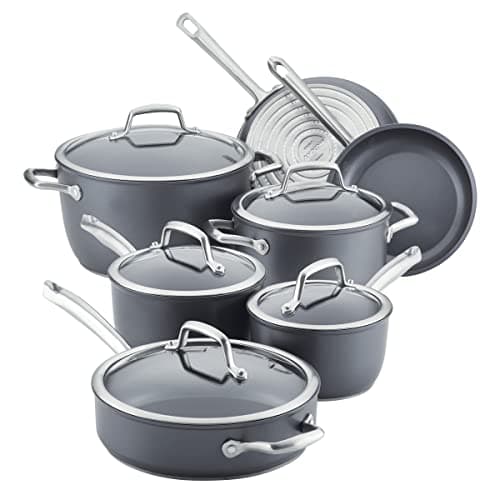
Anolon Accolade 12-Piece: forged, flush rivets
From Best nonstick cookware sets: hard anodized and clad picks
 See price on AmazonAmazon
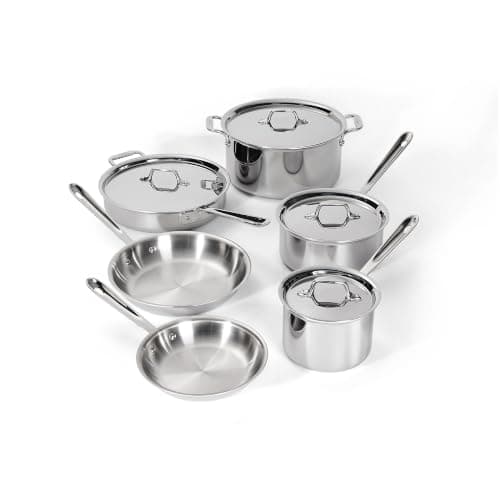
All-Clad D3 10-Piece: bare tri-ply stainless
From Best All-Clad cookware: D3, D5, Copper Core and HA1 picks
 See price on AmazonAmazon
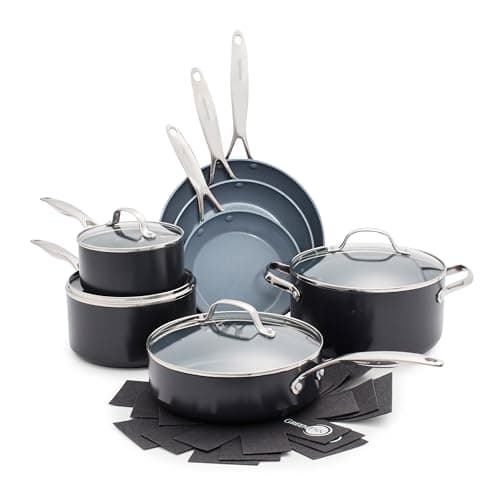
GreenPan Valencia Pro 11-Piece: ceramic, 600°F
From Best ceramic nonstick cookware sets by oven limit and build