Comparison
Stainless steel vs nonstick pans
Published
Short answer
Stainless steel is better for searing, browning, pan sauces and high heat, and with care it can last for decades because there is no coating to wear out. Nonstick is better for eggs, pancakes, delicate fish and low-fat cooking, but its coating wears over time and the pan eventually needs replacing. Most kitchens do best with mostly stainless plus one or two nonstick pans.
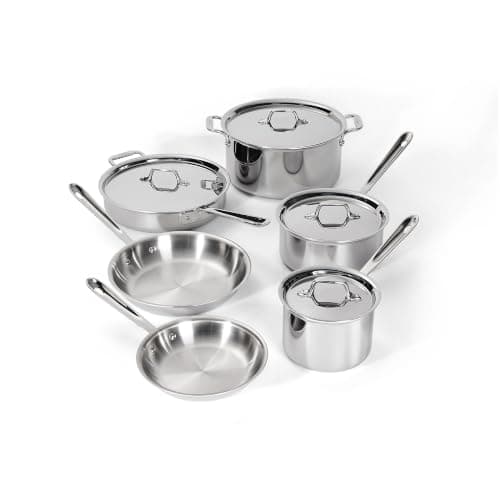
All-Clad
All-Clad D3 10-Piece: bare tri-ply stainless
See price on Amazon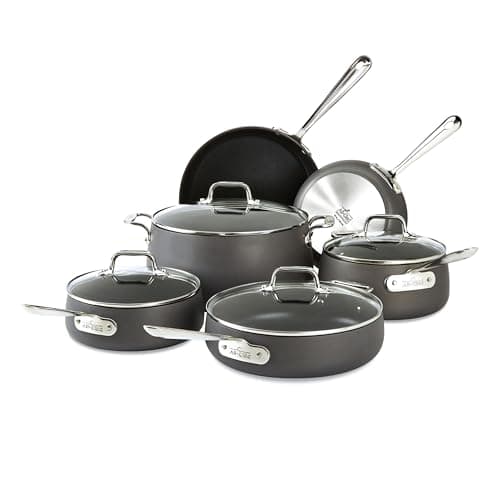
All-Clad
All-Clad HA1 10-Piece: 6 pans incl. 8 qt stockpot
See price on Amazon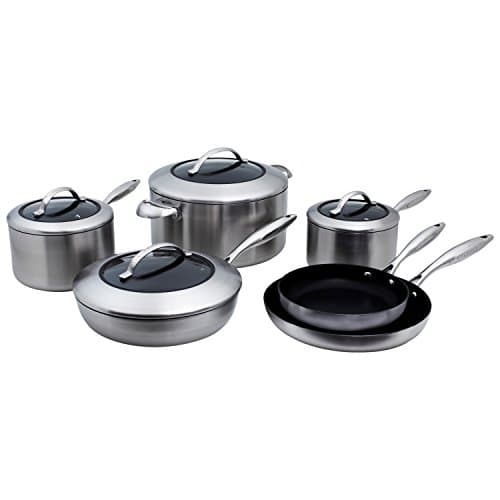
Scanpan
Scanpan CTX 10-Piece: 5-ply clad nonstick, made in Denmark
See price on Amazon
- All-Clad D3 10-Piece: bare tri-ply stainless
- Pieces
- 10: 8 and 10 in fry pans, 2 and 3 qt saucepans, 3 qt saute, 8 qt stockpot
- Oven-safe to
- 600°F
- Induction
- Yes
- Construction
- -
- All-Clad HA1 10-Piece: 6 pans incl. 8 qt stockpot
- Pieces
- 10 (6 pans, 4 lids)
- Oven-safe to
- 500°F, glass lids 350°F
- Induction
- Yes
- Construction
- Hard anodized aluminum, stainless base, PTFE
- Scanpan CTX 10-Piece: 5-ply clad nonstick, made in Denmark
- Pieces
- 10
- Oven-safe to
- Not stated
- Induction
- Yes
- Construction
- 5-ply clad, stainless exterior
| Pick | Pieces | Oven-safe to | Induction | Construction | Price | Link |
|---|---|---|---|---|---|---|
| All-Clad D3 10-Piece: bare tri-ply stainless | 10: 8 and 10 in fry pans, 2 and 3 qt saucepans, 3 qt saute, 8 qt stockpot | 600°F | Yes | - | - | Amazon |
| All-Clad HA1 10-Piece: 6 pans incl. 8 qt stockpot | 10 (6 pans, 4 lids) | 500°F, glass lids 350°F | Yes | Hard anodized aluminum, stainless base, PTFE | - | Amazon |
| Scanpan CTX 10-Piece: 5-ply clad nonstick, made in Denmark | 10 | Not stated | Yes | 5-ply clad, stainless exterior | - | Amazon |
Facts are taken from each Amazon listing. Prices are checked daily and shown with their date.
Verdict
Buy the All-Clad D3 set if you want pans that sear, go in the oven to 600°F and last for decades. Buy the All-Clad HA1 set for affordable, induction-ready nonstick, or the Scanpan CTX if you want nonstick listed as metal-utensil safe. Most cooks do best with stainless plus one nonstick skillet.
This page is for cooks deciding between stainless steel and nonstick pans, or how to split a kitchen between them. It covers which jobs need a coating and which do not, heat and oven limits, care, how long each lasts and where carbon steel fits as a middle option. Examples are the All-Clad D3 stainless set, the All-Clad HA1 nonstick set and the Scanpan CTX set, with facts taken only from the current listings and oven limits only from figures confirmed on maker pages.
The short version
Food sticks to bare stainless at first, then releases once it browns. That sticking is what builds fond, the browned bits that make pan sauces. Nonstick is designed so food does not grip the surface at all. That is ideal for eggs and fish, but it also means less browning and no fond.
So the real question is not which is better, but which jobs you do most. If you sear meat, roast in the oven and make sauces, stainless does more. If you mostly cook eggs, pancakes and quick vegetables, a good nonstick pan is easier.
| Material | Braise | Sear | Sauce | Oven | Eggs |
|---|---|---|---|---|---|
| Enameled cast iron | good | fair | fair | good | poor |
| Clad stainless | fair | good | good | good | poor |
| Carbon steel | poor | good | poor | good | good |
| Bare cast iron | fair | good | poor | good | fair |
| Nonstick | poor | poor | fair | fair | good |
good fair poor
The listed sets side by side
For more options, see the best stainless steel cookware sets and the best nonstick cookware sets.
Price at listing
- All-Clad D3 10-pc (stainless)
- $799.95
- All-Clad HA1 10-pc (nonstick)
- $380.01
- Scanpan CTX 10-pc (nonstick)
- $599.95
Construction
- All-Clad D3 10-pc (stainless)
- Tri-ply, aluminum core
- All-Clad HA1 10-pc (nonstick)
- Hard anodized aluminum, stainless base
- Scanpan CTX 10-pc (nonstick)
- 5-ply
Cooking surface
- All-Clad D3 10-pc (stainless)
- Stainless steel
- All-Clad HA1 10-pc (nonstick)
- PTFE nonstick
- Scanpan CTX 10-pc (nonstick)
- Nonstick
Induction
- All-Clad D3 10-pc (stainless)
- Yes
- All-Clad HA1 10-pc (nonstick)
- Yes
- Scanpan CTX 10-pc (nonstick)
- Yes
Oven limit (maker)
- All-Clad D3 10-pc (stainless)
- 600°F
- All-Clad HA1 10-pc (nonstick)
- 500°F, not under the broiler
- Scanpan CTX 10-pc (nonstick)
- Check Scanpan's care page
Utensils
- All-Clad D3 10-pc (stainless)
- Not stated in listing
- All-Clad HA1 10-pc (nonstick)
- Silicone, nylon or wood
- Scanpan CTX 10-pc (nonstick)
- Metal-utensil safe
Care
- All-Clad D3 10-pc (stainless)
- Hand wash only
- All-Clad HA1 10-pc (nonstick)
- Dishwasher safe
- Scanpan CTX 10-pc (nonstick)
- Dishwasher safe
Warranty in listing
- All-Clad D3 10-pc (stainless)
- Limited lifetime
- All-Clad HA1 10-pc (nonstick)
- Not stated
- Scanpan CTX 10-pc (nonstick)
- Limited lifetime
Made in
- All-Clad D3 10-pc (stainless)
- USA
- All-Clad HA1 10-pc (nonstick)
- China
- Scanpan CTX 10-pc (nonstick)
- Denmark
| Feature | All-Clad D3 10-pc (stainless) | All-Clad HA1 10-pc (nonstick) | Scanpan CTX 10-pc (nonstick) |
|---|---|---|---|
| Price at listing | $799.95 | $380.01 | $599.95 |
| Construction | Tri-ply, aluminum core | Hard anodized aluminum, stainless base | 5-ply |
| Cooking surface | Stainless steel | PTFE nonstick | Nonstick |
| Induction | Yes | Yes | Yes |
| Oven limit (maker) | 600°F | 500°F, not under the broiler | Check Scanpan's care page |
| Utensils | Not stated in listing | Silicone, nylon or wood | Metal-utensil safe |
| Care | Hand wash only | Dishwasher safe | Dishwasher safe |
| Warranty in listing | Limited lifetime | Not stated | Limited lifetime |
| Made in | USA | China | Denmark |
Jobs that need a coating, and jobs that do not
A pattern stands out: nonstick wins for gentle, low-fat cooking of foods that stick. Stainless wins for almost everything else. That is why many cooks buy a stainless set and add a single 10 or 12 inch nonstick skillet for breakfast.
Fried and scrambled eggs, omelets
- Best pan
- Nonstick
- Why
- Releases with little fat and no sticking
Pancakes and crepes
- Best pan
- Nonstick
- Why
- Even release at moderate heat
Delicate fish fillets
- Best pan
- Nonstick
- Why
- Less risk of tearing the skin or flesh
Searing steak, chops, chicken
- Best pan
- Stainless
- Why
- Takes high heat and builds a crust
Pan sauces and gravy
- Best pan
- Stainless
- Why
- Fond forms on the surface and deglazes
Oven roasting and broiling
- Best pan
- Stainless
- Why
- Higher oven ratings, no coating to protect
Tomato and wine sauces
- Best pan
- Stainless
- Why
- Non-reactive and safe with metal whisks
Boiling pasta, stock
- Best pan
- Stainless
- Why
- No coating needed; tough and long lasting
| Job | Best pan | Why |
|---|---|---|
| Fried and scrambled eggs, omelets | Nonstick | Releases with little fat and no sticking |
| Pancakes and crepes | Nonstick | Even release at moderate heat |
| Delicate fish fillets | Nonstick | Less risk of tearing the skin or flesh |
| Searing steak, chops, chicken | Stainless | Takes high heat and builds a crust |
| Pan sauces and gravy | Stainless | Fond forms on the surface and deglazes |
| Oven roasting and broiling | Stainless | Higher oven ratings, no coating to protect |
| Tomato and wine sauces | Stainless | Non-reactive and safe with metal whisks |
| Boiling pasta, stock | Stainless | No coating needed; tough and long lasting |
Heat, oven use and utensils
Stainless handles high heat well. All-Clad rates D3 to 600°F in the oven. You can preheat a stainless pan empty and sear hard. See how to cook with stainless steel pans and why food sticks to stainless steel for the technique.
Nonstick needs gentler handling. All-Clad rates HA1 to 500°F in the oven, but not under the broiler, and its glass lids to 350°F. PTFE nonstick lines in general are rated somewhere from 400 to 500°F by their makers, and ceramic lines vary. Preheat nonstick on low to medium with a little fat, and avoid heating it empty on high. The HA1 listing recommends silicone, nylon or wooden utensils. Scanpan's CTX listing says that set is metal-utensil safe, which is an exception worth knowing. Our oven temperature limit checker gives the figure for each line.
How long each lasts
Fully clad stainless has no coating, so with normal care it can last for decades. Stains, rainbow tint and burnt-on food can all be cleaned. See stainless steel pan discoloration and how to clean a burnt stainless steel pan. The main risk is warping from thermal shock; see fix a warped pan.
Every nonstick coating wears with use. High heat, metal tools, abrasive scrubbers and the dishwasher can all speed that up, even on pans the maker labels dishwasher safe. When food starts to stick or the coating is scratched or flaking, it is time for a new pan. See when to replace nonstick pans. Because of this, many cooks spend more on stainless that lasts and less on nonstick that they expect to replace.
Note.Hand washing with a soft sponge is the simplest way to extend the life of any nonstick coating.
Where carbon steel fits
People who want a pan that releases eggs but takes high heat often look at carbon steel. Once seasoned, a carbon steel pan releases food well, handles searing heat, and has no factory coating to wear out. The trade-offs are that it must be seasoned and kept dry to avoid rust, and acidic sauces can strip the seasoning.
It is a good choice if you want one skillet to cover both jobs and do not mind the upkeep. See carbon steel vs stainless steel, carbon steel vs cast iron and the best carbon steel pans.
How to split your kitchen
A practical setup for most home cooks is a stainless set for searing, sauces, boiling and oven work, plus one nonstick skillet for eggs and fish. If you want to compare coatings, read PTFE vs ceramic nonstick. If you want one set that tries to blend both, see the best hybrid cookware sets and is HexClad worth it.
For a full walk-through of materials, see how to choose cookware.
Frequently asked questions
Are stainless steel pans better than nonstick? For searing, sauces, high heat and long life, yes. For eggs, pancakes and delicate fish, nonstick is easier. Most kitchens use both.
Can I use metal utensils on nonstick? Usually not. The All-Clad HA1 listing recommends silicone, nylon or wooden utensils. A few lines, such as Scanpan CTX, are listed as metal-utensil safe.
Do stainless steel pans need seasoning? No, though some cooks do it for eggs. See do you need to season stainless steel.
Is carbon steel better than nonstick? It takes higher heat and has no coating to wear out, but it needs seasoning and care. Nonstick is easier for low-fat cooking with no upkeep.
What you need for this
- See price on AmazonAmazon
All-Clad D3 10-Piece: bare tri-ply stainless
From Best stainless steel cookware sets, compared piece by piece
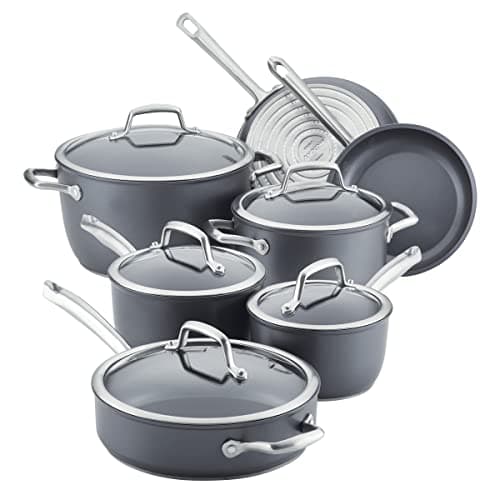 See price on AmazonAmazon
Anolon Accolade 12-Piece: forged, flush rivets
From Best nonstick cookware sets: hard anodized and clad picks
 See price on AmazonAmazon
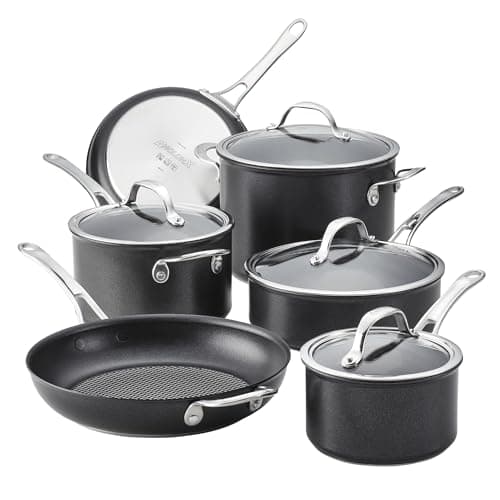
Anolon X 10-Piece: SearTech mesh, helper handles
 See price on AmazonAmazon
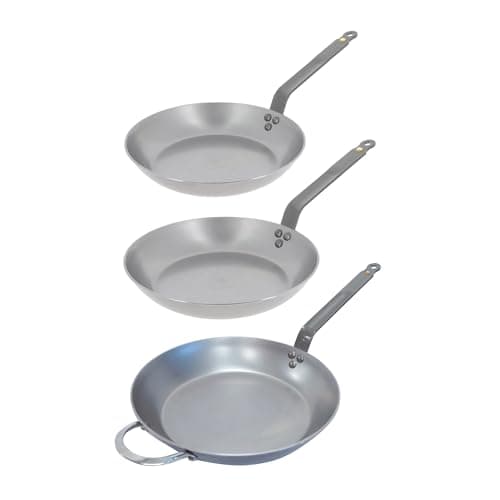
de Buyer Mineral B 3-Pan Set: best carbon steel