Comparison
HexClad vs All-Clad: hybrid or plain stainless
Published
Short answer
All-Clad D3 is plain clad stainless with no coating to wear out, so it sears best and can last for decades, but food sticks unless you preheat and use fat. HexClad is a hybrid: stainless peaks over a ceramic coating, so it releases food more easily than stainless and resists utensil wear better than plain nonstick, yet it does neither job as well as a dedicated pan. Buy All-Clad for longevity and searing, HexClad for one easier all-round pan.
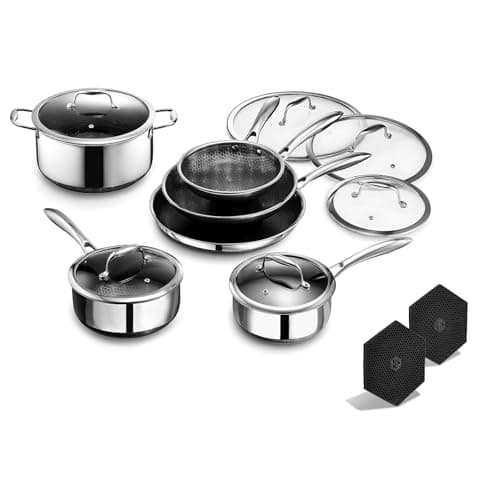
HexClad
HexClad 14-Piece: three pans and three pots
See price on Amazon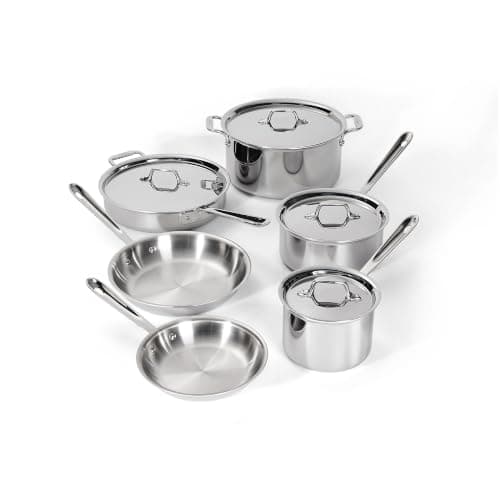
All-Clad
All-Clad D3 10-Piece: bare tri-ply stainless
See price on Amazon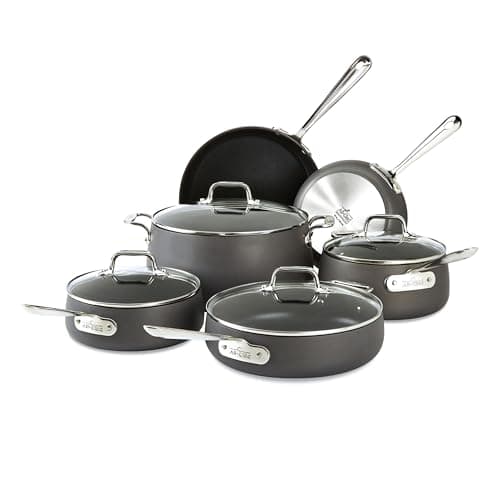
All-Clad
All-Clad HA1 10-Piece: 6 pans incl. 8 qt stockpot
See price on Amazon
- HexClad 14-Piece: three pans and three pots
- Pieces
- 14: 8, 10 and 12 in pans with lids, 2, 3 and 8 qt pots with lids, 2 trivets
- Oven-safe to
- 900°F (glass lids lower)
- Induction
- Yes
- All-Clad D3 10-Piece: bare tri-ply stainless
- Pieces
- 10: 8 and 10 in fry pans, 2 and 3 qt saucepans, 3 qt saute, 8 qt stockpot
- Oven-safe to
- 600°F
- Induction
- Yes
- All-Clad HA1 10-Piece: 6 pans incl. 8 qt stockpot
- Pieces
- 10 (6 pans, 4 lids)
- Oven-safe to
- 500°F, glass lids 350°F
- Induction
- Yes
| Pick | Pieces | Oven-safe to | Induction | Price | Link |
|---|---|---|---|---|---|
| HexClad 14-Piece: three pans and three pots | 14: 8, 10 and 12 in pans with lids, 2, 3 and 8 qt pots with lids, 2 trivets | 900°F (glass lids lower) | Yes | - | Amazon |
| All-Clad D3 10-Piece: bare tri-ply stainless | 10: 8 and 10 in fry pans, 2 and 3 qt saucepans, 3 qt saute, 8 qt stockpot | 600°F | Yes | - | Amazon |
| All-Clad HA1 10-Piece: 6 pans incl. 8 qt stockpot | 10 (6 pans, 4 lids) | 500°F, glass lids 350°F | Yes | - | Amazon |
Facts are taken from each Amazon listing. Prices are checked daily and shown with their date.
Verdict
Buy the All-Clad D3 set if you want pans that sear hard and last decades with no coating to wear out. Buy the HexClad set if easier release and cleanup matter more than maximum browning. If you mostly cook eggs and delicate food on a budget, All-Clad HA1 nonstick is the cheapest of the three.
This page is for shoppers deciding between a HexClad hybrid set and All-Clad, and asking which is better. Because All-Clad sells both plain stainless (D3) and true nonstick (HA1), we compare HexClad with both. It covers how each surface works, food release, searing, how long the cooking surface lasts, care, oven use and warranty, using facts from the listings. It also answers the related question of Le Creuset vs HexClad.
Three different cooking surfaces
HexClad uses a laser-etched hexagon pattern that combines stainless steel with the maker's TerraBond ceramic coating, over tri-ply construction with an aluminum core, per its listing. The raised steel takes the wear from utensils, and the coating in the low spots helps food release. The listing also says seasoning according to the official instructions is essential for the nonstick effect.
All-Clad D3 is fully bonded tri-ply with an aluminum core and a bare stainless cooking surface. Nothing coats the steel, so there is nothing to wear off. All-Clad HA1 is hard-anodized aluminum with a PTFE nonstick coating and a stainless base for induction. For more on hybrids in general, read is HexClad worth it.
Spec table from the listings
Listed price
- HexClad Hybrid 14-piece
- $591.28
- All-Clad D3 10-piece
- $799.95
- All-Clad HA1 10-piece
- $380.01
Surface
- HexClad Hybrid 14-piece
- Stainless and TerraBond ceramic hybrid
- All-Clad D3 10-piece
- Bare stainless steel
- All-Clad HA1 10-piece
- PTFE nonstick
Body
- HexClad Hybrid 14-piece
- Tri-ply, aluminum core
- All-Clad D3 10-piece
- Tri-ply, aluminum core
- All-Clad HA1 10-piece
- Hard-anodized aluminum, stainless base
Pans
- HexClad Hybrid 14-piece
- 8, 10 and 12 inch with lids
- All-Clad D3 10-piece
- 8 and 10 inch
- All-Clad HA1 10-piece
- 8 and 10 inch
Pots
- HexClad Hybrid 14-piece
- 2, 3 and 8 qt with lids
- All-Clad D3 10-piece
- 2 and 3 qt saucepans, 3 qt saute, 8 qt stockpot
- All-Clad HA1 10-piece
- 2.5 and 3.5 qt saucepans, 4 qt saute, 8 qt stockpot
Metal utensils
- HexClad Hybrid 14-piece
- Listed as metal utensil safe
- All-Clad D3 10-piece
- Yes, bare steel
- All-Clad HA1 10-piece
- Silicone, nylon or wood recommended
Washing
- HexClad Hybrid 14-piece
- Dishwasher friendly, hand wash recommended
- All-Clad D3 10-piece
- Hand wash only
- All-Clad HA1 10-piece
- Dishwasher safe
Warranty in listing
- HexClad Hybrid 14-piece
- Lifetime, defects, when sold by HexClad
- All-Clad D3 10-piece
- Limited lifetime
- All-Clad HA1 10-piece
- Not stated
| HexClad Hybrid 14-piece | All-Clad D3 10-piece | All-Clad HA1 10-piece | |
|---|---|---|---|
| Listed price | $591.28 | $799.95 | $380.01 |
| Surface | Stainless and TerraBond ceramic hybrid | Bare stainless steel | PTFE nonstick |
| Body | Tri-ply, aluminum core | Tri-ply, aluminum core | Hard-anodized aluminum, stainless base |
| Pans | 8, 10 and 12 inch with lids | 8 and 10 inch | 8 and 10 inch |
| Pots | 2, 3 and 8 qt with lids | 2 and 3 qt saucepans, 3 qt saute, 8 qt stockpot | 2.5 and 3.5 qt saucepans, 4 qt saute, 8 qt stockpot |
| Metal utensils | Listed as metal utensil safe | Yes, bare steel | Silicone, nylon or wood recommended |
| Washing | Dishwasher friendly, hand wash recommended | Hand wash only | Dishwasher safe |
| Warranty in listing | Lifetime, defects, when sold by HexClad | Limited lifetime | Not stated |
Food release and searing
For eggs and delicate fish, true nonstick like HA1 releases most easily. HexClad comes next: the coated valleys help, but the steel peaks give food something to grip, so a little fat and moderate heat still help. Bare stainless like D3 releases well only when the pan is properly preheated and the food is left alone until it browns and lets go. See why food sticks to stainless steel.
For searing steak, browning chicken skin or building fond for a pan sauce, the order flips. Stainless is the strongest, because the bare metal browns hard and the fond deglazes cleanly. HexClad browns better than most plain nonstick thanks to the steel contact. PTFE nonstick browns least well and should not be used over high heat.
| Material | Braise | Sear | Sauce | Oven | Eggs |
|---|---|---|---|---|---|
| Enameled cast iron | good | fair | fair | good | poor |
| Clad stainless | fair | good | good | good | poor |
| Carbon steel | poor | good | poor | good | good |
| Bare cast iron | fair | good | poor | good | fair |
| Nonstick | poor | poor | fair | fair | good |
good fair poor
Coating life and long-term cost
This is the biggest practical difference. All-Clad D3 has no coating, so with normal care the cooking surface does not wear out. Scratches and discoloration are cosmetic. That is a major reason clad stainless is often called a buy-once purchase.
Any nonstick coating, ceramic or PTFE, loses release over time. HexClad's steel peaks are designed to protect the coating from utensils, which can slow wear, but the coating is still the part that ages. HA1 is a conventional PTFE pan and will need replacing at some point, like any nonstick. See when to replace nonstick pans and PTFE vs ceramic nonstick.
Warranties differ too. HexClad's listing states a lifetime warranty against manufacturer defects for products sold by HexClad, excluding commercial use. All-Clad's D3 listing states a limited lifetime warranty. Coating wear from normal use is commonly excluded from cookware warranties, so read the terms.
Care, heat and oven use
Our oven temperature checker shows the limiting part for All-Clad pans, lids and handles.
- Oven: All-Clad rates D3 to 600°F and HA1 pans to 500°F, with its glass lids at 350°F. For HexClad pans and lids, check the maker's care page.
- Heat: stainless handles high heat. Keep any coated pan, hybrid or PTFE, at low to medium heat and do not preheat it empty on high.
- Seasoning: HexClad's listing calls seasoning essential. Stainless and PTFE nonstick need none. See do you need to season stainless steel.
- Cleaning: D3 is hand wash only. HexClad and HA1 are listed as dishwasher friendly, though hand washing is gentler on coatings.
Which one should you buy
For more stainless options, see is All-Clad worth it and All-Clad D3 vs D5.
- All-Clad D3 if you sear often, want pans that last decades, and will learn to preheat stainless properly.
- HexClad if you want one set that handles most jobs with easier cleanup than stainless and you accept a coating that ages.
- All-Clad HA1 if you mostly cook eggs, pancakes and fish and want the easiest release for the least money.
- Combine: a D3 set plus one nonstick skillet covers almost everything.
Frequently asked questions
Is All-Clad or HexClad better? All-Clad D3 is better for searing and longevity because it has no coating. HexClad is better if easy release and simple cleanup matter more to you than maximum browning.
Does HexClad sear as well as All-Clad stainless? It sears better than most nonstick, but bare stainless like D3 browns harder and builds better fond for pan sauces.
Le Creuset vs HexClad: which should I buy? They do different jobs. Le Creuset is best known for enameled cast iron Dutch ovens for braising and bread; HexClad makes skillets and pots for everyday stovetop cooking. Many kitchens own a Dutch oven and a set of pans.
Is HexClad dishwasher safe? The listing says it is dishwasher friendly but recommends hand washing.
What you need for this
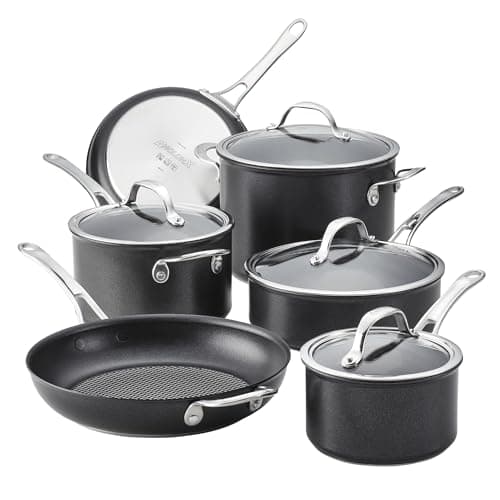 See price on AmazonAmazon
Anolon X 10-Piece: SearTech mesh, helper handles
- See price on AmazonAmazon
All-Clad D3 10-Piece: bare tri-ply stainless
From Best All-Clad cookware: D3, D5, Copper Core and HA1 picks
 See price on AmazonAmazon
Anolon Accolade 12-Piece: forged, flush rivets
From Best nonstick cookware sets: hard anodized and clad picks