Explainer
Copper cookware explained: thickness, linings and care
Published
Short answer
Copper conducts heat better than any other common cookware metal, so a thick copper pan heats evenly and reacts fast when you change the heat. Cooking copper is lined with tin or stainless steel because bare copper reacts with acidic foods. Thickness decides how well it performs: around 2 to 2.5 mm is the range commonly recommended for cooking, while 1 mm pieces are mostly for serving.
Cookware for this job
All 7 picks compared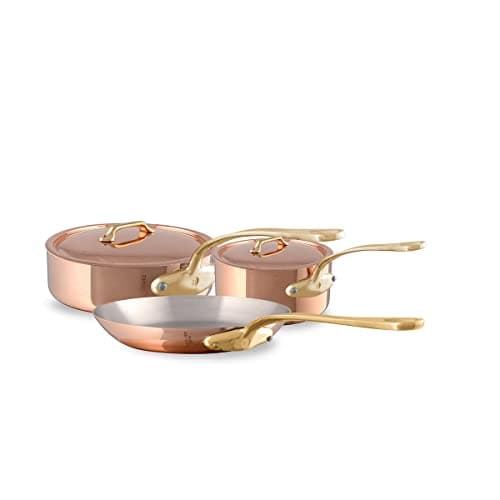
Mauviel M'Heritage 200 B 5-Piece: 2mm copper, brass handles
See price on AmazonSee it on Amazon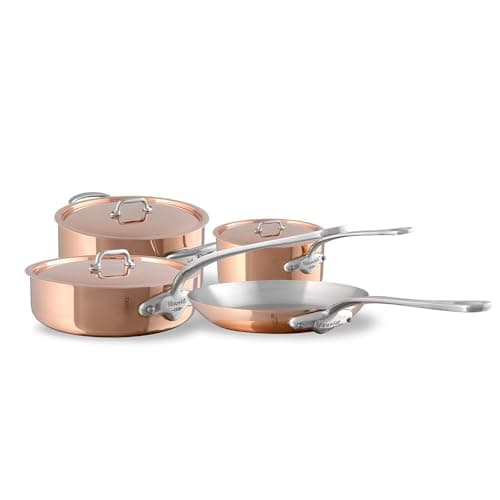
Mauviel M'3 S 7-Piece: adds a 6.1 qt stew pan
See price on AmazonSee it on Amazon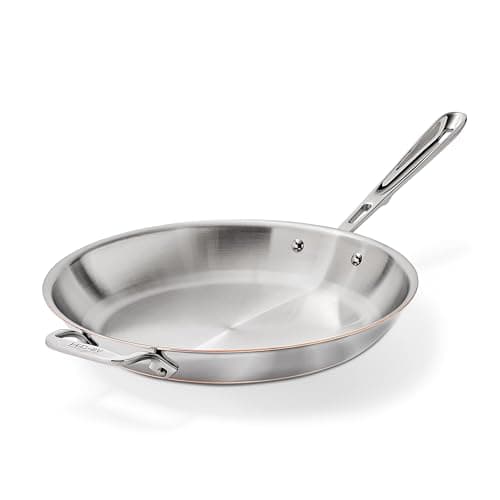
All-Clad Copper Core 12-inch Fry Pan: one piece, rim-to-rim core
See price on AmazonSee it on Amazon
This page is for cooks curious about copper pans who want to understand what they are paying for. It covers why copper heats the way it does, how thickness affects performance, the tradeoffs between tin and stainless linings, how copper core stainless differs from solid copper, and the care involved. It also covers induction, since solid copper does not work on induction without an adapter. Product details here come from maker listings, and for anything not covered, check the maker's care page.
Why copper heats so well
Copper moves heat quickly and spreads it across the whole pan, so there are few hot spots over the burner. It also gives up heat quickly, which means a copper pan responds almost immediately when you turn the flame down. That control is why copper is prized for sauces, caramel, sugar work and delicate reductions.
The flip side is that copper holds less heat than heavy cast iron, so it is not the best pick for searing a big batch of cold meat. Most cooks who own copper also keep cast iron or clad stainless for high-heat work. See cookware materials and heat conductivity for how metals compare.
Why thickness matters
Copper's benefit depends on having enough of it. Thin copper heats quickly but unevenly and can scorch. Around 2 to 2.5 mm is the range commonly recommended for stovetop cooking, giving even heat with good responsiveness. Thicker pans are steadier and much heavier.
Pieces around 1 mm are mostly for serving and gentle warming. Makers often state thickness in the line name. Mauviel's M'Heritage line, for example, is sold in 1.5 mm and 2 mm versions with 90 percent copper and 10 percent 18/10 stainless steel, per the maker's listings, and its M'Minis are 1 mm serving pieces.
About 1 mm
- Typical use
- Serving, table pieces, gentle warming
About 1.5 mm
- Typical use
- Light cooking, sauces on moderate heat
About 2 to 2.5 mm
- Typical use
- General stovetop cooking
Over 2.5 mm
- Typical use
- Very steady heat, very heavy
| Thickness | Typical use |
|---|---|
| About 1 mm | Serving, table pieces, gentle warming |
| About 1.5 mm | Light cooking, sauces on moderate heat |
| About 2 to 2.5 mm | General stovetop cooking |
| Over 2.5 mm | Very steady heat, very heavy |
Tin vs stainless linings
Bare copper reacts with acidic foods, so cooking pans are lined. The two common linings behave differently.
Tin is the traditional lining. It is naturally slick and releases food well, but it is soft and has a low melting point, so it must never be heated empty or over very high heat. Metal utensils and abrasive scrubbers wear it down, and it eventually needs to be retinned by a specialist.
Stainless steel is the modern lining. It is durable, takes metal utensils and higher heat, and never needs retinning. It is a little less slick than tin, and the bond between the layers depends on good manufacturing. Most new copper cookware sold today is stainless lined.
Copper core vs solid copper
Copper core cookware is clad stainless with a copper layer bonded inside. All-Clad Copper Core, for example, is a 5-ply build of stainless, aluminum and copper, with a copper ring showing at the rim, and is rated oven-safe to 600F on the maker's care page. It looks like stainless, cleans like stainless and works on induction.
Solid copper cookware has a copper exterior you can see, lined with tin or stainless. It has more copper by weight, so it is more responsive, but it needs polishing to stay bright and most pieces need an induction interface disc to work on induction. Mauviel lists such a disc as sold separately for M'Heritage.
A stainless pan with a copper disc bottom is a third option. The disc helps the base, but the walls are thin stainless, so it behaves like any disc bottom pan. See what is clad cookware.
Is copper cookware worth it
Copper makes the most sense for cooks who make a lot of sauces, caramel, jam or delicate dishes where quick heat changes matter, and who like the look and do not mind upkeep. For most other kitchens, fully clad stainless gives most of the evenness at lower cost and with easier care.
If you want some copper performance without polishing, copper core stainless is the middle ground. A single solid copper saucepan is a common first piece. The copper cookware guide covers both routes, and All-Clad cookware covers Copper Core.
Caring for copper
Copper exteriors darken and develop a patina with use. That is cosmetic and does not affect cooking. Some cooks polish to keep a bright finish, others leave the patina. Most makers advise hand washing. Tin linings need gentle utensils and low to medium heat. Full steps are in how to clean and polish copper cookware.
Note.Never heat a tin-lined pan empty. Tin melts at a low temperature compared with other cookware metals.
Frequently asked questions
What is the difference between copper core and copper cookware? Copper core is stainless with a copper layer bonded inside. Solid copper has a copper exterior with a tin or stainless lining and more copper overall.
Is tin lined or stainless lined copper better? Tin is slicker but soft and needs retinning eventually. Stainless is durable and low upkeep. Most home cooks choose stainless lined.
Does copper cookware work on induction? Solid copper does not on its own. It needs an induction interface disc. Copper core stainless usually works on induction.
How thick should copper cookware be? Around 2 to 2.5 mm is commonly recommended for cooking. About 1 mm is mostly for serving.
What you need for this
- See price on AmazonAmazon
Mauviel M'Heritage 200 B 5-Piece: 2mm copper, brass handles
From Best copper cookware for home cooks: sets and single pieces
 See price on AmazonAmazon
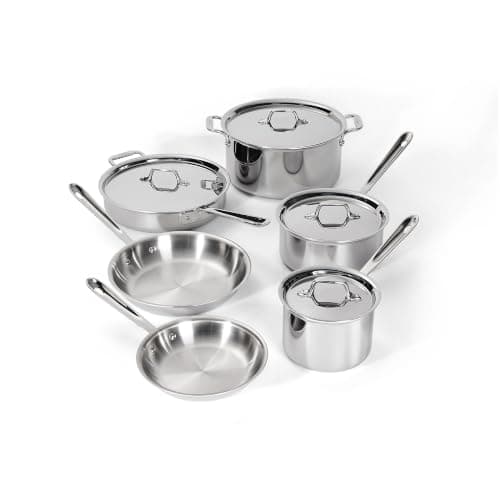
All-Clad D3 10-Piece: bare tri-ply stainless
From Best All-Clad cookware: D3, D5, Copper Core and HA1 picks