Explainer
How cookware materials conduct and hold heat
Published
Short answer
Copper and aluminum conduct heat fastest, so they heat evenly and respond quickly when you change the burner. Stainless steel conducts poorly on its own, which is why good stainless pans have an aluminum or copper core. Cast iron conducts slowly but holds a lot of heat, so it sears well and keeps braises steady. The best material depends on whether you need quick response or stored heat.
Cookware for this job
All 8 picks compared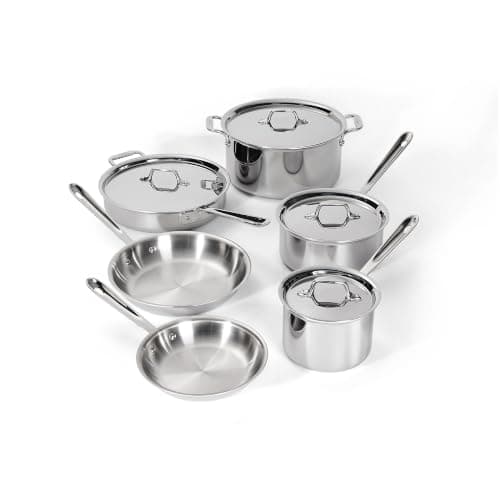
All-Clad D3 10-Piece: the tri-ply benchmark
See price on AmazonSee it on Amazon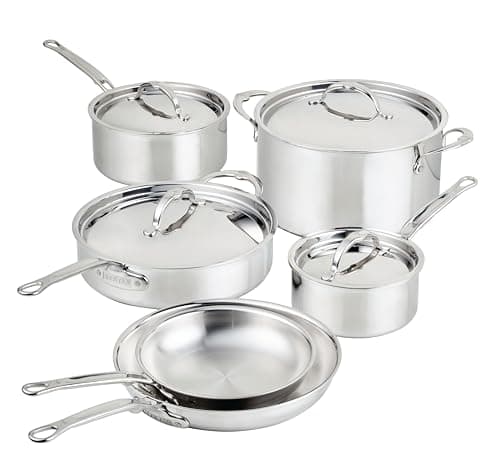
Hestan ProBond Luxe 10-Piece: dishwasher safe, 600°F
See price on AmazonSee it on Amazon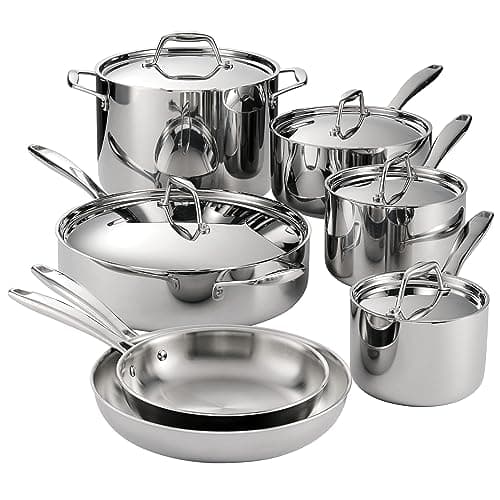
Tramontina Signature 12-Piece: tri-ply on a budget
See price on AmazonSee it on Amazon
Cookware marketing talks about even heating, heat retention and responsiveness, but those are different properties and no single material wins at all of them. This page is for home cooks choosing between copper, clad stainless, carbon steel, cast iron and nonstick aluminum. We explain the two properties that matter, conductivity and heat capacity, rank the common materials on each in plain terms, show how makers combine metals to get the best of both, and match materials to the jobs they do best.
Conductivity vs heat retention
Conductivity is how quickly heat moves through the metal. A highly conductive pan spreads the burner's heat sideways across the base and up the walls, so there are fewer hot spots, and it reacts fast when you raise or lower the flame. Heat retention depends on how much heat the pan can store, which comes from both the material and how much of it there is. A thick, heavy pan stores more heat and loses less temperature when cold food goes in.
These properties often pull in opposite directions. Copper is a superb conductor but a thin copper pan cools quickly when you add a steak. Cast iron is a poor conductor, so it heats unevenly at first, but a heavy skillet holds a lot of heat once it gets there. Understanding which one you need for a dish is the key to choosing a pan.
How the common materials compare
The rankings are relative and describe typical pans. Thickness changes the picture a lot: a thick aluminum pan holds more heat than a thin one, and a thin cast iron pan holds less than a heavy one.
| Material | Braise | Sear | Sauce | Oven | Eggs |
|---|---|---|---|---|---|
| Enameled cast iron | good | fair | fair | good | poor |
| Clad stainless | fair | good | good | good | poor |
| Carbon steel | poor | good | poor | good | good |
| Bare cast iron | fair | good | poor | good | fair |
| Nonstick | poor | poor | fair | fair | good |
good fair poor
Copper
- Conducts heat
- Highest
- Holds heat (typical pan)
- Medium
- Responds to burner
- Very fast
- Weight
- Heavy
Aluminum
- Conducts heat
- High
- Holds heat (typical pan)
- Low to medium
- Responds to burner
- Fast
- Weight
- Light
Clad stainless (aluminum or copper core)
- Conducts heat
- High across base
- Holds heat (typical pan)
- Medium
- Responds to burner
- Fast
- Weight
- Medium
Plain stainless steel
- Conducts heat
- Low
- Holds heat (typical pan)
- Low to medium
- Responds to burner
- Uneven
- Weight
- Medium
Carbon steel
- Conducts heat
- Low to medium
- Holds heat (typical pan)
- Medium
- Responds to burner
- Medium
- Weight
- Medium
Cast iron
- Conducts heat
- Low
- Holds heat (typical pan)
- High
- Responds to burner
- Slow
- Weight
- Heavy
Enameled cast iron
- Conducts heat
- Low
- Holds heat (typical pan)
- High
- Responds to burner
- Slow
- Weight
- Heavy
| Material | Conducts heat | Holds heat (typical pan) | Responds to burner | Weight |
|---|---|---|---|---|
| Copper | Highest | Medium | Very fast | Heavy |
| Aluminum | High | Low to medium | Fast | Light |
| Clad stainless (aluminum or copper core) | High across base | Medium | Fast | Medium |
| Plain stainless steel | Low | Low to medium | Uneven | Medium |
| Carbon steel | Low to medium | Medium | Medium | Medium |
| Cast iron | Low | High | Slow | Heavy |
| Enameled cast iron | Low | High | Slow | Heavy |
Copper and aluminum: fast and even
Copper conducts heat better than any other common cookware metal. A thick copper pan heats evenly edge to edge and follows burner changes almost instantly, which is why it is prized for sauces, caramel and delicate fish. It is expensive, heavy at good thicknesses, and reacts with acidic food, so copper pans are usually lined with stainless steel or tin. See copper cookware explained and copper cookware care.
Aluminum conducts heat well at a fraction of the cost and weight. Bare aluminum reacts with acidic food and scratches easily, so it is usually anodized, coated with nonstick, or used as the core inside stainless steel. Most nonstick pans are aluminum underneath.
Stainless steel and cladding
Stainless steel on its own is a poor heat conductor. A pan made only of a single layer of stainless will have hot spots right over the flame. That is why quality stainless cookware is clad: layers of stainless steel bonded around a core of aluminum or copper. The stainless gives a durable, non-reactive cooking surface; the core spreads the heat.
Tri-ply has one aluminum core; 5-ply adds more layers for a thicker, slower, steadier pan; copper core uses copper in the middle. Disc-bottom pans put a thick disc only on the base, leaving thin steel walls that heat less evenly. Our what is clad cookware page and All-Clad D3 vs D5 comparison explain the trade-offs.
Cast iron and carbon steel: stored heat
Cast iron conducts heat slowly, so a skillet on a small burner will be hotter in the middle than at the edges for a while. Preheat it longer, or in the oven, to even it out. Once hot, its mass holds that heat, which gives a deep sear on steaks and keeps oil temperature stable for frying. Enameled cast iron behaves the same way, and in a Dutch oven that steady stored heat is exactly what a braise needs.
Carbon steel is thinner than cast iron, so it heats faster and responds more quickly, but it holds less heat. It suits high-heat searing and stir-frying where you want the pan hot fast. See carbon steel vs cast iron and how to preheat pans.
Matching material to the job
Most kitchens are best served by a mix: a clad stainless skillet and saucepan, an enameled Dutch oven, and a cast iron or carbon steel pan. Our how to choose cookware page helps you build that mix without buying pieces you will not use.
- Searing steaks and chops: cast iron, carbon steel or a thick clad stainless skillet.
- Braising and stews: enameled cast iron Dutch oven for steady heat. See the best Dutch ovens.
- Pan sauces and sauteing: clad stainless or copper for quick response.
- Delicate sauces and caramel: copper or thick clad stainless.
- Eggs and fish: nonstick aluminum or well-seasoned carbon steel.
- Boiling pasta and stock: lighter stainless or aluminum pots, which heat a large volume quickly.
- Induction cooktops: any pan with a magnetic base. See induction-compatible cookware.
Frequently asked questions
What is the best material for cookware? There is no single best. Clad stainless is the most versatile everyday choice; enameled cast iron is best for braising; copper gives the most control; nonstick is easiest for eggs.
Does cast iron heat evenly? Not at first. It conducts slowly, so preheat it gradually. Once hot, it holds heat very well, which makes cooking feel even.
Is copper better than aluminum? Copper conducts heat better and responds faster, but it costs much more and needs more care. Thick aluminum inside clad stainless gives most of the benefit for less money.
Why does my stainless pan have hot spots? It may be single-ply or disc-bottom, or the burner may be smaller than the pan. Fully clad pans with an aluminum or copper core spread heat more evenly.
What you need for this
- See price on AmazonAmazon
All-Clad D3 10-Piece: bare tri-ply stainless
From Best stainless steel cookware sets, compared piece by piece
 See price on AmazonAmazon
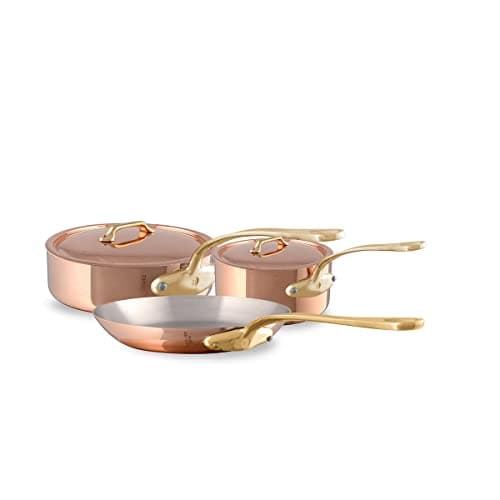
Mauviel M'Heritage 200 B 5-Piece: 2mm copper, brass handles
From Best copper cookware for home cooks: sets and single pieces
 See price on AmazonAmazon
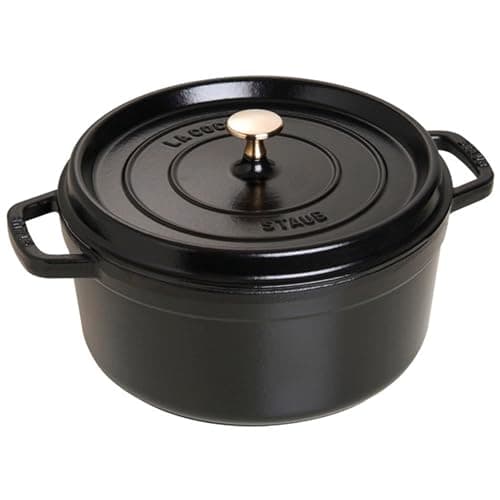
Staub 5.5 qt Round Cocotte: spiked lid, 900°F base limit
From Best Dutch ovens for home cooks: enameled and stainless picks
 See price on AmazonAmazon
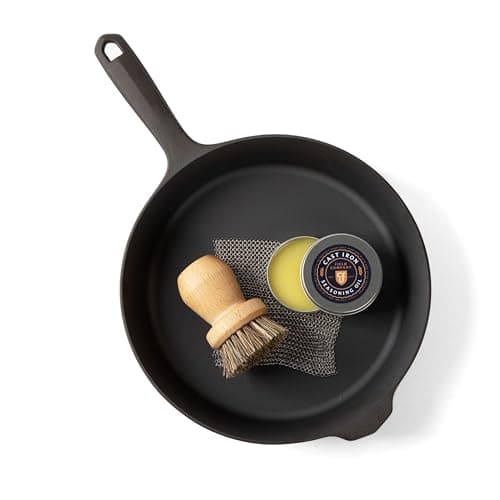
Field 10.25 in Starter Set: 4.3 lb with care kit
From Best premium cast iron skillets: machined and enameled picks