Explainer
Do you need to season stainless steel pans
Published
Short answer
No. Stainless steel pans do not need seasoning, and makers ship them ready to cook. You can heat a thin film of oil in the pan to make it a little slicker for eggs or fish, but that layer is temporary and washes off with soap. Proper preheating, enough fat and letting food release on its own do far more to stop sticking.
Cookware for this job
All 7 picks compared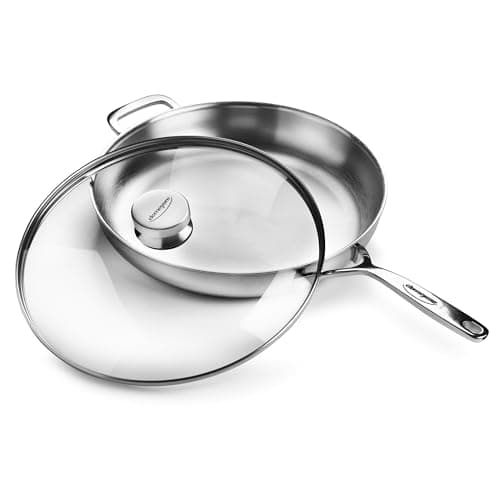
Demeyere 5-Plus 12.5 in with Glass Lid: 3 mm 5-ply
See price on AmazonSee it on Amazon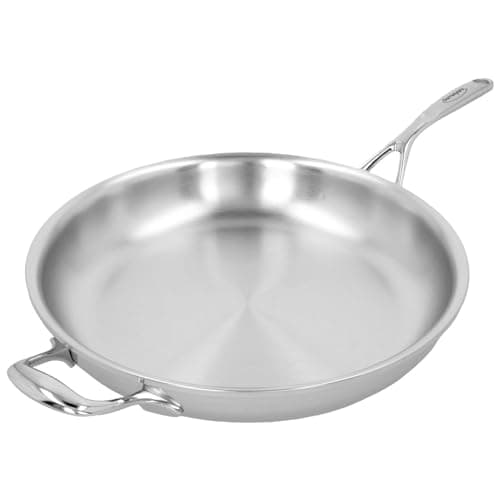
Demeyere Atlantis Proline 12.6 in: 7-ply, helper handle
See price on AmazonSee it on Amazon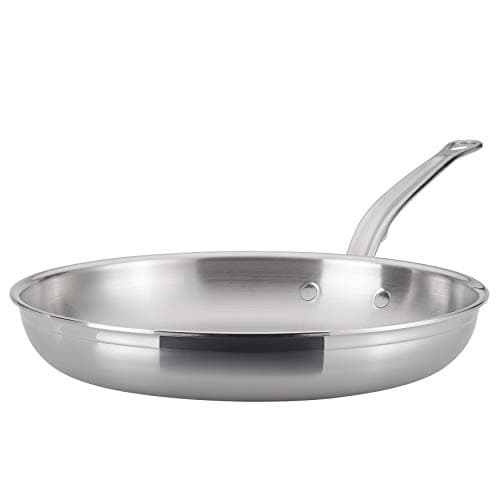
Hestan ProBond Forged 12.5 in: dishwasher safe
See price on AmazonSee it on Amazon
This page is for cooks with a new stainless steel pan, or one where food keeps sticking, who have seen advice to season it like cast iron. It explains why stainless does not build seasoning the way cast iron and carbon steel do, what the quick stovetop oil treatment actually does, how to do it if you want to try, and what helps more with sticking. It also covers cleaning, since harsh scrubbing is not a problem for stainless the way it is for a seasoned pan.
Why stainless steel is different from cast iron
Seasoning on cast iron and carbon steel is oil heated past its smoke point until it polymerizes into a hard, slick layer bonded to the iron. Bare iron needs that layer because it rusts and because the raw surface is grippy. Over many uses the layers build up and the pan gets more nonstick.
Stainless steel does not rust in normal kitchen use, thanks to the chromium in the alloy, and its surface is smooth and dense. Polymerized oil does not bond to it well, so any layer you build tends to wear or wash off. That is why stainless makers do not ask you to season, and why you can wash it with soap and scrub it hard. See what is 18/10 stainless steel for more on the alloy.
What a quick oil seasoning does
Some cooks heat a thin coat of high smoke point oil in a stainless pan until it just starts to smoke, then wipe out the excess. This leaves a light film that can make the pan release eggs, fish or pancakes a bit more easily for a while.
The effect is temporary. Washing with dish soap, deglazing with acidic liquids, or simmering sauces removes it. That is fine, since the pan does not depend on it. Think of it as an optional trick for delicate foods, not maintenance.
- 1
Wash and dry the pan fully.
- 2
Heat it over medium for a minute or two.
- 3
Add a thin layer of neutral oil with a high smoke point and swirl it over the base.
- 4
Heat until the oil just begins to smoke, then take the pan off the heat.
- 5
Let it cool, then wipe out the excess oil with a paper towel.
Note.Do not leave an empty or nearly empty pan on high heat for long. Heating stainless empty for extended periods can discolor it and is hard on any pan.
What actually stops sticking in stainless
Food sticks to stainless mostly because the pan or the fat is not hot enough, or because the food is moved before it has browned. When protein hits cool metal, it bonds to the surface. As it browns, it releases on its own.
These habits matter far more than any seasoning. More detail is in why food sticks to stainless steel and how to preheat pans.
- Preheat the empty pan over medium for a couple of minutes before adding fat.
- Add oil and wait until it shimmers before adding food.
- Pat meat and fish dry, since surface water cools the pan.
- Do not crowd the pan; cook in batches.
- Leave food alone until it releases, then turn it.
When stainless is the wrong pan for the job
Stainless shines for searing, pan sauces and anything that benefits from browned bits on the bottom. It is less forgiving for very delicate foods like scrambled eggs and thin fish fillets, even with good technique. Many kitchens keep one nonstick or well-seasoned carbon steel pan for those jobs and use stainless for everything else.
If you want the release of seasoning, carbon steel is the pan that actually builds it. See carbon steel vs stainless steel and stainless steel vs nonstick for how they compare.
| Material | Braise | Sear | Sauce | Oven | Eggs |
|---|---|---|---|---|---|
| Enameled cast iron | good | fair | fair | good | poor |
| Clad stainless | fair | good | good | good | poor |
| Carbon steel | poor | good | poor | good | good |
| Bare cast iron | fair | good | poor | good | fair |
| Nonstick | poor | poor | fair | fair | good |
good fair poor
Cleaning stainless without worrying about seasoning
Because there is no seasoning to protect, you can clean stainless with dish soap, a scrub sponge, and a cleanser made for stainless when needed. Stuck-on residue usually lifts after a soak in hot soapy water, or after simmering a little water in the pan and scraping with a wooden spatula.
Rainbow tints and white spots are cosmetic and come off with a stainless cleanser or a little vinegar. See stainless steel pan discoloration and how to clean a burnt stainless steel pan. If you are shopping for a pan, our stainless steel frying pan guide lists picks.
Frequently asked questions
Should I season a new stainless steel pan? No. Wash it before first use to remove any manufacturing residue, then cook. Seasoning is optional and temporary.
Can you season stainless steel like cast iron? Not in a lasting way. Oil does not bond to stainless the way it bonds to iron, so the layer washes off with soap and acidic cooking.
Will soap ruin my stainless steel pan? No. Soap is fine on stainless and recommended for regular cleaning.
Why do eggs still stick after I seasoned the pan? Usually the pan or the fat is not hot enough, or there is too little fat. Preheat, use enough butter or oil, and let the eggs set before moving them.
What you need for this
- See price on AmazonAmazon
Demeyere 5-Plus 12.5 in with Glass Lid: 3 mm 5-ply
 See price on AmazonAmazon
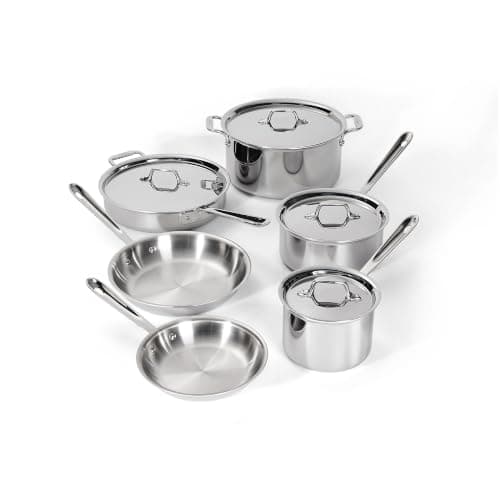
All-Clad D3 10-Piece: bare tri-ply stainless
From Best stainless steel cookware sets, compared piece by piece