Explainer
Do you need a Dutch oven for sourdough
Published
Short answer
You do not strictly need a Dutch oven for sourdough, but it is the easiest way to get a tall loaf with a crisp, blistered crust at home. The lid traps steam from the dough, which keeps the crust soft long enough for the loaf to expand. A 4.5 to 5.5 quart round or a 6.75 quart oval suits loaves made from about 500 g of flour.
Cookware for this job
All 7 picks compared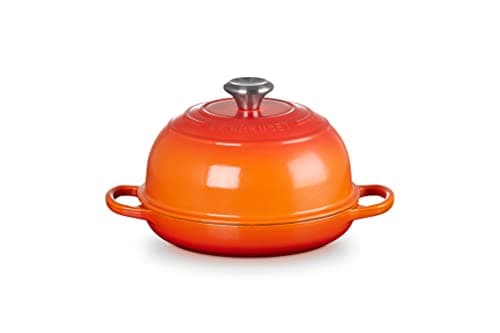
Le Creuset Round Bread Oven 9.5 in: low base for boules
See price on AmazonSee it on Amazon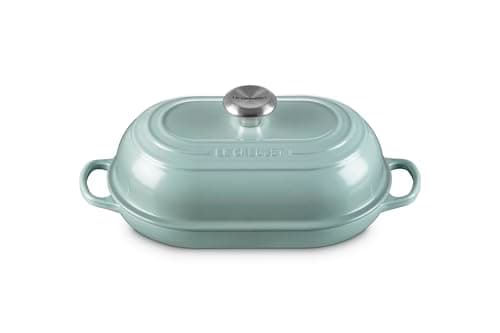
Le Creuset Oval Bread Oven 11.5 in: for batards
See price on AmazonSee it on Amazon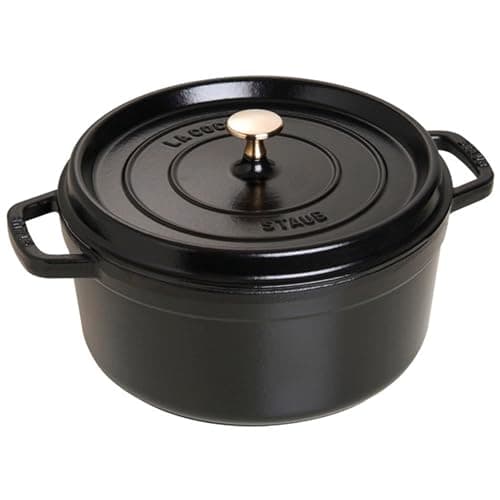
Staub 5.5 qt Round Cocotte: 900°F base, 500°F lid
See price on AmazonSee it on Amazon
This page is for home bakers deciding whether to bake sourdough in a Dutch oven, and which one to use. It explains what the pot does for the loaf, which sizes and shapes fit common recipes, how to preheat safely, and which parts of a pot limit how hot it can go. It also covers ways to bake without a Dutch oven if you do not have one yet. Recipes vary, so follow your recipe's temperatures and times and treat this as a guide to the equipment.
Why a Dutch oven helps sourdough
In the first part of the bake, bread needs a humid environment. Steam keeps the outer skin of the dough soft so the loaf can keep expanding as gases heat up, which is called oven spring. Once the crust sets, the loaf stops rising. Professional deck ovens inject steam for this reason.
A home oven vents moisture, so it struggles to stay humid. A lidded Dutch oven solves this on a small scale. The dough releases its own moisture, the heavy lid holds it in, and the thick preheated walls give strong, even heat from all sides. After a set time you take the lid off so the crust can dry, brown and crisp.
What size Dutch oven for sourdough
For a loaf made from about 500 g of flour, a 4.5 to 5.5 quart round is the usual pick for a boule, and a 6.75 quart oval suits a batard, the longer oval loaf. Too small and the loaf presses against the walls. Too large and there is extra air to fill with steam, so the effect is weaker, though a slightly large pot still works well.
Larger recipes need a larger pot. If you bake bigger loaves from 750 g or 1 kg of flour, step up a size. Our Dutch oven size picker suggests a size for bread, and the best Dutch ovens for bread guide covers pots suited to baking.
Boule from about 500 g flour
- Usual pot
- 4.5 to 5.5 qt round
Batard from about 500 g flour
- Usual pot
- 6.75 qt oval
Larger loaves
- Usual pot
- Step up one size
| Loaf | Usual pot |
|---|---|
| Boule from about 500 g flour | 4.5 to 5.5 qt round |
| Batard from about 500 g flour | 6.75 qt oval |
| Larger loaves | Step up one size |
Check the oven limit before you preheat
Bread baking commonly runs around 450F, and some recipes go higher. The iron and enamel body of a Dutch oven is rarely the limit. The knob usually is. The lowest-rated part in the oven sets the limit for the whole pot.
Figures confirmed on maker pages: Le Creuset's older black phenolic knob is rated to 390F, which is below common bread temperatures. Staub cocottes with metal knobs and Lodge enameled cast iron are rated to 500F. For Le Creuset's Signature composite knob and stainless steel knob, check the maker's care page, since the published figures we could find disagree. The oven temperature checker finds the limiting part for your pot.
Note.If your knob is rated below your bake temperature, swap it for a metal knob from the maker before baking, or check the maker's care page for guidance.
How long to preheat a Dutch oven for sourdough
Most recipes preheat the pot with the oven so the iron is fully hot when the dough goes in. Many bakers allow 30 to 60 minutes, because cast iron is thick and takes time to heat through. A cold or half-heated pot gives a paler base and less oven spring.
Put the pot and lid in the cold oven and let them heat together. Heating an empty pot slowly in the oven is gentler on enamel than blasting an empty pot on a burner. Some makers advise against heating empty enameled pots on the stovetop, so check the maker's care page for guidance on empty preheating.
- 1
Place the pot and lid on a middle or lower rack in the cold oven.
- 2
Heat to your recipe temperature and hold it there for 30 to 60 minutes.
- 3
Lower the dough in on parchment, score it and cover.
- 4
Bake covered for the time in your recipe, then uncover to brown.
- 5
Lift the loaf out on the parchment and cool it on a rack.
Enameled, bare cast iron or a combo cooker
Enameled cast iron is easy to clean and does not need seasoning, but repeated high heat with a dark loaf can stain a light interior over time, which is cosmetic. A pale interior is also easier to see into when checking color. See does Le Creuset need seasoning for how enamel differs from bare iron.
Bare cast iron handles high heat well and costs less, but it needs its seasoning kept up. A combo cooker, a shallow pan with a deep lid, lets you drop dough onto a flat base instead of lowering it into a deep pot, which many bakers find easier and safer.
Baking sourdough without a Dutch oven
You can still bake good bread without one. The goal is to trap or add steam for the first part of the bake, then let the crust dry. These options are common, and see Dutch oven alternatives for more.
- Bake on a preheated baking steel or stone and cover the loaf with an upturned oven-safe pot or roasting pan.
- Put a preheated metal tray on a lower rack and pour hot water into it as the bread goes in, protecting your hands and the oven glass.
- Use a lidded oven-safe stock pot or roaster, checking that the handles and lid are rated for the temperature.
Frequently asked questions
What size Dutch oven do I need for sourdough? For a loaf from about 500 g of flour, a 4.5 to 5.5 quart round or a 6.75 quart oval is the usual pick.
How long should I preheat my Dutch oven for sourdough? Many bakers preheat the pot with the oven for 30 to 60 minutes so the thick iron is fully hot. Follow your recipe for the temperature.
Can I bake sourdough in a Le Creuset with the black knob? The older black phenolic knob is rated to 390F, below common bread temperatures. Swap to a metal knob or check Le Creuset's care page before baking hotter.
Why take the lid off partway through? The lid traps steam for rise. Removing it lets the crust dry out, brown and crisp.
What you need for this
- See price on AmazonAmazon
Le Creuset Round Bread Oven 9.5 in: low base for boules
- See price on AmazonAmazon
Staub 5.5 qt Round Cocotte: spiked lid, 900°F base limit
From Best Dutch ovens for home cooks: enameled and stainless picks
 See price on AmazonAmazon
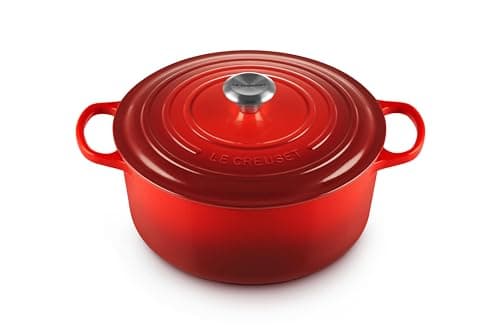
Le Creuset 7.25 qt Round: the family-size classic
From Best Le Creuset Dutch ovens: which shape and size to buy
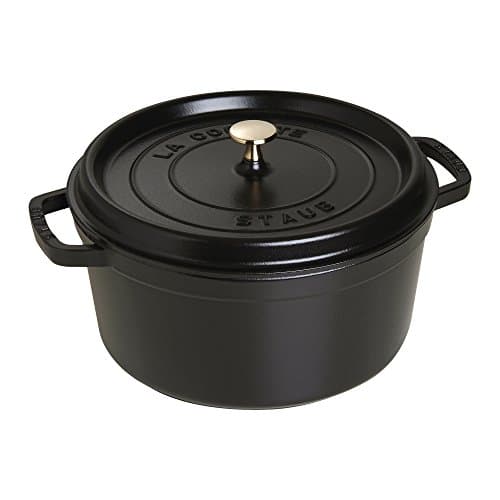 See price on AmazonAmazon
Staub 7 qt Round: spiked lid, serves 7-8