Explainer
Is All-Clad worth the money
Published
Short answer
All-Clad is worth it if you want clad stainless that lasts for decades, cooks evenly and is backed by a limited lifetime warranty. Its bonded lines, like D3, D5 and Copper Core, are made in the USA and rated oven safe to 600°F by the maker. For many home cooks, a good tri-ply pan from a cheaper brand cooks nearly as well, so the extra cost mostly buys fit, finish, consistency and the warranty.
Cookware for this job
All 7 picks compared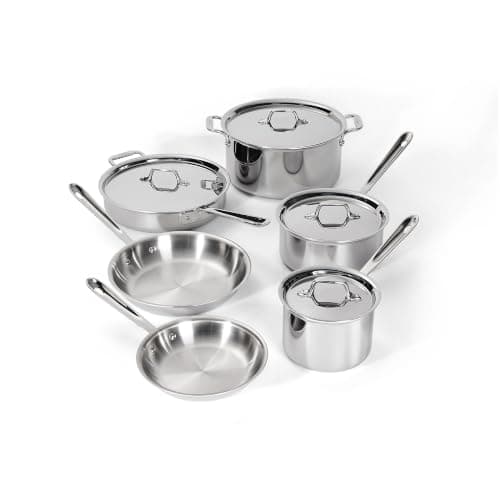
All-Clad D3 10-Piece: six pans incl. 8 qt stockpot
See price on AmazonSee it on Amazon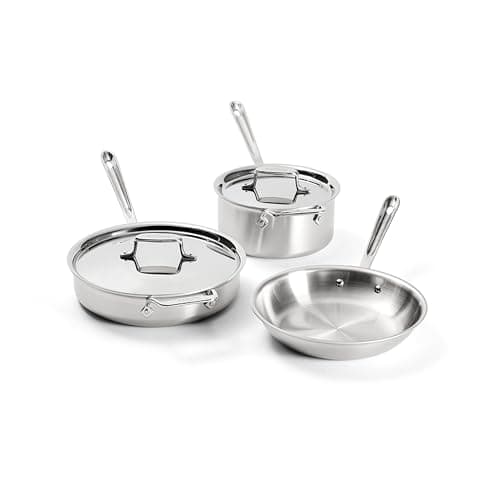
All-Clad D5 5-Piece: three core pans, 5-ply
See price on AmazonSee it on Amazon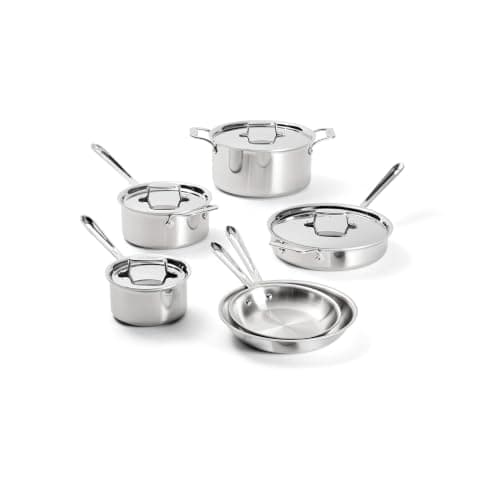
All-Clad D5 10-Piece: brushed 5-ply full kit
See price on AmazonSee it on Amazon
All-Clad is one of the best known names in American cookware, and also one of the most expensive. This page is for home cooks deciding whether to pay for it. It covers why All-Clad costs what it does, what makes it a good brand, which lines are made in the US, how it compares with cheaper tri-ply, and who should buy something else. It is a reference for the decision, not a sales pitch.
What All-Clad makes and why it costs more
All-Clad is known for bonded, fully clad stainless steel cookware. Fully clad means the layers of metal run all the way up the sides of the pan, not just across a disc on the bottom. A conductive core of aluminum or copper is sandwiched between stainless steel layers. The aluminum or copper spreads heat, and the stainless gives a durable, non-reactive cooking surface and works on induction.
The main bonded stainless lines are D3, which is tri-ply with an aluminum core, D5, which has five alternating layers, and Copper Core, which adds a copper center. The price reflects the metal, the bonding process, US manufacturing for those lines, and tight finishing like rolled rims and riveted stainless handles. For a deeper look at construction, see what is clad cookware, and for the line differences, see All-Clad D3 vs D5.
Is All-Clad an American company?
All-Clad was founded in Pennsylvania, and its bonded stainless lines, including D3, D5 and Copper Core, are made in Canonsburg, Pennsylvania. The company is now owned by Groupe SEB, a French cookware group that also owns other cookware brands.
Not every All-Clad product is made in the US. Some lines, including nonstick pans like HA1 and some accessories, are made overseas. If country of origin matters to you, read the product listing or the box, which states where each item is made.
What the price buys
A well made clad pan has no coating to wear out. With normal care it can last for decades, so the cost per year of use can be low even when the purchase price is high. All-Clad's warranty covers manufacturing defects, not misuse or normal wear, so read the terms on the maker's site.
Fully clad construction
- What it means in the kitchen
- Even heat across the base and up the sides, fewer hot spots
Stainless cooking surface
- What it means in the kitchen
- Safe for acidic food, metal utensils and high heat searing
Oven safe to 600°F
- What it means in the kitchen
- Maker rating for D3, D5 and Copper Core, enough for broiling and high heat roasting
Induction compatible
- What it means in the kitchen
- Magnetic stainless exterior works on induction
Limited lifetime warranty
- What it means in the kitchen
- Covers defects in materials and workmanship; check the maker's terms
Consistent finishing
- What it means in the kitchen
- Flat bases, rolled rims for pouring, riveted handles
| Feature | What it means in the kitchen |
|---|---|
| Fully clad construction | Even heat across the base and up the sides, fewer hot spots |
| Stainless cooking surface | Safe for acidic food, metal utensils and high heat searing |
| Oven safe to 600°F | Maker rating for D3, D5 and Copper Core, enough for broiling and high heat roasting |
| Induction compatible | Magnetic stainless exterior works on induction |
| Limited lifetime warranty | Covers defects in materials and workmanship; check the maker's terms |
| Consistent finishing | Flat bases, rolled rims for pouring, riveted handles |
Where cheaper tri-ply catches up
The core idea of tri-ply, an aluminum core clad in stainless, is not unique to All-Clad. Several brands make fully clad tri-ply at lower prices, and some are well regarded for even heating and durability. For everyday tasks like sautéing vegetables, searing chicken and making pan sauces, the difference between a good budget tri-ply pan and All-Clad D3 is smaller than the price gap suggests.
Where All-Clad usually stands out is in consistency, fit and finish, the oven rating, and the warranty. Some lower cost brands rate their pans to lower oven temperatures, use thinner layers, or are less consistent from batch to batch. Our comparisons of All-Clad vs Tramontina, All-Clad vs Calphalon and All-Clad vs Made In cover specific matchups. Made In stainless clad, for example, is rated to 800°F by its maker.
Common complaints about All-Clad
Try holding a pan in a store if handle comfort is a concern. Weight and handle shape matter more in daily use than small differences in heat spread.
- Handles: the classic All-Clad stick handle has a concave shape that some cooks find uncomfortable.
- Sticking: like all stainless, it sticks if not preheated. This is technique, not a defect. See why food sticks to stainless steel.
- Weight: D5 and Copper Core are heavier than D3, which some people find tiring.
- Price: full sets are a large purchase, and many people never use every piece.
- Nonstick lines: All-Clad nonstick pans wear out over time like any coated pan. The lifetime value applies mainly to the stainless lines.
Who should buy All-Clad and who should not
All-Clad makes sense if you cook often, want stainless pans that will last for many years, use the oven a lot, cook on induction, or value a US made product with a strong warranty. Buying one or two key pieces, such as a 10 or 12 inch skillet and a saucepan, gets most of the benefit without the cost of a full set.
A cheaper tri-ply brand makes sense if you are new to stainless, cook occasionally, or are on a tight budget. Spending less on stainless and adding a carbon steel or nonstick pan for eggs is a practical mix. For model picks, see the best All-Clad cookware guide, and for alternatives at every price, the best stainless steel cookware set guide.
Frequently asked questions
Why is All-Clad so expensive? Fully clad bonded construction, US manufacturing for the main stainless lines, careful finishing and a limited lifetime warranty all add cost.
Is All-Clad a good brand? Its bonded stainless lines are widely regarded as reliable and long lasting. Nonstick lines wear out like any coated pan.
Is All-Clad made in the USA? The bonded stainless lines such as D3, D5 and Copper Core are made in Pennsylvania. Some other lines are made overseas, so check the listing.
Is All-Clad D3 or D5 better? D3 heats faster and is lighter. D5 is a bit more forgiving with heat. See All-Clad D3 vs D5 for details.
What you need for this
- See price on AmazonAmazon
All-Clad D3 10-Piece: bare tri-ply stainless
From Best All-Clad cookware: D3, D5, Copper Core and HA1 picks
 See price on AmazonAmazon
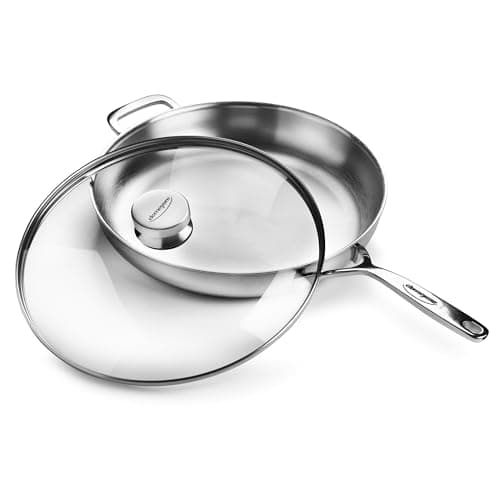
Demeyere 5-Plus 12.5 in with Glass Lid: 3 mm 5-ply
 See price on AmazonAmazon
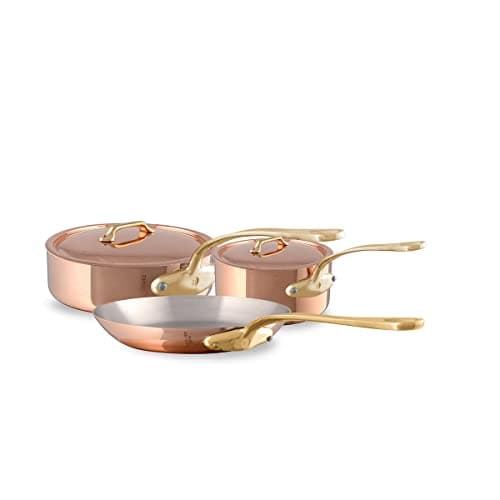
Mauviel M'Heritage 200 B 5-Piece: 2mm copper, brass handles
From Best copper cookware for home cooks: sets and single pieces