Explainer
Can you use cast iron and Dutch ovens on a glass top stove
Published
Short answer
Yes. Cast iron, enameled Dutch ovens like Le Creuset and Staub, and carbon steel pans can all be used on a glass top stove. The rules are simple: lift the pan instead of sliding it, keep the base clean and flat, match the pan to the burner size, and heat heavy pots gradually. Check your stove maker's manual too, since some list their own cookware guidance.
Cookware for this job
All 6 picks compared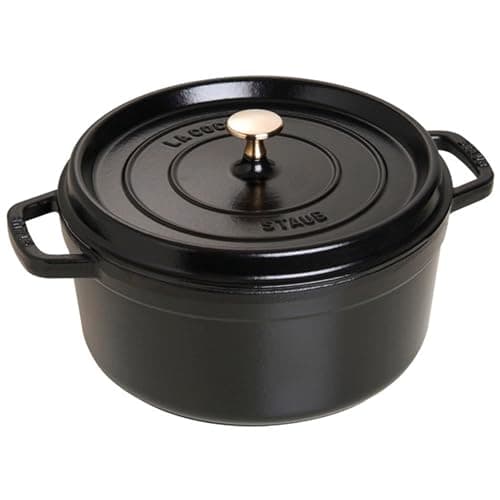
Staub 5.5 qt Round Cocotte: spiked lid, 900°F base limit
See price on AmazonSee it on Amazon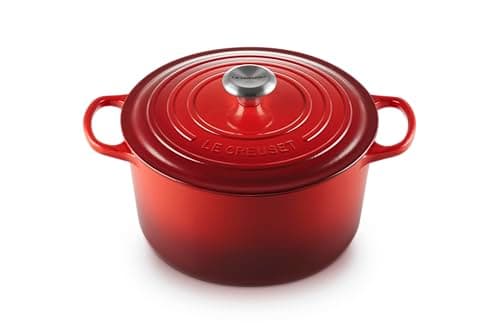
Le Creuset 6.5 qt Deep Round: extra depth for soups
See price on AmazonSee it on Amazon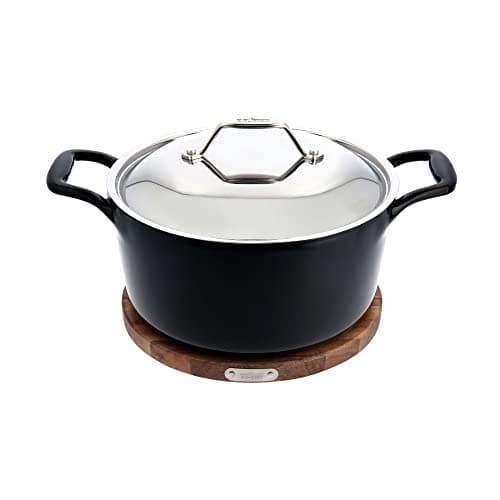
All-Clad 6 qt enameled: 650°F limit, trivet included
See price on AmazonSee it on Amazon
This page is for cooks with a smooth glass or ceramic cooktop, radiant electric or induction, who want to use heavy cast iron, an enameled Dutch oven or a carbon steel pan without scratching or cracking the surface. It explains what actually damages glass tops, how each type of pan behaves on them, and the habits that protect both the stove and the cookware. Glass cooktops differ by maker, so treat your range manual as the final word on what it allows.
What actually damages a glass top
Glass ceramic cooktops are tough against heat but can be scratched by rough bases and cracked by a sharp impact. The common causes of damage are sliding a heavy pan with a rough or gritty base across the surface, dropping a pan or lid onto it, and residue such as sugar or melted plastic burning onto the glass.
Weight alone is rarely the issue when a pot is set down gently. A full Dutch oven is heavy, but it spreads that weight over a broad base. The risk is in moving it, so most advice comes down to lifting with care. For weights, see how much a Dutch oven weighs.
Enameled Dutch ovens like Le Creuset and Staub
Enameled cast iron works well on glass tops. The enamel on the base is smooth, so it is less likely to scratch than rough bare iron. Le Creuset and Staub both market their cast iron as usable on all cooktops, including induction.
Heat it gradually. Enameled cast iron should be brought up to temperature on low to medium heat rather than blasted on high, and the base should be dry before it goes on the burner. Do not heat an enameled pot empty for long. See how to use a Dutch oven for more, and the best Dutch oven guide for picks.
Bare cast iron and carbon steel
Bare cast iron works on glass, but its base can be rough, and older or poorly finished pans may have raised casting marks. Run your hand over the base: if it feels gritty or has burrs, it is more likely to scratch. Keep the base clean, since baked-on carbon can scratch too.
Carbon steel pans are smoother and lighter. The main concern is flatness. A thin pan heated hard on a small burner can warp and then rock on a flat glass surface, which reduces contact and heating. Match the burner to the pan and heat gradually. See how to fix a warped pan, carbon steel vs cast iron and the carbon steel pan guide.
Lift, do not slide: habits that protect the glass
- Lift pans to move them; do not drag them across the surface.
- Set heavy pots down gently, and never drop a lid on the glass.
- Keep the bottom of every pan clean and dry before cooking.
- Wipe the cooktop before placing a pan so crumbs and grit do not get trapped.
- Clean sugary spills promptly, following your range maker's instructions.
- Do not use the cooktop as a cutting board or a place to set hot lids face down.
Match the pan to the burner
Flat, full contact is what makes a glass top work well. A base much wider than the burner heats unevenly, with the outer edge running cooler. A base much smaller than the burner wastes heat and can overheat the handle side of the pot. Aim for a pan base close to the burner size.
Ovals are a special case. They hang past a round burner at the ends, so food there cooks more slowly. Some ranges have a bridge or oval zone that helps. Rotate the pot or brown in smaller batches if not. On induction, the pan must be magnetic; cast iron, carbon steel and most clad stainless are. See induction compatible cookware and the induction cookware set guide.
Enameled cast iron
- Works on glass top
- Yes
- Main thing to watch
- Heat gradually, lift do not slide
Bare cast iron
- Works on glass top
- Yes
- Main thing to watch
- Rough base can scratch
Carbon steel
- Works on glass top
- Yes
- Main thing to watch
- Warping on a mismatched burner
Clad stainless
- Works on glass top
- Yes
- Main thing to watch
- Keep the base clean of residue
Solid copper
- Works on glass top
- Radiant yes, induction needs a disc
- Main thing to watch
- Copper residue can mark the glass
| Cookware | Works on glass top | Main thing to watch |
|---|---|---|
| Enameled cast iron | Yes | Heat gradually, lift do not slide |
| Bare cast iron | Yes | Rough base can scratch |
| Carbon steel | Yes | Warping on a mismatched burner |
| Clad stainless | Yes | Keep the base clean of residue |
| Solid copper | Radiant yes, induction needs a disc | Copper residue can mark the glass |
Heating heavy pots safely
Radiant glass cooktops heat by glowing elements under the glass, and the glass gets very hot. A heavy cast iron pot stores a lot of heat as well, so it stays hot long after you switch off the burner. Turn the burner down earlier than you would with a thin pan, and use low to medium settings for most cooking in cast iron.
Avoid moving a very hot pot onto a cold wet surface or adding cold liquid to an empty, overheated enameled pot, since sudden temperature changes are hard on enamel. Let pans cool on the stove or a trivet before washing.
Note.Your range maker's manual is the final word. Some glass top makers list specific cookware cautions, and those apply even if the cookware maker says its pans work on all cooktops.
Frequently asked questions
Can you use a Le Creuset Dutch oven on a glass top stove? Yes. Le Creuset markets its enameled cast iron for all cooktops. Lift it rather than sliding it and heat it gradually.
Will cast iron crack my glass top? Not from normal use. Cracks usually come from dropping a pan or lid. Scratches come from sliding a rough or dirty base.
Can I use a carbon steel pan on a glass top? Yes. Keep it flat by heating gradually on a burner that matches its size.
Why does my pan wobble on the glass top? The base is likely warped. A warped pan heats unevenly on a flat surface and is worth straightening or replacing.
What you need for this
- See price on AmazonAmazon
Staub 5.5 qt Round Cocotte: spiked lid, 900°F base limit
From Best Dutch ovens for home cooks: enameled and stainless picks
 See price on AmazonAmazon
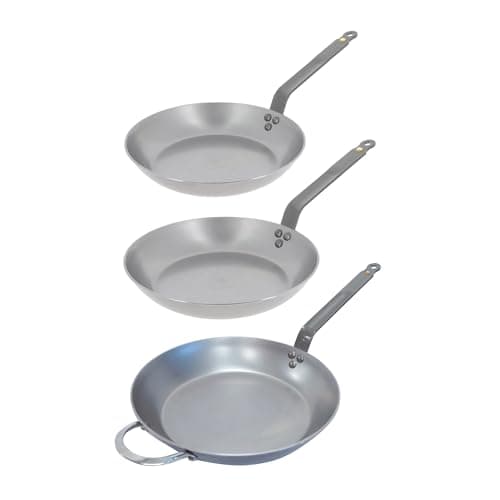
de Buyer Mineral B 3-Pan Set: best carbon steel
 See price on AmazonAmazon
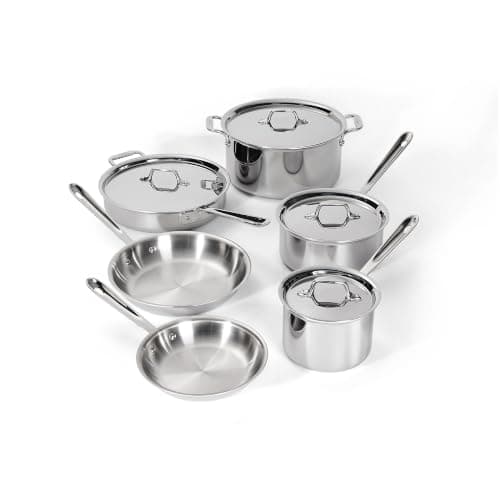
All-Clad D3 10-Piece: bare tri-ply stainless
 See price on AmazonAmazon
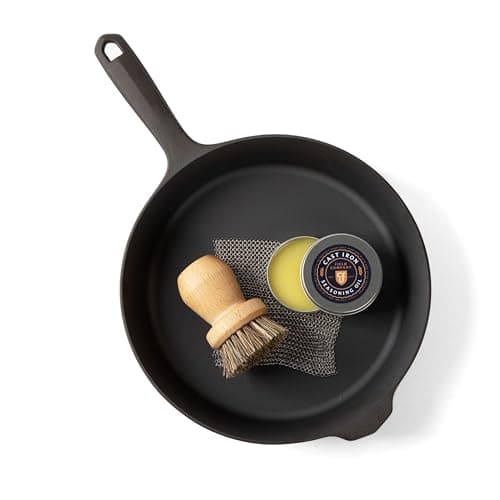
Field 10.25 in Starter Set: 4.3 lb with care kit
From Best premium cast iron skillets: machined and enameled picks