Fix
How to restore a rusty cast iron Dutch oven
Published
Short answer
Scrub the rust off with steel wool and water until you reach bare gray iron, wash and dry the pot completely on a burner or in a warm oven, then reseason it with several very thin coats of oil, each baked in a hot oven. On an enameled Dutch oven, rust usually appears only on the bare iron rim; scrub it lightly, dry it and rub on a little oil.
Cookware for this job
All 6 picks compared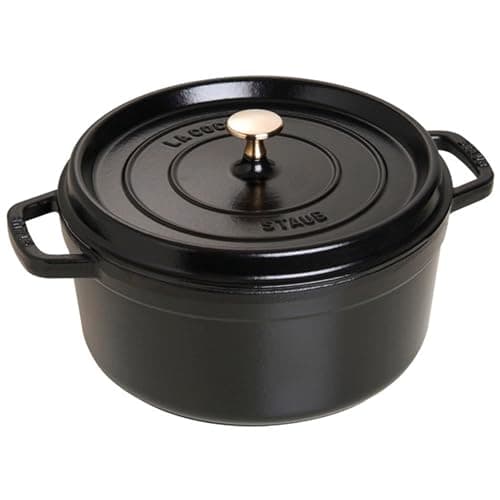
Staub 5.5 qt Round Cocotte: spiked lid, 900°F base limit
See price on AmazonSee it on Amazon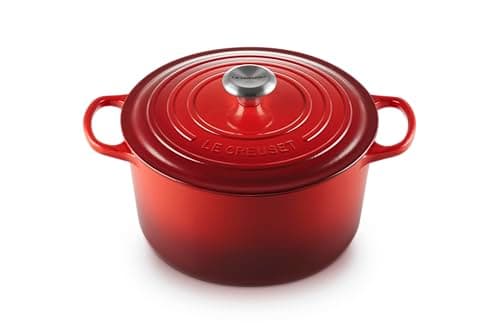
Le Creuset 6.5 qt Deep Round: extra depth for soups
See price on AmazonSee it on Amazon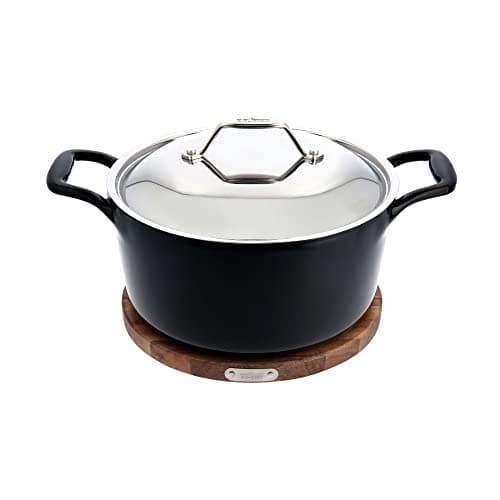
All-Clad 6 qt enameled: 650°F limit, trivet included
See price on AmazonSee it on Amazon
A cast iron Dutch oven left in a damp garage, a camp box or a sink overnight can come out covered in orange rust. Unless the iron is cracked or deeply pitted, it can almost always be restored. This page is for owners of bare cast iron Dutch ovens and of enameled pots with rust on the rim. We explain how to judge whether the pot is salvageable, how to strip rust, how to reseason step by step, how to handle the rim of an enameled pot, and how to store the pot so it does not happen again.
Is your rusty Dutch oven worth saving
Surface rust, even when it covers the whole pot, sits on top of the iron and comes off with scrubbing. Cast iron is thick, so a little metal lost to rust rarely matters. A pot is worth restoring if it has no cracks, the base sits flat, and the lid still fits.
Look closely for cracks, especially around the base and handles, and for deep pits that remain after scrubbing. A cracked pot should be retired. Deep pitting is mostly cosmetic but makes the surface harder to season smoothly. Warping is uncommon in thick cast iron; if the pot rocks on a flat surface, see fix a warped pan.
Light orange spots
- What to do
- Scrub spots, dry, oil, heat
Rust over most of the pot
- What to do
- Full scrub to bare iron and reseason
Flaking black seasoning plus rust
- What to do
- Strip fully and reseason
Rust on bare rim of enameled pot
- What to do
- Light scrub, dry, thin oil
Crack in the iron
- What to do
- Retire the pot
| Condition | What to do |
|---|---|
| Light orange spots | Scrub spots, dry, oil, heat |
| Rust over most of the pot | Full scrub to bare iron and reseason |
| Flaking black seasoning plus rust | Strip fully and reseason |
| Rust on bare rim of enameled pot | Light scrub, dry, thin oil |
| Crack in the iron | Retire the pot |
Step by step: remove the rust
- 1
Rinse the pot and lid with warm water.
- 2
Scrub every rusty area with fine steel wool or a scouring pad and a little dish soap. Work until the orange is gone and you see gray or black iron.
- 3
For heavy rust, soak the pot for a short time in a 50/50 mix of white vinegar and water, checking every 30 minutes. Remove it as soon as the rust loosens, because vinegar attacks bare iron too.
- 4
Scrub again, then rinse well with water to remove all vinegar and loose rust.
- 5
Dry immediately with a towel, then put the pot on a burner or in a warm oven for several minutes to drive off every trace of moisture. Bare iron can flash-rust within minutes if left wet.
Note.Wear gloves when scrubbing heavy rust, and do not leave cast iron in a vinegar soak overnight. Long soaks can pit the iron.
How to reseason a cast iron Dutch oven
Seasoning is oil baked onto the iron until it polymerizes into a hard, protective layer. The secret is thin coats. Thick oil turns sticky and flakes. Use a neutral oil with a high smoke point, such as vegetable, canola or a commercial seasoning oil.
- 1
Preheat the oven to a temperature hot enough to smoke the oil you chose; many cooks use the top of the oil's smoke point range. Check that your oven and pot can take it.
- 2
Rub a small amount of oil over every surface of the warm, dry pot and lid, inside and out, including handles.
- 3
Wipe it all off with a clean lint-free cloth until the pot looks almost dry. What stays on is enough.
- 4
Place the pot and lid upside down in the oven with a sheet of foil on the rack below to catch drips.
- 5
Bake for about an hour, then turn the oven off and let the pot cool inside.
- 6
Repeat the oil, wipe and bake cycle three or more times for a durable base layer.
Rust on the rim of an enameled Dutch oven
Many enameled Dutch ovens, including Le Creuset and Staub, have a band of bare or matte black iron around the rim of the pot and lid where they touch. That band is not coated with glossy enamel and can rust if the pot is put away damp or the lid is stored on tight.
This is common and easy to fix. Scrub the rim gently with a nylon brush or a non-scratch pad, wipe it dry, then rub a drop of cooking oil along the rim with a paper towel. Store the pot with the lid slightly ajar or with a folded towel or pot protector between lid and pot so air can circulate. Do not use steel wool on the enamel itself. If rust appears where the enamel is chipped, see chipped enamel Dutch oven; for brown stains on the enamel, see why your enameled Dutch oven is turning brown.
Keeping cast iron rust-free
If you are choosing a new pot and want to avoid seasoning altogether, an enameled Dutch oven needs no seasoning on the cooking surface. See enameled vs bare cast iron and does Le Creuset need seasoning.
- Dry the pot right after washing, then warm it briefly on a burner.
- Wipe on a very thin film of oil before storing a bare cast iron pot.
- Store with the lid off or propped open so moisture cannot collect.
- Keep it away from the dishwasher and long soaks.
- Cook in it often; regular use with fat maintains the seasoning.
- For camping pots, make sure they are fully dry before packing. See how to store cookware.
When to replace instead of restore
Replace the pot if the iron is cracked, if the base has warped enough to rock badly on a flat cooktop, or if an enameled pot has large chips on the cooking surface that keep spreading. A bare cast iron pot with surface rust, however ugly, is almost never a reason to replace.
If you do replace it, decide first whether you want bare or enameled cast iron. Bare iron is cheaper and handles very high heat; enameled is easier to clean and better for acidic food. Our guides to the best Dutch ovens, the best Le Creuset Dutch ovens and premium cast iron skillets cover both.
Frequently asked questions
Can you fix a rusty Dutch oven? Yes, in almost all cases. Scrub the rust off, dry the pot completely and reseason it with thin coats of oil.
How do I reseason a Dutch oven without an oven? You can build seasoning on the stovetop by heating thin coats of oil in the pot until they smoke, but it is harder to coat the outside and lid evenly. The oven method gives a more even result.
Why does the rim of my Le Creuset rust? The rim is often bare or matte iron where pot and lid meet. Moisture trapped there causes light rust. Scrub, dry and rub on a little oil.
Is it safe to use a Dutch oven with rust on it? Remove visible rust before cooking. Once it is scrubbed off and the pot is reseasoned, it is ready to use.
What you need for this
- See price on AmazonAmazon
Staub 5.5 qt Round Cocotte: spiked lid, 900°F base limit
From Best Dutch ovens for home cooks: enameled and stainless picks
 See price on AmazonAmazon
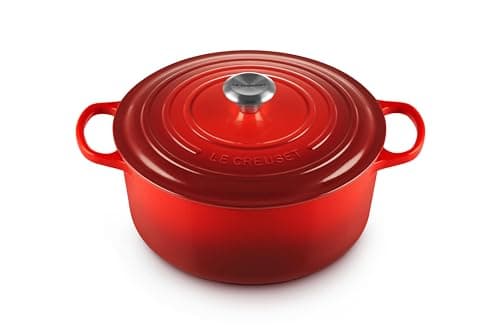
Le Creuset 7.25 qt Round: the family-size classic
From Best Le Creuset Dutch ovens: which shape and size to buy
 See price on AmazonAmazon
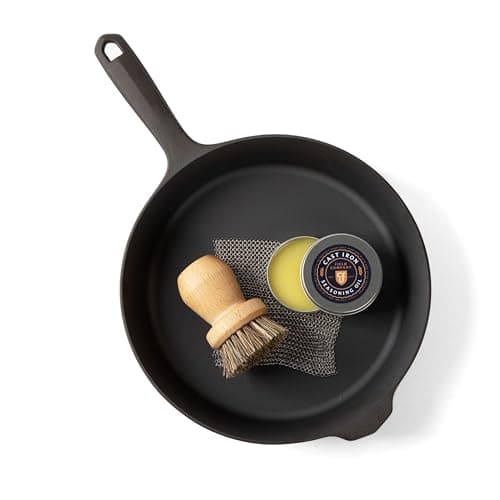
Field 10.25 in Starter Set: 4.3 lb with care kit
From Best premium cast iron skillets: machined and enameled picks