Explainer
How to choose cookware: materials, pieces and sets
Published
Short answer
Choose cookware by the jobs you cook most, not by the size of the set. Most kitchens are well served by a 10 to 12 inch skillet, a 3 quart saucepan, a 3 quart saute pan, a 5.5 quart Dutch oven and a large stock pot. Fully clad stainless covers most tasks, enameled cast iron handles braises and bread, and one nonstick pan makes eggs easy.
Cookware for this job
All 7 picks compared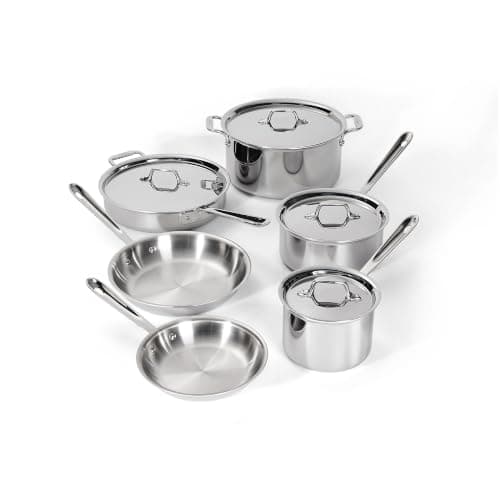
All-Clad D3 10-Piece: best clad stainless set
See price on AmazonSee it on Amazon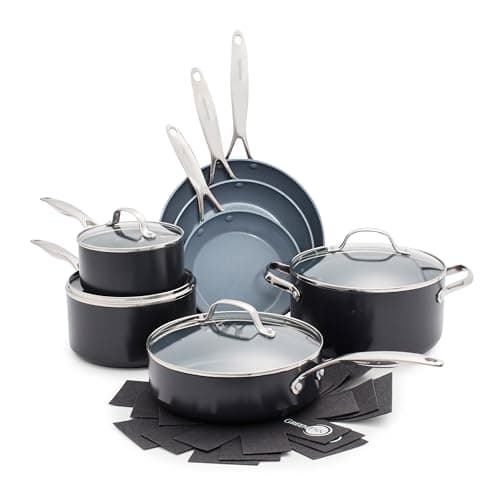
GreenPan Valencia Pro 11-Piece: best ceramic nonstick
See price on AmazonSee it on Amazon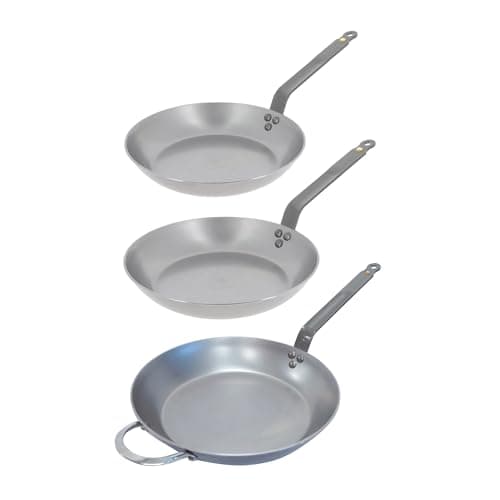
de Buyer Mineral B 3-Pan Set: best carbon steel
See price on AmazonSee it on Amazon
This page is for anyone buying cookware for a first kitchen, replacing a worn set, or upgrading piece by piece. It walks through the main materials and what each does well, the five pieces most kitchens use every day, how to check that cookware suits your cooktop and oven, and when a set is better value than buying pans individually. It is a framework for choosing, with links to detailed guides for each type of pan once you know what you need.
Start with how you cook
Before comparing brands, list what you actually make in a normal week. Searing meat and making pan sauces points to stainless. Lots of eggs and delicate fish points to a nonstick or well-seasoned carbon steel pan. Weekend braises, soups and bread point to an enameled Dutch oven. Pasta and stock need a tall pot.
Also note your cooktop. Induction needs magnetic cookware. Glass tops need flat bases. Gas works with almost anything. Read induction compatible cookware and the gas stove cookware guide if either applies.
Materials and what each does best
No single material does everything well, which is why most good kitchens mix two or three. For a deeper comparison, see stainless steel vs nonstick and enameled vs bare cast iron.
| Material | Braise | Sear | Sauce | Oven | Eggs |
|---|---|---|---|---|---|
| Enameled cast iron | good | fair | fair | good | poor |
| Clad stainless | fair | good | good | good | poor |
| Carbon steel | poor | good | poor | good | good |
| Bare cast iron | fair | good | poor | good | fair |
| Nonstick | poor | poor | fair | fair | good |
good fair poor
Fully clad stainless
- Best for
- Searing, sauces, everyday cooking
- Watch out for
- Food sticks without proper preheating
Enameled cast iron
- Best for
- Braises, stews, bread, oven cooking
- Watch out for
- Heavy; enamel can chip if dropped
Bare cast iron
- Best for
- High-heat searing, cornbread
- Watch out for
- Needs seasoning, heavy, reacts with acid
Carbon steel
- Best for
- Searing, stir-fries, eggs once seasoned
- Watch out for
- Needs seasoning, can rust
PTFE nonstick
- Best for
- Eggs, fish, pancakes
- Watch out for
- Coating wears out; moderate heat only
Ceramic nonstick
- Best for
- Eggs and gentle cooking
- Watch out for
- Release fades over time
Copper
- Best for
- Sauces, caramel, precise heat control
- Watch out for
- Cost and upkeep
| Material | Best for | Watch out for |
|---|---|---|
| Fully clad stainless | Searing, sauces, everyday cooking | Food sticks without proper preheating |
| Enameled cast iron | Braises, stews, bread, oven cooking | Heavy; enamel can chip if dropped |
| Bare cast iron | High-heat searing, cornbread | Needs seasoning, heavy, reacts with acid |
| Carbon steel | Searing, stir-fries, eggs once seasoned | Needs seasoning, can rust |
| PTFE nonstick | Eggs, fish, pancakes | Coating wears out; moderate heat only |
| Ceramic nonstick | Eggs and gentle cooking | Release fades over time |
| Copper | Sauces, caramel, precise heat control | Cost and upkeep |
The five pieces most kitchens use daily
Add a nonstick skillet if you cook eggs often, and a sheet pan or roaster for the oven. Beyond that, buy specialty pieces only when a recipe you make often needs one.
- 10 to 12 inch skillet: the workhorse for searing, sauteing and pan sauces. Stainless or carbon steel.
- 3 quart saucepan with lid: grains, sauces, reheating, boiling eggs.
- 3 quart saute pan with lid: straight sides for shallow braises, sauces and pan-frying without splatter.
- 5.5 quart Dutch oven: stews, braises, soups and bread. See what size Dutch oven to buy.
- 8 to 12 quart stock pot: pasta, stock and big batches.
Sets vs individual pieces
Sets can be good value when most pieces are ones you will use. Watch the piece count: makers count lids as pieces, and many sets include small pans that see little use. A 10 piece set is often five pans and five lids.
Buying individually lets you mix materials, such as clad stainless pans, an enameled Dutch oven and one nonstick skillet. A smaller core set plus one or two individual pieces is often the best balance. See the cookware set guide and the stainless steel cookware set guide.
If budget is tight, spend most on the pieces you use every day, usually the skillet and the Dutch oven, and save on the stock pot, where a disc bottom works fine for boiling. Good clad stainless and enameled cast iron can last for decades with basic care, while nonstick coatings wear out and need replacing, so a cheaper nonstick pan is often the smarter buy.
Check oven and cooktop ratings
Oven limits vary by line and by part. On the makers' own pages: All-Clad D3, D5 and Copper Core are rated to 600F, Made In stainless clad to 800F, All-Clad HA1 nonstick to 500F, GreenPan Valencia Pro to 600F, Caraway ceramic to 550F, and Staub and Lodge enameled cast iron to 500F. Glass lids are usually lower, from 350 to 450F depending on maker. For other lines, check the maker's care page or use the oven temperature checker.
For induction, look for a magnetic base in the listing. For glass tops, look for a flat, smooth base. See cookware for glass top stoves.
Build quality signs to look for
Weight is a tradeoff rather than a quality sign. Heavier pans hold heat but are harder to handle. Pick up a pan, or check listed weights, if lifting is a concern.
- Fully clad construction on skillets and saucepans, not just a disc base
- Riveted or welded handles that feel secure and stay cool on the stovetop
- Lids that sit flat and close without rocking
- A flat base that does not spin on a counter
- Clear care and oven information from the maker
- A meaningful warranty against manufacturing defects
Frequently asked questions
What cookware set should I buy first? A fully clad stainless set with a skillet, two saucepans, a saute pan and a stock pot covers most cooking. Add an enameled Dutch oven and one nonstick skillet.
Is it better to buy a set or individual pieces? A set is good value if you will use most of it. Individual pieces let you mix materials and skip pans you do not need.
What is the most versatile pan? A 10 to 12 inch fully clad stainless skillet or saute pan handles the widest range of everyday cooking.
How many pieces of cookware do I need? Five core pieces cover most meals. Lids count as pieces in set listings, so compare the actual pans.
What you need for this
- See price on AmazonAmazon
All-Clad D3 10-Piece: bare tri-ply stainless
 See price on AmazonAmazon
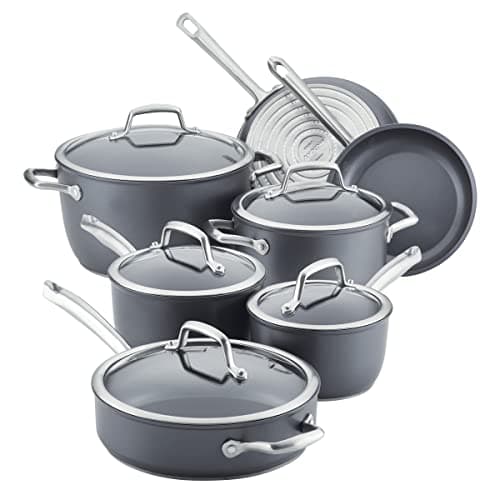
Anolon Accolade 12-Piece: forged, flush rivets
From Best nonstick cookware sets: hard anodized and clad picks
 See price on AmazonAmazon
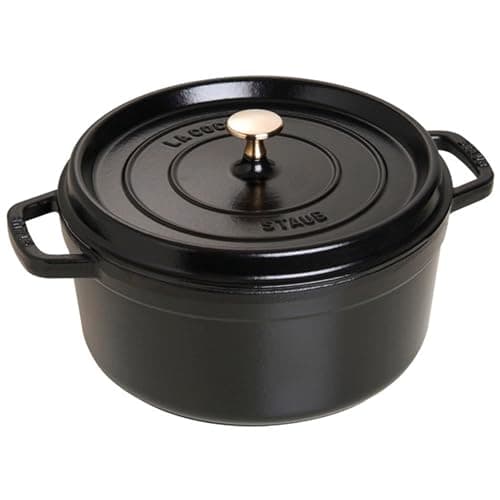
Staub 5.5 qt Round Cocotte: spiked lid, 900°F base limit
From Best Dutch ovens for home cooks: enameled and stainless picks