Explainer
Enameled vs bare cast iron: what the coating changes
Published
Short answer
Enamel is a layer of glass fused to the cast iron. It means no seasoning, no rust on the cooking surface and no worry about acidic food like tomato sauce or wine, which is why most Dutch ovens are enameled. Bare cast iron needs seasoning and care, but it handles very high heat, metal utensils and rough use, and gets more nonstick with time. Many cooks own an enameled Dutch oven and a bare skillet.
Cookware for this job
All 6 picks compared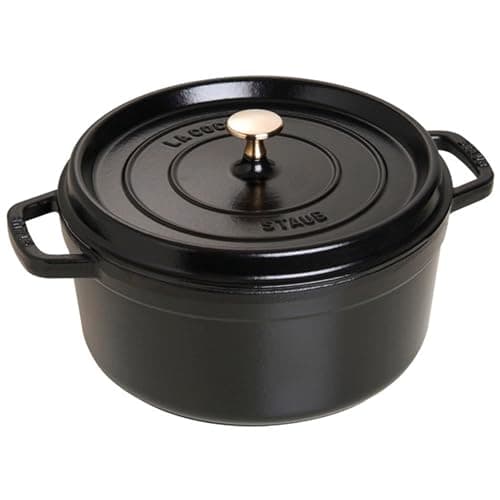
Staub 5.5 qt Round Cocotte: spiked lid, 900°F base limit
See price on AmazonSee it on Amazon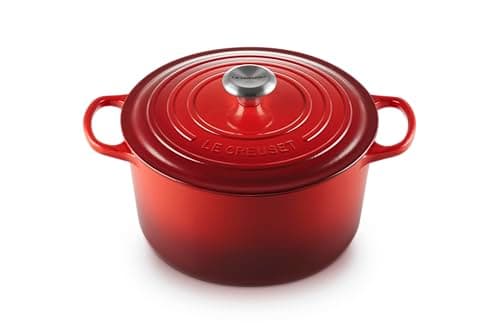
Le Creuset 6.5 qt Deep Round: extra depth for soups
See price on AmazonSee it on Amazon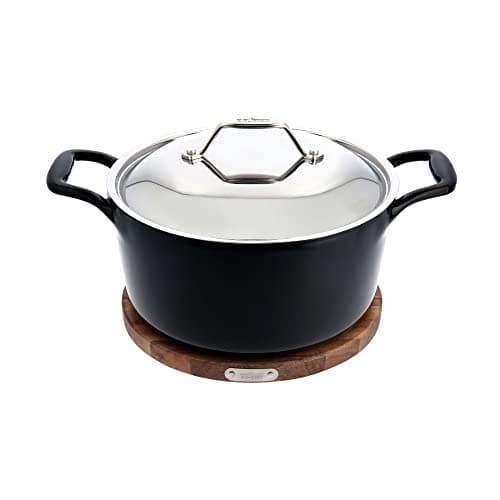
All-Clad 6 qt enameled: 650°F limit, trivet included
See price on AmazonSee it on Amazon
Cast iron comes in two broad kinds: bare, which is seasoned with oil, and enameled, which is coated in a glassy finish. Both hold heat well, and both work on induction. They behave differently with acidic food, high heat, cleaning and long term care. This page is for home cooks choosing between a bare cast iron Dutch oven or skillet and an enameled one from Le Creuset, Staub or Lodge. It explains what the enamel coating actually changes and which kind suits which job.
What enamel is
Enameled cast iron is cast iron coated with a vitreous enamel, which is powdered glass fused to the metal at high temperature. The interior may be light colored, like the sand interior on many Le Creuset pots, or black matte, like Staub's interior. The outside is usually colored enamel. The rim where the lid sits is often left as exposed iron.
Bare cast iron has no glass layer. Its cooking surface is protected by seasoning, a film of polymerized oil built up over time. Most bare cast iron sold today comes pre-seasoned from the factory.
Why Dutch ovens are usually enameled
Dutch ovens spend a lot of time holding liquid: stews, braises, soups, beans and tomato sauces simmered for hours. Long contact with acidic liquid strips seasoning from bare cast iron and can give food a metallic taste. Enamel is not reactive, so it handles wine braises and tomato sauces without trouble. Enamel also means the pot does not rust on the inside if it is left damp, and it can be cleaned with soap and soaked.
Bare cast iron Dutch ovens do exist and are common for camping and outdoor cooking over coals, where the toughness of bare iron matters more. For the indoor kitchen, enameled is the usual choice. For more on how they work, see what is a Dutch oven.
Side by side
Seasoning
- Enameled cast iron
- Not needed
- Bare cast iron
- Needed and maintained
Acidic food
- Enameled cast iron
- Fine for long simmers
- Bare cast iron
- Short cooking only; long simmers strip seasoning
Rust
- Enameled cast iron
- Cooking surface does not rust; exposed rim can
- Bare cast iron
- Rusts if left wet or unseasoned
Soap and soaking
- Enameled cast iron
- Fine
- Bare cast iron
- Soap fine on good seasoning; no soaking
Metal utensils
- Enameled cast iron
- Can scratch or mark enamel
- Bare cast iron
- Fine
Very high dry heat
- Enameled cast iron
- Avoid; can damage enamel
- Bare cast iron
- Fine
Nonstick over time
- Enameled cast iron
- Does not build seasoning
- Bare cast iron
- Gets slicker with use
Thermal shock
- Enameled cast iron
- Enamel can crack or craze
- Bare cast iron
- More tolerant, can still crack
Oven limit
- Enameled cast iron
- Usually set by the knob or lid
- Bare cast iron
- Usually no practical limit for all-metal pieces
Price
- Enameled cast iron
- Higher
- Bare cast iron
- Lower
| Feature | Enameled cast iron | Bare cast iron |
|---|---|---|
| Seasoning | Not needed | Needed and maintained |
| Acidic food | Fine for long simmers | Short cooking only; long simmers strip seasoning |
| Rust | Cooking surface does not rust; exposed rim can | Rusts if left wet or unseasoned |
| Soap and soaking | Fine | Soap fine on good seasoning; no soaking |
| Metal utensils | Can scratch or mark enamel | Fine |
| Very high dry heat | Avoid; can damage enamel | Fine |
| Nonstick over time | Does not build seasoning | Gets slicker with use |
| Thermal shock | Enamel can crack or craze | More tolerant, can still crack |
| Oven limit | Usually set by the knob or lid | Usually no practical limit for all-metal pieces |
| Price | Higher | Lower |
Searing and heat
Both kinds hold heat well and sear meat beautifully once preheated. The difference is how much heat you can safely use. Bare cast iron can sit on a high flame, go under a broiler, or go into a campfire. Enameled cast iron is happiest at low to medium heat, and makers warn against heating it empty on high, because the enamel and the iron expand at different rates and rapid heating can crack the enamel.
Black matte enamel interiors, like Staub's, are often described as good for browning. Light colored interiors make it easier to see fond developing so you can manage heat. Neither builds seasoning the way bare iron does, so eggs and delicate food tend to stick more in an enameled pan. For heat technique, see how to use a Dutch oven and how to preheat pans.
Oven use
On enameled cast iron the oven limit is usually set by the knob or lid, not the iron. Staub rates its cocottes with metal knobs to 500°F, and Lodge rates its enameled cast iron to 500°F. Le Creuset rates its older black phenolic knob to 390°F. For other knobs and lines, check the maker's care page or use our oven temperature limit checker.
An all-metal bare cast iron skillet or pot has no practical oven limit in a home oven. Remove any silicone handle sleeve before it goes in.
Care and durability
Enamel is tough but not indestructible. Dropping a pot, banging it against a sink, using metal utensils, or thermal shock can chip it. Interior chips expose iron and can spread, which is why maker warranties matter. See chipped enamel on a Dutch oven. Enamel interiors also stain over time, which is cosmetic; see enameled Dutch oven turning brown.
Bare cast iron is close to indestructible, but it rusts if neglected. Rust can almost always be scrubbed off and the pan reseasoned, so a bare pan found rusty in a garage can often be restored. For that, see rusty cast iron Dutch oven. Bare iron needs drying after every wash and a light coat of oil.
Which one should you buy?
Many kitchens end up with both: an enameled Dutch oven for wet cooking and a bare skillet for dry, high heat cooking. For picks, see the best Dutch oven and best premium cast iron skillet guides. If weight is a concern with a skillet, carbon steel is a lighter option; see carbon steel vs cast iron.
- For stews, braises, soups, beans and bread: an enameled Dutch oven.
- For searing steaks, cornbread, frying and high heat: a bare cast iron skillet.
- For camping and cooking over coals: bare cast iron.
- For low maintenance and soap and water cleanup: enameled.
- For the lowest price: bare cast iron.
Frequently asked questions
Why are Dutch ovens enameled? Enamel lets the pot handle long simmers of acidic food, prevents rust on the cooking surface, and removes the need for seasoning.
Is a Dutch oven with no enamel worse? Not worse, just different. Bare cast iron handles higher heat and rough use, but needs seasoning and is less suited to long acidic braises.
Does enameled cast iron need seasoning? No. The enamel is the cooking surface. The exposed iron rim can benefit from a light coat of oil. See does Le Creuset need seasoning.
Do both work on induction? Yes. Cast iron is magnetic, so both enameled and bare cast iron work on induction cooktops.
What you need for this
- See price on AmazonAmazon
Staub 5.5 qt Round Cocotte: spiked lid, 900°F base limit
From Best Dutch ovens for home cooks: enameled and stainless picks
 See price on AmazonAmazon
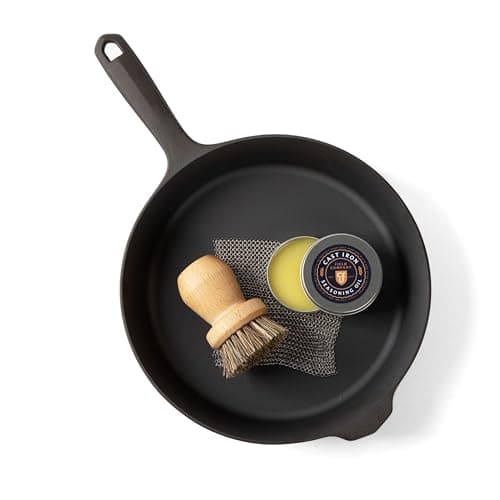
Field 10.25 in Starter Set: 4.3 lb with care kit
From Best premium cast iron skillets: machined and enameled picks
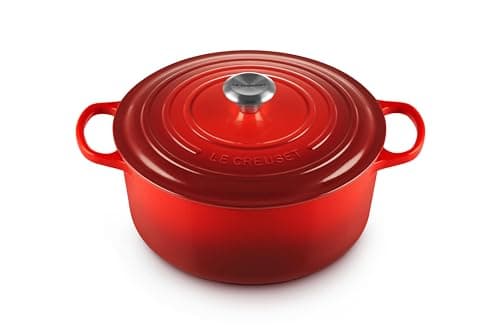 See price on AmazonAmazon
Le Creuset 7.25 qt Round: the family-size classic
From Best Le Creuset Dutch ovens: which shape and size to buy
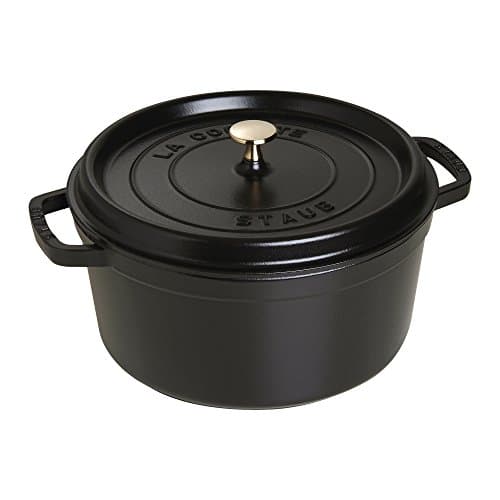 See price on AmazonAmazon
Staub 7 qt Round: spiked lid, serves 7-8