Fix
Carbon steel pan rust and flaking seasoning: how to fix it
Published
Short answer
Yes, carbon steel rusts, because it has no chromium to protect it. Light rust scrubs off with steel wool and water; dry the pan on the burner, wipe on a very thin layer of oil and heat it until it smokes. Sticky patches mean too much oil: heat the pan longer or scrub them back. Flaking usually comes from thick seasoning layers and is fixed by scrubbing the loose area and reseasoning thinly.
Cookware for this job
All 6 picks compared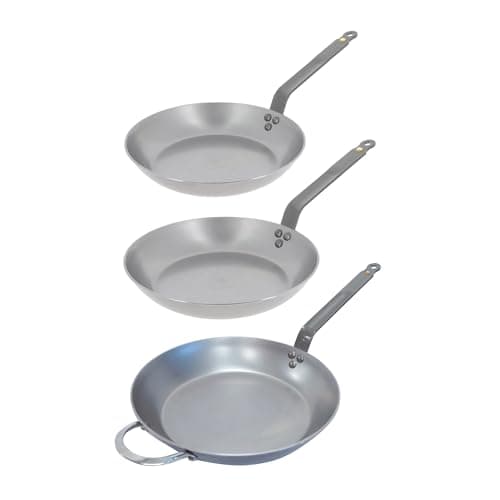
de Buyer Mineral B 3-Pan Set: 8, 10.25 and 12.5 in
See price on AmazonSee it on Amazon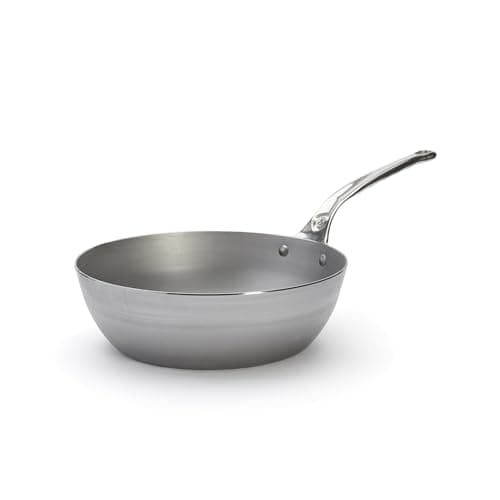
de Buyer Mineral B Pro Country Pan 11 in: high sides
See price on AmazonSee it on Amazon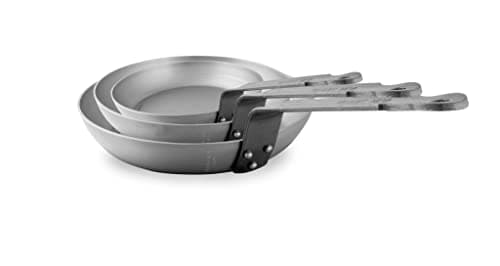
Mauviel M'Steel 3-Piece Set: 7.9, 9.4 and 11 in
See price on AmazonSee it on Amazon
A carbon steel pan that comes out of the cupboard with orange spots, a tacky surface or black flakes is not ruined. These are the three most common problems with carbon steel, and all three are fixable at home with a scrubber, oil and a burner. This page is for owners who want to know what went wrong and how to fix it. We cover how to tell the problems apart, step by step fixes for each, when to strip the pan back to bare metal, and the routine that prevents them.
Why carbon steel rusts and flakes
Carbon steel is mostly iron. Without the chromium that protects stainless steel, bare iron reacts with water and oxygen and forms rust. Seasoning, a hard layer of polymerized oil, is the only barrier. Wherever the seasoning is thin, scratched or damaged, moisture can reach the steel.
Flaking and stickiness are seasoning problems rather than steel problems. Seasoning works best as many very thin layers. Thick layers do not fully polymerize, stay soft and tacky, and can later crack and flake off, especially when the pan heats and cools. Acidic food and long soaks also weaken seasoning.
Identify the problem
Black flakes are carbonized oil, not paint or a coating, and carbon steel pans are generally sold bare or with a temporary wax or oil coating rather than a nonstick layer. If your pan has a factory coating, check the maker's care page for how to treat it.
Orange or brown spots
- Cause
- Moisture on thin seasoning
- Fix
- Scrub, dry, oil thinly, heat
Large rusty area
- Cause
- Pan stored wet or soaked
- Fix
- Scrub to bare metal, reseason
Sticky or tacky surface
- Cause
- Oil applied too thick, underheated
- Fix
- Heat longer or scrub back
Black flakes in food
- Cause
- Thick seasoning breaking off
- Fix
- Scrub loose areas, reseason thinly
Dull gray patch after acidic food
- Cause
- Seasoning stripped
- Fix
- Reseason that area
| What you see | Cause | Fix |
|---|---|---|
| Orange or brown spots | Moisture on thin seasoning | Scrub, dry, oil thinly, heat |
| Large rusty area | Pan stored wet or soaked | Scrub to bare metal, reseason |
| Sticky or tacky surface | Oil applied too thick, underheated | Heat longer or scrub back |
| Black flakes in food | Thick seasoning breaking off | Scrub loose areas, reseason thinly |
| Dull gray patch after acidic food | Seasoning stripped | Reseason that area |
How to fix spot rust
Light surface rust is cosmetic. Once removed, the pan is as good as before. A patch of lighter color where you scrubbed will darken with cooking.
- 1
Scrub the rusty spots with fine steel wool or a scouring pad and a little water until the orange is gone and you see gray or black.
- 2
Rinse and dry with a towel, then set the pan on a burner over medium heat for a few minutes to drive off all moisture.
- 3
With the pan warm, add a few drops of neutral, high smoke point oil and rub it over the whole cooking surface with a paper towel.
- 4
Wipe it off again with a clean towel until the pan looks almost dry. The film should be very thin.
- 5
Heat the pan until it just starts to smoke, then let it cool. Repeat the oil, wipe and heat steps two or three times on the bare area.
- 6
Cook something fatty, such as bacon or fried potatoes, for the next few uses to rebuild the seasoning.
Note.Heating oil to smoking produces smoke and fumes. Turn on the range hood or open a window, and keep a lid nearby in case oil flares.
How to fix sticky and flaking seasoning
Sticky patches mean oil that has not fully polymerized. Often the easiest fix is to put the pan on a burner, or in a hot oven if the handle allows, and heat it until the tackiness is gone. If the layer is thick and gummy, scrub it back with hot water and a stiff brush or steel wool, then reseason thinly.
Flaking means the seasoning has built up too thick and is coming apart. Scrub the flaking areas with steel wool until the edges are smooth and no loose flakes remain. You do not need to strip the whole pan unless flaking is widespread. Reseason the scrubbed area with very thin coats as described above. A flake or two in food is unpleasant but is only carbonized oil.
When to strip to bare metal
If rust covers most of the pan, or the seasoning is flaking everywhere, start over. Scrub the whole pan with steel wool and hot water until it is uniformly gray. Some cooks use a vinegar and water soak for short periods to loosen heavy rust; do not leave the pan in vinegar for long, and rinse and dry it right away.
Then season it as if it were new: several very thin coats of oil, each heated past the smoke point. Our how to season a carbon steel pan page has the full method. A carbon steel pan stripped and reseasoned properly is as good as new, which is one reason these pans last for decades. If your pan is also warped, see fix a warped pan before reseasoning.
How to prevent rust and flaking
If the routine sounds like too much, a clad stainless pan needs none of it. If you like carbon steel and want a better pan, our best carbon steel pans guide lists models with thicker bases that hold seasoning well. For the material itself, see what is carbon steel cookware.
- Dry the pan on a burner after every wash, not just with a towel.
- Wipe on a very thin layer of oil while the pan is warm, then wipe most of it off.
- Never soak the pan or put it in the dishwasher.
- Keep long tomato, wine or vinegar simmers for stainless or enameled pots.
- Store it in a dry cupboard, not near the sink or dishwasher steam. See how to store cookware.
- Cook with it often. Regular use is the best maintenance.
Frequently asked questions
Do carbon steel pans rust? Yes. Carbon steel has no chromium, so bare or thinly seasoned areas rust if left wet. Drying on the burner and a thin oil coat prevent it.
Is it safe to cook in a carbon steel pan with a little rust? Remove visible rust before cooking. Scrub it off, dry and oil the pan, and it is ready to use.
Why is my carbon steel pan sticky after seasoning? Too much oil or not enough heat. Heat the pan longer to finish polymerizing the oil, and use thinner coats next time.
Can I use soap on carbon steel? A little dish soap will not strip well-polymerized seasoning. Avoid soaking and harsh scouring on areas you want to keep seasoned.
What you need for this
- See price on AmazonAmazon
de Buyer Mineral B 3-Pan Set: best carbon steel
 See price on AmazonAmazon
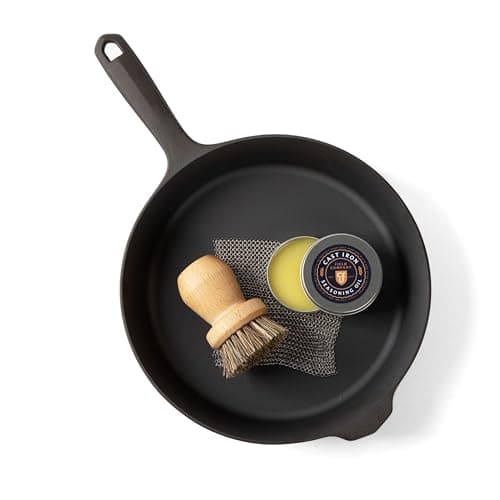
Field 10.25 in Starter Set: 4.3 lb with care kit
From Best premium cast iron skillets: machined and enameled picks