Fix
How to clean a burnt stainless steel pan
Published
Short answer
Start gentle. Simmer water in the pan for a few minutes and scrape with a wooden spatula. If burnt residue remains, make a paste of baking soda and a little water, let it sit, and scrub with a non-scratch sponge. For stubborn black or brown stains, use an oxalic acid cleanser made for stainless steel, following the label. Avoid steel wool on polished surfaces and never plunge a hot pan into cold water.
Cookware for this job
All 7 picks compared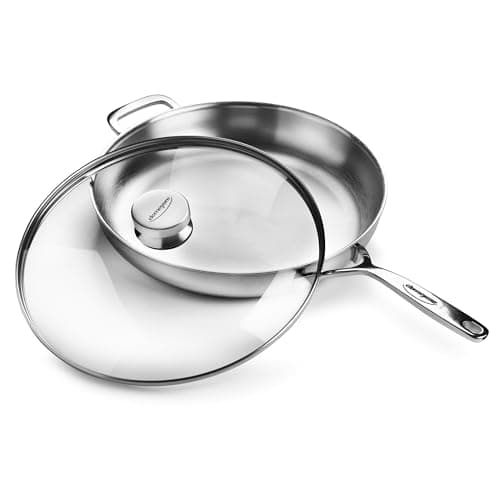
Demeyere 5-Plus 12.5 in with Glass Lid: 3 mm 5-ply
See price on AmazonSee it on Amazon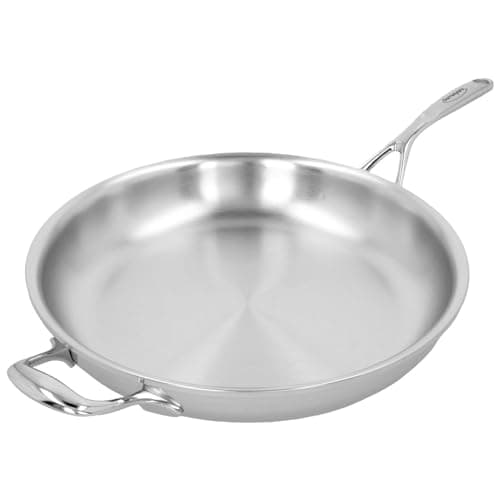
Demeyere Atlantis Proline 12.6 in: 7-ply, helper handle
See price on AmazonSee it on Amazon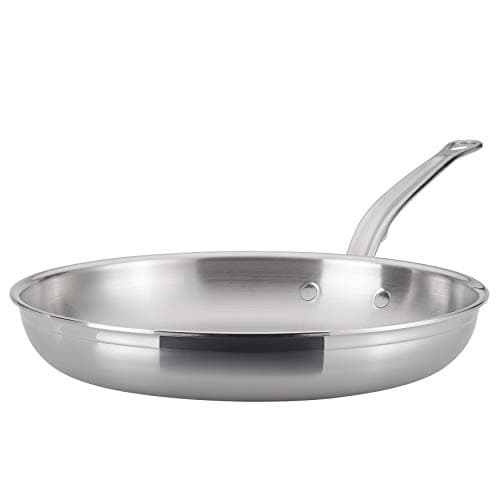
Hestan ProBond Forged 12.5 in: dishwasher safe
See price on AmazonSee it on Amazon
Burnt sugar, scorched rice or a forgotten pan sauce can leave a stainless steel pan looking ruined. It almost never is. Stainless steel is tough, and most burnt food comes off with heat, water and a mild abrasive. This page is for anyone with a clad stainless pan from All-Clad, Made In or another maker who wants to restore it safely. It lays out methods from gentlest to strongest, how to treat the outside and the base, and how to keep it from happening again.
Before you start
Let the pan cool until it is warm, not hot. Putting a very hot pan into cold water can cause thermal shock, which can warp the pan, especially a thinner one. Scrape out loose food with a wooden spatula. Then work through the methods below in order, stopping as soon as the pan is clean. Each step adds abrasion or chemistry, so there is no reason to jump to the strongest one first.
Check whether your pan is fully stainless or has another finish. Some pans have a brushed or copper exterior, or a nonstick interior. The methods here are for bare stainless cooking surfaces. For copper exteriors, see copper cookware care.
Note.Wear gloves when using cleansers, follow the label, and never mix cleaning products, especially bleach with acids or ammonia.
Step 1: Deglaze and simmer
This works best on fresh fond and lightly scorched sauce. A splash of white vinegar in the water can help loosen mineral deposits and some stains. Adding a squirt of dish soap to the simmering water also helps cut through greasy residue.
- 1
Add enough water to cover the burnt area by about half an inch.
- 2
Bring it to a simmer on medium heat for a few minutes.
- 3
Scrape the bottom with a flat wooden spatula while the water simmers. Much of the residue lifts off.
- 4
Pour out the water, let the pan cool slightly, and wash with dish soap and a non-scratch sponge.
Step 2: Baking soda paste or boil
Baking soda is a mild alkaline abrasive that is safe on stainless steel. For a thin layer of burnt food, sprinkle baking soda over the damp pan, add a little water to make a thick paste, and let it sit for 15 minutes to an hour. Then scrub with a non-scratch sponge or a nylon brush, working in the direction of the grain if the pan has a brushed finish.
For thicker burnt layers, add a few tablespoons of baking soda to a shallow layer of water and bring it to a simmer for several minutes. Let it cool, then scrub. You can repeat this several times. Patience works better than force here.
Step 3: Oxalic acid cleanser for stubborn stains
When baked-on brown or black residue will not move, a powdered or liquid cleanser based on oxalic acid is the standard next step. Bar Keepers Friend is the best known example, and several cookware makers, including All-Clad, mention it in their care guidance for stainless. Oxalic acid breaks down burnt-on oil, mineral deposits and the rainbow heat tint that stainless gets after high heat.
Wet the pan, sprinkle a small amount of cleanser, and work it into a paste with a damp sponge. Scrub gently, then rinse thoroughly and wash with soap and water so no residue is left behind. Follow the product label on contact time and ventilation. Do not leave the paste on for a long time, and rinse well.
Discoloration that remains after cleaning is usually cosmetic and does not affect cooking. Our page on stainless steel pan discoloration explains the different stains and what causes them.
Simmer water and scrape
- Best for
- Fresh fond, light scorching
- Caution
- Let a hot pan cool slightly before adding cold water
Dish soap and soak
- Best for
- Greasy film, stuck food
- Caution
- Soak only, do not leave wet for days
Baking soda paste
- Best for
- Thin burnt layer
- Caution
- Use non-scratch pads
Baking soda simmer
- Best for
- Thick burnt layer
- Caution
- Repeat rather than forcing it
Oxalic acid cleanser
- Best for
- Baked-on stains, heat tint, film
- Caution
- Follow the label, rinse well, wear gloves
Steel wool
- Best for
- Last resort on very rough spots
- Caution
- Scratches polished finishes
| Method | Best for | Caution |
|---|---|---|
| Simmer water and scrape | Fresh fond, light scorching | Let a hot pan cool slightly before adding cold water |
| Dish soap and soak | Greasy film, stuck food | Soak only, do not leave wet for days |
| Baking soda paste | Thin burnt layer | Use non-scratch pads |
| Baking soda simmer | Thick burnt layer | Repeat rather than forcing it |
| Oxalic acid cleanser | Baked-on stains, heat tint, film | Follow the label, rinse well, wear gloves |
| Steel wool | Last resort on very rough spots | Scratches polished finishes |
Cleaning the outside and the base
The outside of a pan often gets brown polymerized grease, especially near the base and the handle rivets. The same methods apply: baking soda paste or an oxalic acid cleanser, a non-scratch pad, and patience. For the underside, set the pan upside down on a towel in the sink, apply the paste, let it sit, and scrub.
Avoid oven cleaner unless the maker of your pan says it is safe. Oven cleaners are strong caustic products, and they can damage handles, rivets or other finishes. Check the maker's care page before using anything stronger than the methods above.
What to avoid
If a pan has lost its flat base after a heat shock, see how to fix a warped pan. For whether a dishwasher is safe for your pans at all, see is cookware dishwasher safe.
- Steel wool and coarse scouring pads on polished stainless, which leave scratches.
- Chlorine bleach, which can pit and stain stainless steel.
- Cold water on a very hot pan, which can warp it.
- Leaving salty water or acidic food in the pan for long periods, which can cause pitting.
- Dishwasher detergent on burnt residue in place of scrubbing, since it will not remove it and may dull the finish.
How to keep it from happening again
Most burnt pans come from heat that is too high for too long. Clad stainless pans conduct heat well, so medium heat is enough for most cooking. Deglaze while the pan is still warm, since that lifts fond before it sets. When simmering sauces or cooking rice, stir and keep an eye on the bottom.
Food also burns more often in thin pans and pans with only a disc on the bottom, where heat concentrates. A fully clad pan spreads heat up the sides. If you are replacing a burnt or warped pan, our best stainless steel frying pan and best stainless steel cookware set guides compare clad options. For preventing sticking in the first place, see why food sticks to stainless steel.
Frequently asked questions
Can a burnt stainless steel pan be saved? Almost always. Stainless steel does not absorb burnt food, so heat, baking soda and an oxalic acid cleanser usually remove even heavy residue.
Is Bar Keepers Friend safe on stainless steel? It is widely used on stainless steel cookware and several makers mention it. Follow the label, use a soft sponge and rinse well.
Does vinegar clean burnt stainless steel? Vinegar helps with mineral spots and some stains. For heavily burnt food, baking soda or an oxalic acid cleanser works better.
Why does my stainless pan have rainbow stains? That is heat tint, a thin oxide layer from high heat. It is cosmetic and usually wipes off with an oxalic acid cleanser.
What you need for this
- See price on AmazonAmazon
Demeyere 5-Plus 12.5 in with Glass Lid: 3 mm 5-ply
 See price on AmazonAmazon
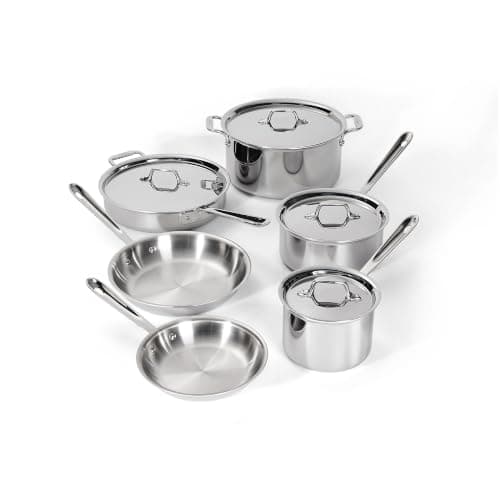
All-Clad D3 10-Piece: bare tri-ply stainless
From Best stainless steel cookware sets, compared piece by piece