Explainer
Can you put Le Creuset, All-Clad and Staub in the dishwasher
Published
Short answer
Many enameled cast iron and clad stainless pieces from makers like Le Creuset, Staub and All-Clad are described as dishwasher safe, but the makers' care guides generally recommend hand washing to keep the finish looking its best. Bare cast iron and carbon steel should never go in the dishwasher. Nonstick lasts longer washed by hand. Rules vary by line and can change, so check the maker's care page for your exact piece.
Cookware for this job
All 7 picks compared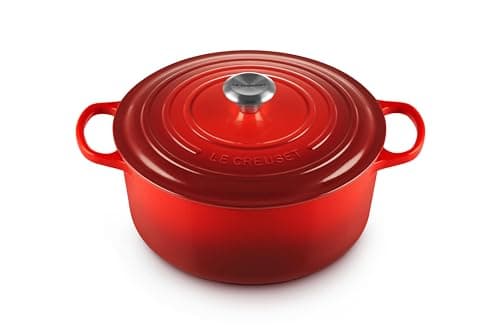
Le Creuset Round 7.25 qt: room for big batches
See price on AmazonSee it on Amazon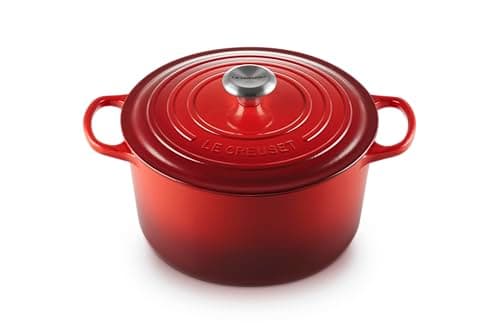
Le Creuset Signature Deep Round 6.5 qt: tall sides
See price on AmazonSee it on Amazon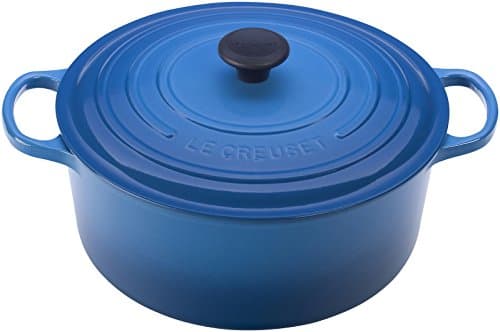
Le Creuset Signature Round 9 qt: the crowd pot
See price on AmazonSee it on Amazon
Premium cookware costs a lot, and nobody wants to ruin a pot by loading it in the dishwasher. The answer depends on the material more than the brand. This page is for home cooks with Le Creuset, Staub, All-Clad or similar cookware who want to know what is safe. It covers what makers generally say for each material, what dishwashers actually do to finishes, which pieces should never go in, and an easy hand washing routine that takes only a few minutes.
Quick answer by material
Enameled cast iron (Le Creuset, Staub)
- Dishwasher?
- Often allowed, hand washing recommended
- Why
- Detergent can dull the exterior enamel and dry out the exposed iron rim
Clad stainless (All-Clad D3, D5)
- Dishwasher?
- Often allowed, hand washing recommended
- Why
- Detergent can dull the polish and discolor aluminum edges on some pans
Copper exterior or copper core
- Dishwasher?
- Hand wash
- Why
- Detergent tarnishes and discolors copper
Nonstick (PTFE or ceramic)
- Dishwasher?
- Hand wash, even if labeled safe
- Why
- Heat and harsh detergent wear the coating faster
Bare cast iron
- Dishwasher?
- Never
- Why
- Strips seasoning and causes rust
Carbon steel
- Dishwasher?
- Never
- Why
- Strips seasoning and causes rust
Wooden or phenolic handles and knobs
- Dishwasher?
- Hand wash
- Why
- Heat and water can crack or loosen them
| Material | Dishwasher? | Why |
|---|---|---|
| Enameled cast iron (Le Creuset, Staub) | Often allowed, hand washing recommended | Detergent can dull the exterior enamel and dry out the exposed iron rim |
| Clad stainless (All-Clad D3, D5) | Often allowed, hand washing recommended | Detergent can dull the polish and discolor aluminum edges on some pans |
| Copper exterior or copper core | Hand wash | Detergent tarnishes and discolors copper |
| Nonstick (PTFE or ceramic) | Hand wash, even if labeled safe | Heat and harsh detergent wear the coating faster |
| Bare cast iron | Never | Strips seasoning and causes rust |
| Carbon steel | Never | Strips seasoning and causes rust |
| Wooden or phenolic handles and knobs | Hand wash | Heat and water can crack or loosen them |
Le Creuset and Staub enameled cast iron
Enamel is glass, so it handles detergent and hot water better than seasoning does. That is why many enameled cast iron pieces are described as dishwasher safe. Even so, both Le Creuset and Staub recommend hand washing in their care guidance. Over many cycles, strong dishwasher detergent can dull the glossy exterior, and the exposed iron rim where the lid sits can dry out or show rust spots.
There is also the practical issue of size and weight. A 5.5 qt or larger Dutch oven takes most of a dishwasher rack and can knock against other dishes, which risks chipping the enamel. Lids with phenolic or composite knobs are another reason to hand wash, since repeated heat cycles can wear knobs over time.
If your pot has baked-on food, a soak in warm soapy water usually does more than a dishwasher cycle. See how to clean Le Creuset and enameled Dutch oven turning brown for stains.
All-Clad and other clad stainless
Fully clad stainless steel is durable, and the stainless cooking surface itself is not harmed by detergent. All-Clad describes many of its stainless pieces as dishwasher safe, but its care guidance favors hand washing. Dishwasher detergents are abrasive and alkaline, and over time they can dull a polished exterior. On some pans the aluminum core is visible at the rim, and that edge can darken or discolor in the dishwasher.
Copper Core and copper exterior pans need more care, since copper reacts with detergent and tarnishes. All-Clad nonstick lines wear faster in the dishwasher, like any nonstick. Check the care page for your line. For burnt residue, a dishwasher will not do much anyway; see how to clean a burnt stainless steel pan.
Never in the dishwasher: bare cast iron and carbon steel
Bare cast iron and carbon steel are protected only by seasoning. A dishwasher cycle with hot water, long wet time and strong detergent can strip that seasoning and leave the pan rusty by the end of the cycle. Rust can be fixed, but it means scrubbing and reseasoning.
Wash these pans by hand with hot water and a brush, a little soap if needed, then dry them on a burner and wipe on a thin coat of oil. See how to season a carbon steel pan, carbon steel pan rust and rusty cast iron Dutch oven if one has already been through the dishwasher.
Note.If a bare cast iron or carbon steel pan comes out of the dishwasher rusty, scrub off the rust, dry it fully on heat, and reseason with thin coats of oil.
Nonstick: hand wash even if it says dishwasher safe
Many nonstick pans are labeled dishwasher safe, and an occasional cycle will not ruin one. Over time, though, the heat and harsh detergent wear the coating and can dull the release. Since nonstick is already the shortest lived cookware in the kitchen, hand washing with a soft sponge is the easiest way to extend its life. See when to replace nonstick pans for the signs of a worn coating.
A quick hand washing routine
Once dry, store pieces so they do not knock together. See how to store cookware. For durable stainless picks that tolerate everyday use, see the best stainless steel cookware set guide, and for enameled pots, the best Dutch oven guide.
- 1
Let the pan cool until warm. Hot pans in cold water can warp or crack enamel.
- 2
Scrape out food with a wooden or silicone spatula.
- 3
For stuck food, add warm water and a drop of dish soap and let it soak for 15 to 30 minutes (not for bare cast iron or carbon steel).
- 4
Wash with a soft sponge or nylon brush. Use baking soda paste for stubborn spots.
- 5
Rinse and dry fully with a towel. Dry the rim of enameled pots and the inside of rolled rims.
- 6
For bare iron and carbon steel, dry on a burner and add a thin coat of oil.
Frequently asked questions
Can you put Le Creuset in the dishwasher? Many Le Creuset enameled pieces are described as dishwasher safe, but Le Creuset recommends hand washing to keep the finish. Check the care page for your piece.
Is All-Clad dishwasher safe? Many All-Clad stainless pieces are described as dishwasher safe, but hand washing keeps the polish and edges looking better. Check the care page for your line.
Is Staub dishwasher safe? Staub enameled cast iron is often described as dishwasher safe, with hand washing recommended. The large size makes hand washing easier in practice.
Can you put a bare cast iron Dutch oven in the dishwasher? No. It strips the seasoning and causes rust. Wash by hand and dry on heat.
What you need for this
- See price on AmazonAmazon
Le Creuset 7.25 qt Round: the family-size classic
From Best Le Creuset Dutch ovens: which shape and size to buy
 See price on AmazonAmazon
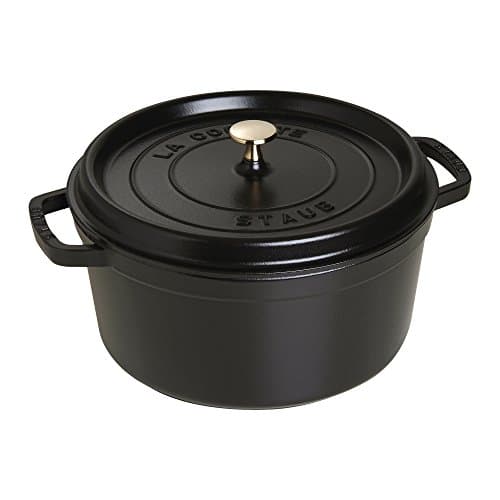
Staub 7 qt Round: spiked lid, serves 7-8
 See price on AmazonAmazon
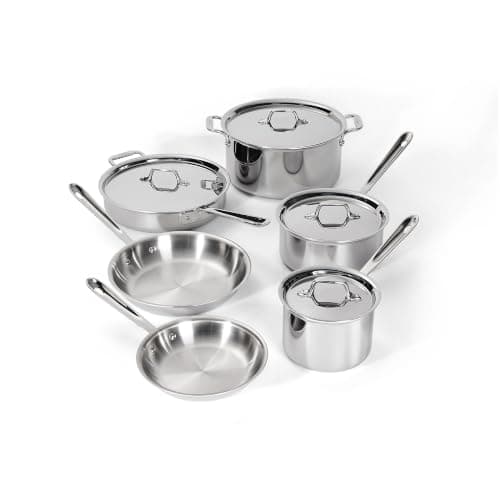
All-Clad D3 10-Piece: bare tri-ply stainless
From Best All-Clad cookware: D3, D5, Copper Core and HA1 picks