Explainer
What is a Dutch oven and what is it for
Published
Short answer
A Dutch oven is a heavy, deep pot with thick walls and a tight-fitting lid, usually made of cast iron, bare or enameled. It holds steady heat on the stove and in the oven, which makes it the go-to pot for braising, stews, soups, deep frying and baking crusty bread. A French oven or cocotte is the same kind of pot with an enamel coating; the names differ more than the pots do.
Cookware for this job
All 6 picks compared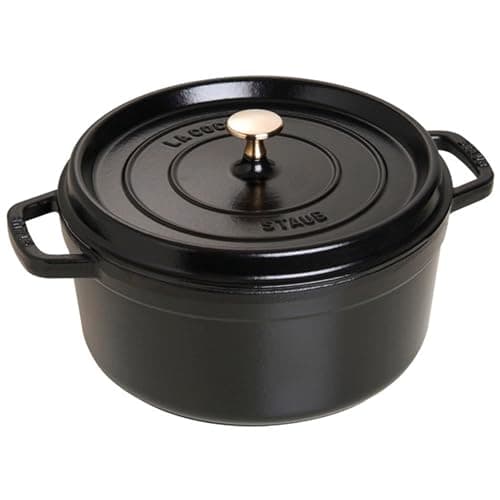
Staub 5.5 qt Round Cocotte: spiked lid, 900°F base limit
See price on AmazonSee it on Amazon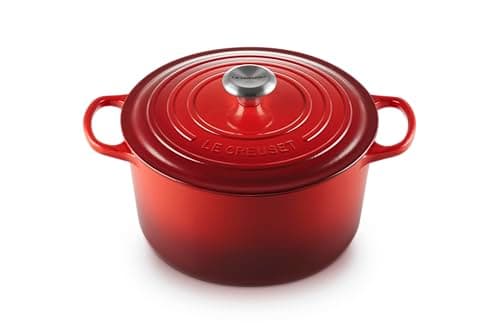
Le Creuset 6.5 qt Deep Round: extra depth for soups
See price on AmazonSee it on Amazon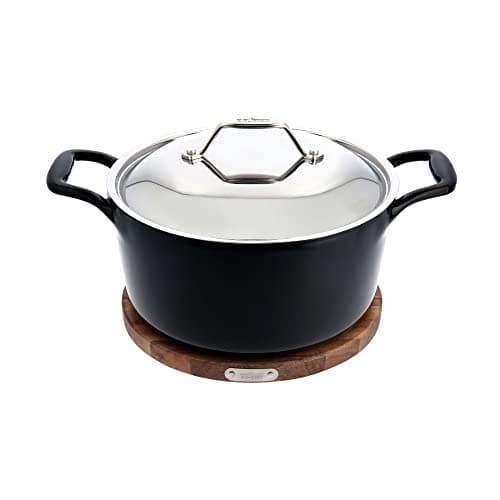
All-Clad 6 qt enameled: 650°F limit, trivet included
See price on AmazonSee it on Amazon
If a recipe tells you to use a Dutch oven and you are not sure what counts, this page is for you. We cover what defines the pot, where the name comes from, how it relates to French ovens and cocottes, which materials it comes in, and what it actually cooks well. By the end you should know whether the pot you already own will do the job, and what to look for if you are buying your first one. We stick to how the pots are built and used, and link to our gear guides when you are ready to shop.
What makes a pot a Dutch oven
Three features define a Dutch oven: thick, heavy walls and base; a deep, wide body with two loop handles; and a heavy, close-fitting lid. Thick metal soaks up heat and gives it back evenly, so food browns without scorching and liquids stay at a gentle simmer. The heavy lid keeps moisture in, which is why meat comes out tender after hours of braising.
Most Dutch ovens are cast iron. Some are bare cast iron that you season like a skillet; many are coated in enamel inside and out. There are also stainless steel Dutch ovens with a thick clad base, and a few aluminum ones. All of them can go from stovetop to oven, which is the whole point of the design.
Why is it called a Dutch oven
The most widely repeated account traces the name to the early 1700s, when the English ironworker Abraham Darby studied Dutch methods of casting metal pots in sand molds and brought the technique to England. Cast pots made this way became known as Dutch ovens. The name stuck in Britain and America even after production moved elsewhere.
The "oven" part makes sense once you know how these pots were used before home ovens were common. A cast iron pot with a lid, set in hot coals with more coals on the lid, works as a small oven. Camp Dutch ovens still have legs and a flanged lid built for exactly that.
Dutch oven vs French oven vs cocotte
A French oven is an enameled cast iron Dutch oven. The term spread with French makers such as Le Creuset and Staub, which coat cast iron with porcelain enamel. The enamel means you do not need to season the pot and you can cook acidic food like tomato sauce or wine braises without reacting with bare iron.
Cocotte is the French word for the same pot, and Staub uses it as its product name. A Staub cocotte usually has small spikes or dimples on the underside of the lid that help condensation drip back onto the food. Le Creuset lids are smooth. Either way, it is a Dutch oven. For how the two brands compare, see Staub vs Le Creuset.
Dutch oven (bare)
- Usual material
- Cast iron
- Needs seasoning
- Yes
- Good with acidic food
- Short cooking only
French oven
- Usual material
- Enameled cast iron
- Needs seasoning
- No
- Good with acidic food
- Yes
Cocotte
- Usual material
- Enameled cast iron
- Needs seasoning
- No
- Good with acidic food
- Yes
Stainless Dutch oven
- Usual material
- Clad stainless steel
- Needs seasoning
- No
- Good with acidic food
- Yes
| Name | Usual material | Needs seasoning | Good with acidic food |
|---|---|---|---|
| Dutch oven (bare) | Cast iron | Yes | Short cooking only |
| French oven | Enameled cast iron | No | Yes |
| Cocotte | Enameled cast iron | No | Yes |
| Stainless Dutch oven | Clad stainless steel | No | Yes |
What a Dutch oven cooks best
The Dutch oven earns its space with slow, wet cooking and with jobs that need steady heat. Sear meat on the stove, add liquid, cover and move the pot into a low oven: that is braising, and nothing does it better. The same steady heat helps with deep frying, because a heavy pot full of oil loses less temperature when you add cold food.
Bread bakers use a preheated Dutch oven as a small steam chamber. The lid traps moisture released by the dough, which helps the loaf rise before the crust sets. Our Dutch oven for sourdough article covers that method, and our how to use a Dutch oven guide covers everyday technique.
- Braises and pot roasts: short ribs, beef stew, coq au vin, pork shoulder
- Soups, chili, beans and stock
- No-knead and sourdough bread
- Deep frying chicken or doughnuts
- Rice, risotto and one-pot pasta
- Whole roast chicken, especially in an oval
Dutch oven vs other pots
A stock pot is taller, thinner and lighter. It boils water and stock faster but scorches thick stews and does not sear well. A braiser is a shallow Dutch oven with more floor space for browning and less depth for liquid. A slow cooker holds a low temperature unattended but cannot sear or bake. We compare each of these in Dutch oven vs stock pot, Dutch oven vs braiser and Dutch oven vs slow cooker.
If you only buy one heavy pot, a round enameled Dutch oven around 5.5 quarts covers the widest range of jobs for three to four people. Our Le Creuset size chart explains what the size numbers mean.
What to look for when buying one
Look for an even, smooth enamel finish with no chips at the rim, a lid that sits flat without rocking, and handles big enough to grab with oven mitts. Check the oven limit of the knob: on many enameled pots the knob, not the pot, sets the maximum temperature. Our oven-safe temperature checker shows which part limits each line, and our cookware oven temperature limits page explains the figures.
Weight is the other practical check. A heavier pot holds heat better but is harder to lift full. If you have a glass or induction cooktop, confirm the base is flat and compatible. For premium picks by brand, see our Le Creuset and Staub guides.
Frequently asked questions
Is a Dutch oven the same as a casserole dish? In British English, a lidded cast iron pot is often called a casserole, so yes in that sense. In the US, a casserole dish usually means a shallow baking dish without a lid, which is a different thing.
Can a Dutch oven go on the stove? Yes. Cast iron and enameled Dutch ovens are made for both stovetop and oven use. Heat enameled pots gradually on medium rather than blasting them on high while empty.
Do I need to season an enameled Dutch oven? No. The enamel is the cooking surface, so there is nothing to season. Bare cast iron Dutch ovens do need seasoning. See does Le Creuset need seasoning.
What can I use instead of a Dutch oven? Any heavy, oven-safe pot with a tight lid will do most of the same jobs. Our Dutch oven alternatives page covers the options.
What you need for this
- See price on AmazonAmazon
Staub 5.5 qt Round Cocotte: spiked lid, 900°F base limit
From Best Dutch ovens for home cooks: enameled and stainless picks
 See price on AmazonAmazon
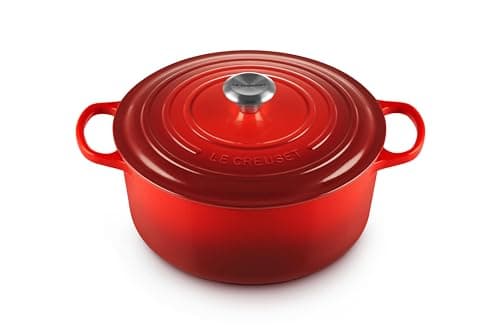
Le Creuset 7.25 qt Round: the family-size classic
From Best Le Creuset Dutch ovens: which shape and size to buy
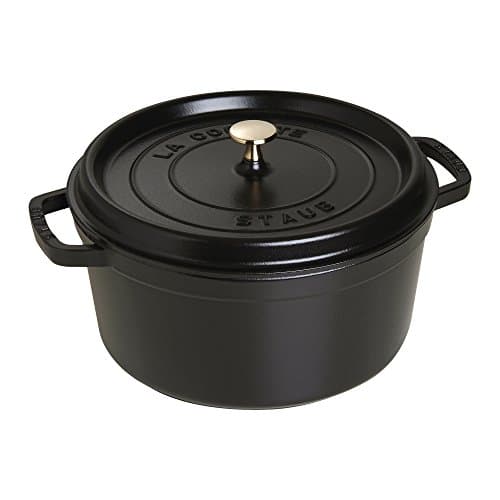 See price on AmazonAmazon
Staub 7 qt Round: spiked lid, serves 7-8
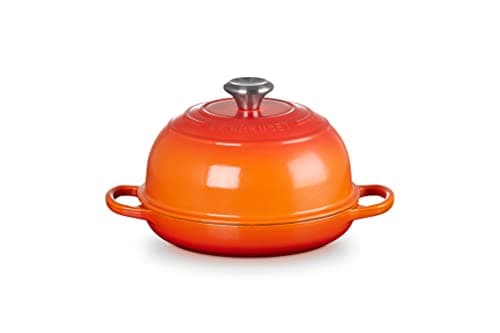 See price on AmazonAmazon
Le Creuset Round Bread Oven 9.5 in: low base for boules