Comparison
Carbon steel vs stainless steel pans
Published
Short answer
Carbon steel builds a seasoned, slick surface that releases eggs and sears hard, and it costs less, but it needs seasoning, must be dried right away to avoid rust, and does not like long acidic simmers. Clad stainless needs no seasoning, handles tomato, wine and dishwasher-free scrubbing, and is better for pan sauces, but food sticks unless you preheat properly. Many cooks keep one of each.
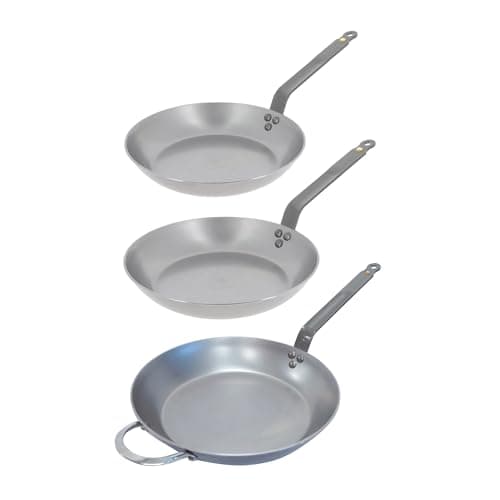
de Buyer
de Buyer Mineral B 3-Pan Set: best carbon steel
See price on Amazon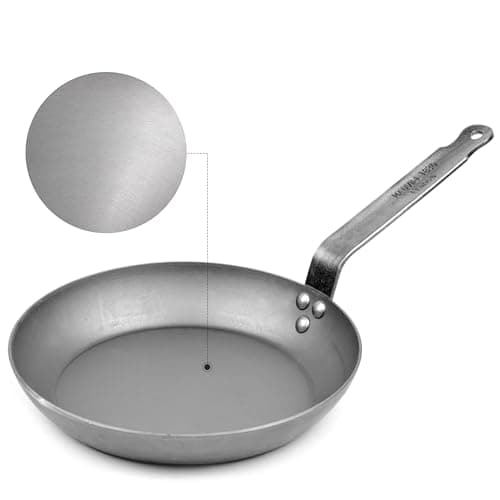
Mauviel
Mauviel M'Steel 14.2 in Frying Pan: extra large
See price on Amazon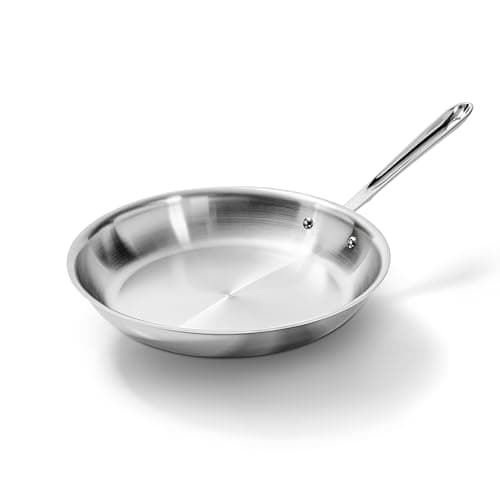
All-Clad
All-Clad D3 12 in Fry Pan: clad stainless all-rounder
See price on Amazon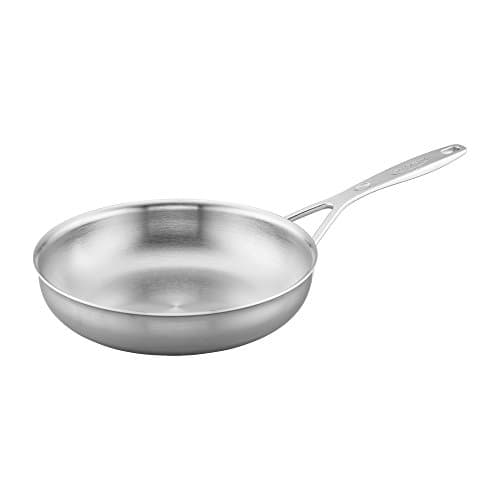
Demeyere
Demeyere Industry 5-Ply 9.5 in: thick, flat base
See price on Amazon
- de Buyer Mineral B 3-Pan Set: best carbon steel
- Material
- Carbon steel
- Oven-safe to
- 400°F for up to 10 min
- Size
- -
- Weight
- -
- Mauviel M'Steel 14.2 in Frying Pan: extra large
- Material
- Extra thick black carbon steel
- Oven-safe to
- Not stated
- Size
- 14.2 in
- Weight
- Not stated
- All-Clad D3 12 in Fry Pan: clad stainless all-rounder
- Material
- Tri-ply stainless, aluminum core
- Oven-safe to
- 600°F
- Size
- 12 in
- Weight
- Not stated
- Demeyere Industry 5-Ply 9.5 in: thick, flat base
- Material
- 5-ply stainless
- Oven-safe to
- Not stated
- Size
- 9.5 in
- Weight
- Not stated
| Pick | Material | Oven-safe to | Size | Weight | Price | Link |
|---|---|---|---|---|---|---|
| de Buyer Mineral B 3-Pan Set: best carbon steel | Carbon steel | 400°F for up to 10 min | - | - | - | Amazon |
| Mauviel M'Steel 14.2 in Frying Pan: extra large | Extra thick black carbon steel | Not stated | 14.2 in | Not stated | - | Amazon |
| All-Clad D3 12 in Fry Pan: clad stainless all-rounder | Tri-ply stainless, aluminum core | 600°F | 12 in | Not stated | - | Amazon |
| Demeyere Industry 5-Ply 9.5 in: thick, flat base | 5-ply stainless | Not stated | 9.5 in | Not stated | - | Amazon |
Facts are taken from each Amazon listing. Prices are checked daily and shown with their date.
Verdict
Buy a carbon steel pan such as the de Buyer Mineral B set or Mauviel M'Steel if you want easy-release eggs and hard sears and will season and dry it. Buy a clad stainless pan such as the All-Clad D3 12 inch or Demeyere Industry if you want low maintenance, even heat and freedom to cook acidic sauces.
This page is for cooks choosing between a carbon steel skillet and a clad stainless fry pan for everyday cooking. It compares food release, searing, care and seasoning, acidic foods, heat response, weight, oven use and cost, using facts from listed pans by de Buyer, Mauviel, All-Clad and Demeyere. If you are new to carbon steel, also see what is carbon steel cookware.
How the two materials differ
Carbon steel is mostly iron with a small amount of carbon, formed into a single, fairly thin sheet. Bare, it is not nonstick and it rusts. Once you season it, thin layers of oil bond to the surface and polymerize into a dark, slick coating. The de Buyer listing calls it lighter and more heat responsive than cast iron and better adapted to high heat than stainless steel.
Clad stainless sandwiches a heat-spreading core, usually aluminum, between stainless steel layers. The stainless cooking surface does not rust, does not need seasoning and does not react with food. The All-Clad D3 pan is tri-ply with an aluminum core, and the Demeyere Industry pan is 5-ply, per their listings. See what is clad cookware.
Spec table from the listings
Listed price
- de Buyer Mineral B 3-pan set
- $311.85
- Mauviel M'Steel 14.2 in
- $170.00
- All-Clad D3 12 in
- $159.95
- Demeyere Industry 9.5 in
- $197.87
Material
- de Buyer Mineral B 3-pan set
- Carbon steel
- Mauviel M'Steel 14.2 in
- Black carbon steel
- All-Clad D3 12 in
- Tri-ply stainless, aluminum core
- Demeyere Industry 9.5 in
- 5-ply stainless
Sizes
- de Buyer Mineral B 3-pan set
- 8, 10.25 and 12.5 in
- Mauviel M'Steel 14.2 in
- 14.2 in
- All-Clad D3 12 in
- 12 in
- Demeyere Industry 9.5 in
- 9.5 in
Seasoning
- de Buyer Mineral B 3-pan set
- Required, beeswax coat to remove first
- Mauviel M'Steel 14.2 in
- Required, beeswax coat to remove first
- All-Clad D3 12 in
- None
- Demeyere Industry 9.5 in
- None
Washing
- de Buyer Mineral B 3-pan set
- Hand wash only
- Mauviel M'Steel 14.2 in
- Hand wash only
- All-Clad D3 12 in
- Hand wash only
- Demeyere Industry 9.5 in
- Not stated in listing
Induction
- de Buyer Mineral B 3-pan set
- Yes
- Mauviel M'Steel 14.2 in
- All cooking surfaces
- All-Clad D3 12 in
- Yes
- Demeyere Industry 9.5 in
- Not stated in listing
Made in
- de Buyer Mineral B 3-pan set
- France
- Mauviel M'Steel 14.2 in
- France
- All-Clad D3 12 in
- USA
- Demeyere Industry 9.5 in
- Belgium
| de Buyer Mineral B 3-pan set | Mauviel M'Steel 14.2 in | All-Clad D3 12 in | Demeyere Industry 9.5 in | |
|---|---|---|---|---|
| Listed price | $311.85 | $170.00 | $159.95 | $197.87 |
| Material | Carbon steel | Black carbon steel | Tri-ply stainless, aluminum core | 5-ply stainless |
| Sizes | 8, 10.25 and 12.5 in | 14.2 in | 12 in | 9.5 in |
| Seasoning | Required, beeswax coat to remove first | Required, beeswax coat to remove first | None | None |
| Washing | Hand wash only | Hand wash only | Hand wash only | Not stated in listing |
| Induction | Yes | All cooking surfaces | Yes | Not stated in listing |
| Made in | France | France | USA | Belgium |
Food release and searing
A well-seasoned carbon steel pan releases eggs, potatoes and fish easily, and it gets very hot for a hard sear on steak. That combination is why many restaurant line cooks use carbon steel for eggs and searing alike. New pans stick until the seasoning builds up, so expect a break-in period. See how to season a carbon steel pan and how to cook with a carbon steel pan.
Stainless never becomes nonstick, but it sears well and releases food that has browned properly. The trick is to preheat the pan, add fat, and leave the food alone until it lets go. Stainless also builds the best fond for pan sauces, since you can deglaze it with wine or stock without worrying about damaging seasoning. See why food sticks to stainless steel and how to preheat pans.
Care, rust and acidic foods
- Carbon steel: hand wash, dry right away, and wipe on a thin film of oil. Avoid long soaks and the dishwasher. Rust spots come off with scrubbing and re-seasoning; see carbon steel pan rust.
- Stainless: scrub hard, use cleaners like Bar Keepers Friend, soak it overnight. Nothing to strip. Discoloration is cosmetic; see stainless steel pan discoloration.
- Acidic foods: long simmers of tomato sauce, wine or vinegar can strip carbon steel seasoning and leave a metallic taste. A quick deglaze is usually fine. Stainless handles acidic food without any issue.
- Appearance: carbon steel darkens and looks patchy as it seasons. Stainless keeps its look with cleaning.
Heat, weight, oven use and cost
Carbon steel heats quickly and gets very hot, but a single layer of steel spreads heat less evenly than an aluminum-core clad pan, so hot spots over a small burner are more noticeable. Clad stainless spreads heat more evenly across the base and up the sides.
For oven use, de Buyer rates the coated handle on its Mineral B pans to 400°F for less than 10 minutes, so it suits a quick finish in the oven, not a long roast. An all-metal carbon steel pan has no practical limit in a home oven. All-Clad rates its D3 stainless to 600°F. For the Demeyere and Mauviel pans, check the maker's care page. Our oven temperature checker shows which part limits each pan.
On cost, carbon steel is often cheaper per pan for the same size, as the listings show: the 14.2 inch Mauviel and the 12 inch All-Clad are close in price despite the size gap. The de Buyer set gives three sizes for about the price of two premium clad pans.
Note.Carbon steel and stainless handles get hot on the stove and in the oven. Use a dry towel or mitt, and never grab a pan straight from the oven bare-handed.
Which one should you buy
If you are also weighing cast iron, see carbon steel vs cast iron. For coated pans, see stainless steel vs nonstick.
- Carbon steel if you cook eggs, potatoes and steaks often, like a lighter pan for high heat, and do not mind seasoning and drying it after each use.
- Stainless if you make pan sauces, cook tomato or wine dishes, want zero maintenance beyond washing, and prefer even heat.
- Both if you cook every day: carbon steel for eggs and searing, stainless for sauces and acidic dishes.
Frequently asked questions
Is carbon steel better than stainless steel? Neither is better overall. Carbon steel is better for release and high-heat searing once seasoned; stainless is better for pan sauces, acidic food and low maintenance.
Can carbon steel go in the dishwasher? No. The listings say hand wash only, and the dishwasher strips seasoning and causes rust.
Do I need to season stainless steel? No. Stainless does not need seasoning; good preheating and fat do the job. See do you need to season stainless steel.
Can I cook tomato sauce in carbon steel? A quick sauce or deglaze is usually fine on a well-seasoned pan, but long acidic simmers can strip the seasoning. Use stainless or enameled cast iron for those.
What you need for this
- See price on AmazonAmazon
de Buyer Mineral B 3-Pan Set: best carbon steel
 See price on AmazonAmazon
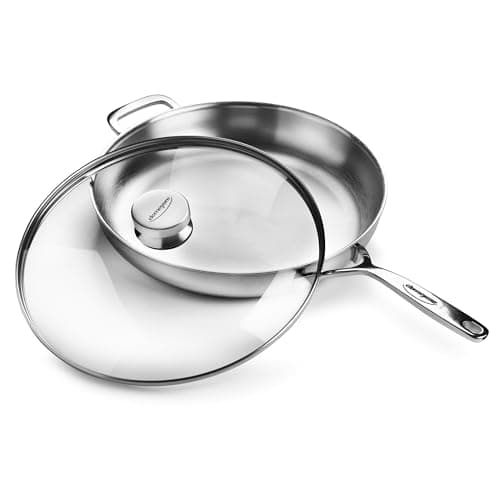
Demeyere 5-Plus 12.5 in with Glass Lid: 3 mm 5-ply
 See price on AmazonAmazon
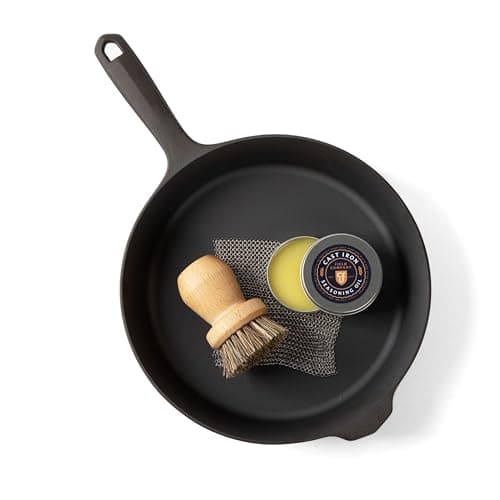
Field 10.25 in Starter Set: 4.3 lb with care kit
From Best premium cast iron skillets: machined and enameled picks